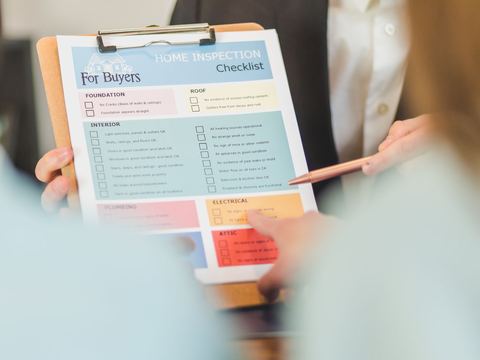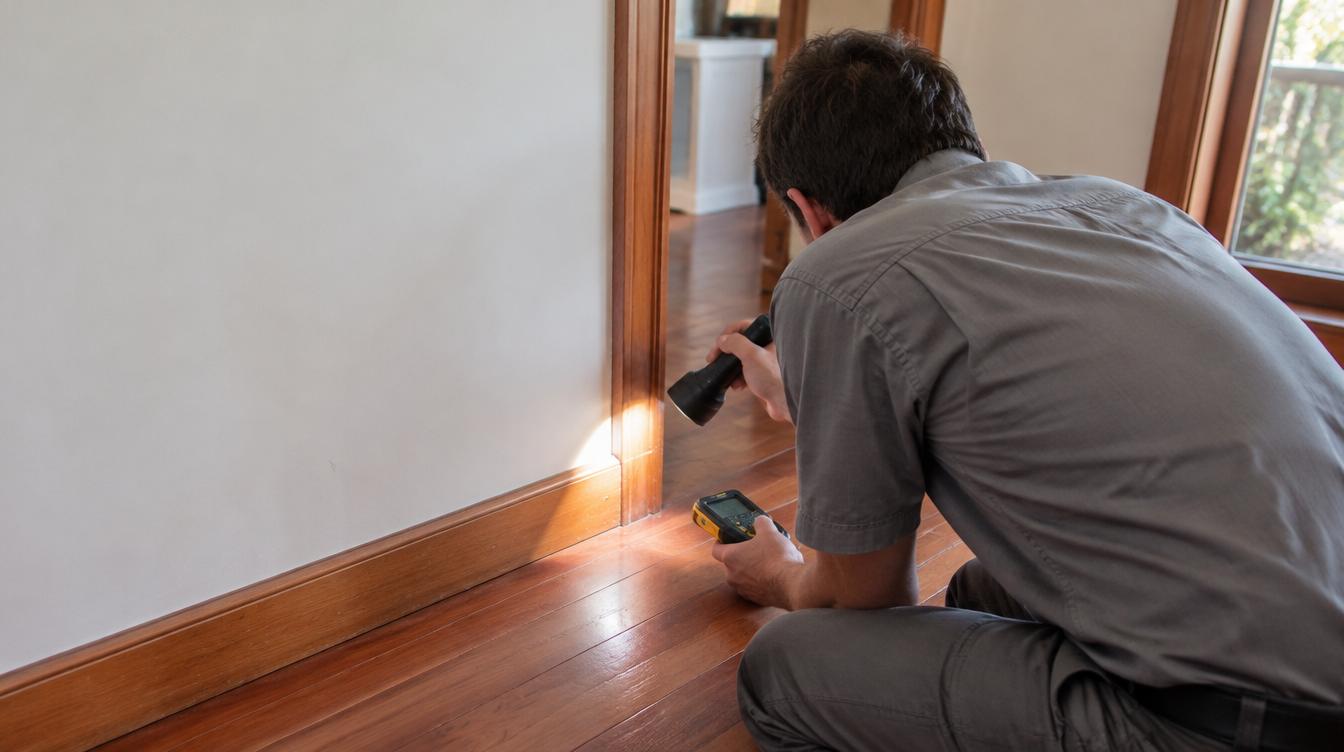
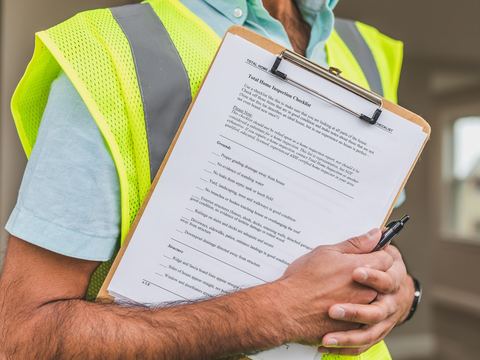
What does the inspector actually look at?
Everything they can reach without pulling the house apart. WA Building and Energy says a pest controller's inspection should take in all accessible timber and every likely termite entry point. In most homes that means the subfloor or the slab edge, the roof space, each room inside, and the garden: stumps, sleepers, fences and timber stacked by the shed.
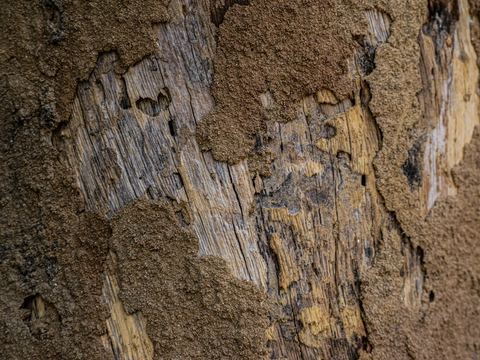
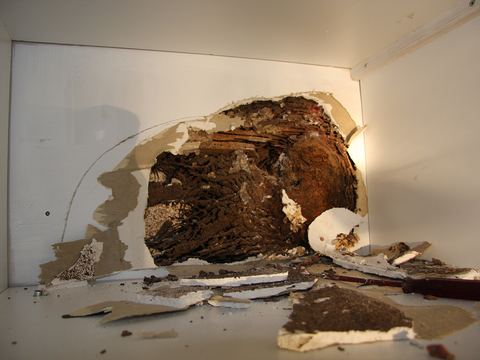
They're hunting for mud shelter tubes, timber that sounds hollow when tapped, bubbled paint, and the bridges termites use to get past a barrier, like a garden bed heaped against a wall. WA Building and Energy notes that inside the house, the first hint can be faint discolouring on a wall, then warping where timber panelling lines it.
On a newer home they'll also read the durable termite notice, usually in the meter box, and check the system it names. Under the NCC that notice carries the installer's or maker's advice on what future inspections should cover and how often.
What happens on the day
Access first
The inspector needs to reach the subfloor (the space under a raised floor), the roof space and the outside walls. Clear stored boxes from the manhole and the edges of the house, and move pot plants off the walls where you can.
Around the outside
They look where soil, paving and garden beds meet the house, at stored timber, stumps and trees. CSIRO says subterranean termites usually forage within 30 m of their nest and occasionally 100 m or more, so the colony may be past your fence.
Underneath
Subterranean termites build shelter tubes of mud over concrete, brickwork and durable timber to stay moist and out of the sun, so piers, footings and the bottom of walls get a careful look.
Inside the house
Skirting boards, architraves, door and window frames and floors, checked for soft spots, blistered paint and timber that sounds hollow.
The roof space
Timbers near the eaves and anywhere a leak has kept wood damp.
Water and damp
WA Building and Energy says plumbing, drainage and roof leaks should be fixed quickly, because damp conditions attract termites. A dripping tap by the wall or a downpipe draining against the slab goes in the report.
The meter box notice
For newer homes, the NCC requires a durable notice, usually in the meter box, showing the termite management system used, its installation date and the recommended scope and frequency of future inspections. For a chemical system it also shows the life expectancy from the product's label.
How often should you book one?
The QBCC tells Queensland owners to have the property inspected and reported on every year, or more often in high hazard areas. WA Building and Energy also recommends a professional inspection at least once a year, plus your own walk around every six months looking for anything obvious.
If the durable notice on your house sets a different schedule, go by that, and ask the termite inspector whether your block changes things. A timber house on stumps beside a gum tree is a different proposition from a slab home on a cleared estate.
What a useful inspection report includes
- The areas inspected, plus any they couldn't reach and why: a jammed roof hatch, a tight subfloor, furniture against the walls.
- Live termites, old damage and mud tubes, each with its location.
- Conditions that invite termites: leaks, damp, timber touching soil, garden beds against walls, blocked vents.
- The termite system found, from the notice or what was visible, and the state it's in.
- Photos of anything that matters.
- What they recommend next, and when the following inspection should be.
If the inspector finds termites
A careful inspector disturbs live workings as little as they can. CSIRO explains why: several control options only work if the termites are still active when treatment begins.
Leave any mud tubes the inspector opened as they are afterwards, too. You don't need to decide anything on the day. Take the written report, read it at home, and see termite treatment for what usually follows. If the termites have come from a nest out in the garden, termite baiting may come up as an option.
Who's allowed to do the inspection?
It differs by state. In Queensland, inspecting and reporting on termite systems and infestations in finished buildings falls within the QBCC's termite management (chemical) licence class, and anyone doing that work must also hold a pest management licence from Queensland Health.
In NSW, the EPA's licence isn't required for a timber pest inspection that uses no pesticides; it comes into play once something is applied, and it's issued to the individual technician rather than the company. NSW Government advice for pre-purchase reports is to pick an inspector with adequate insurance, particularly professional indemnity, which is a fair question for any termite inspection.
Victoria also licenses the person, and termite work needs the general authorisation including timber pests. Other states are covered on their state pages.
Getting ready, and your own checks between visits
You can
- Clear a path to the roof hatch and the subfloor access, and pull boxes away from inside walls.
- Rake mulch and soil back so the slab edge and weep holes can be seen.
- Have the durable termite notice handy, or say where it is.
- Every six months, walk around the house looking (not poking) for mud on piers, walls, fences and stumps.
- If you spot mud tubes or soft timber before the visit, leave them untouched: don't break them open or spray them.
Leave to a pest business
- Getting into the roof space and the subfloor.
- Tapping and testing timber, and checking inside walls.
- Telling live activity from old damage or something else entirely.
- Writing the report and recommending the next step.
Before you book, ask
- Which areas will you inspect, and what could stop you reaching any of them?
- Will the report be written, with photos, and when will I get it?
- How do you check inside walls without opening them up?
- Will you check the system named on the termite notice in the meter box?
- What would make you suggest a shorter gap before the next inspection?
- Is there an inspection or call-out fee?

Our take on termite inspections
If the house has never had a termite inspection, or the last one was over a year ago, we'd book one now rather than wait for a sign. Keep the written report with the house papers and put the next date in the calendar. Tap Termites and your postcode.
Want someone to look at it?
Tell us what you've seen and your postcode, and a local pest business that handles exactly that calls you to talk it through.