
If you've found termites, in this order
Leave them exactly as they are
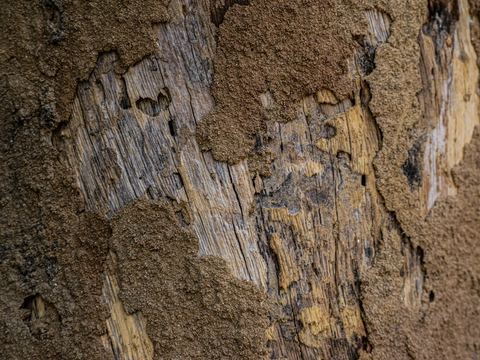
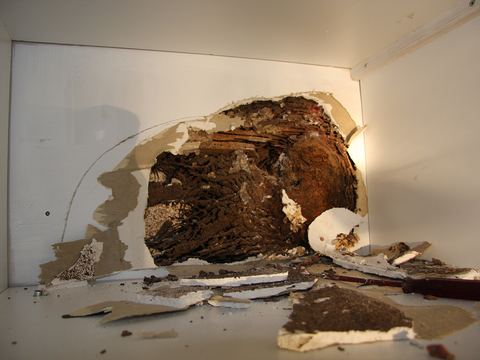
CSIRO says to take care not to disturb termites you find, because several control options rely on finding them active. Don't spray them, pull the timber out or break the mud open.
Take a photo from where you stand
Note the spot, the date and what you saw: soft timber, a mud tube, or winged insects at a light. That's what the termite inspector will ask first.
Check the meter box
Under the national building code, a house built with a termite management system carries a durable notice, often in the meter box, naming the system, when it went in and how often it should be inspected.
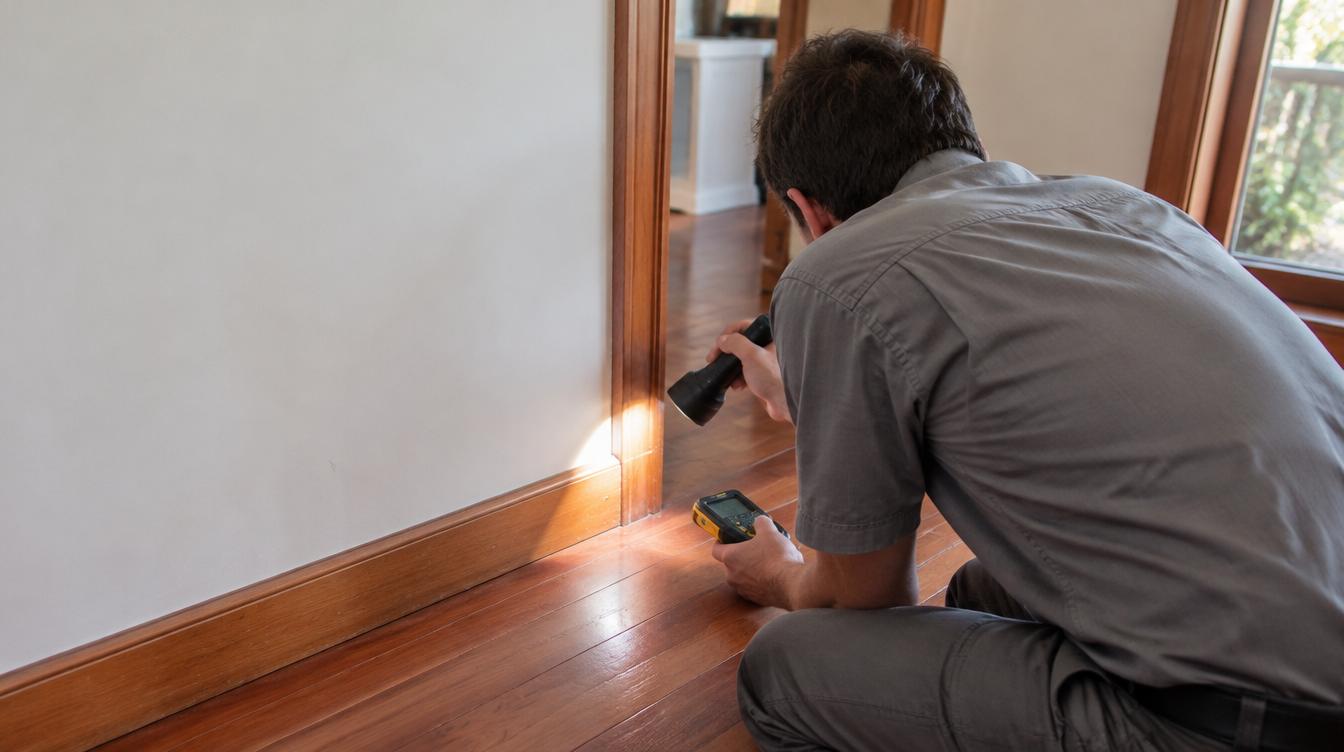
Get the whole house inspected
One damaged skirting board doesn't show where the colony is. Subterranean termites usually forage within 30 m of their nest and sometimes travel 100 m or more, CSIRO says.
What's different about termites in Darwin
Mastotermes, the big one
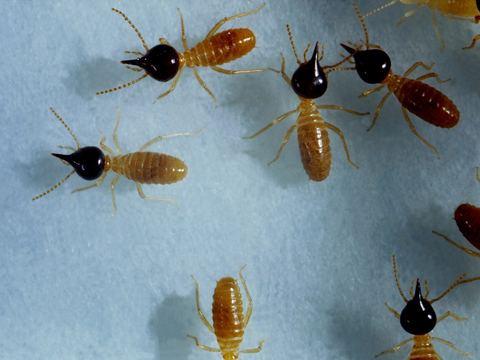
CSIRO describes the giant northern termite, Mastotermes darwiniensis, as particularly voracious above the Tropic of Capricorn, and Darwin lies above it. Writing about termites as pests, the Australian Museum says this one has the greatest potential for destruction.
Bigger soldiers
Business Queensland says most subterranean termites are 3 to 7 mm long, while giant northern termite soldiers can reach 13 mm. A large pale insect in damaged timber is worth a photo for the inspector.
Humid evenings bring flights
Winged termites leave the nest during humid periods in the warmer months, often at dusk, CSIRO says. A flight past the porch light doesn't prove the house has termites, but it's a good prompt to book the inspection you've been putting off.
How people actually find termites
In a CSIRO survey of homes in 1996 to 1998, 86% of people with termites noticed them through damaged wood, 34% through mud tubes and only 8% through wings. The survey wasn't a random sample, but it shows where to look: timber that sounds hollow or gives under a thumb, and thin mud tracks over concrete, brick or stumps.
Termites keep a thin outer skin on the timber they eat, so a doorframe can look fine until it's pressed. The inspector looks for exactly this, along with damp spots, timber touching soil and anything stacked against the walls.
Inspection or treatment: which do you need?
| Termite inspection | Termite treatment | |
|---|---|---|
| When | Regularly, and before you buy | When live termites are found, or to protect a building |
| What happens | A look through the house, roof space, subfloor and garden, written up | A plan for this house: baiting, a chemical soil treatment, or both |
| What you should get | A report of what was found, where, and what's at risk | The product's full name, where it went, re-entry times and the follow-up visits |
The NT licence side
In the NT, pest control needs a pest management technician licence under the Medicines, Poisons and Therapeutic Goods Act 2012, and each licence lists the pesticides its holder may use. So it's fair to ask whether the products in your treatment plan are on that list.
We didn't find an NT rule that sets how often a house must be inspected. Queensland's building regulator, QBCC, advises a yearly inspection, or more often in high hazard areas, which is a sensible yardstick to raise with the inspector.
What you can do, and what to leave
You can
- Fix plumbing, drainage and roof leaks quickly; WA's building regulator says damp conditions attract termites.
- Keep garden beds and mulch from building up against the walls.
- Store firewood and spare timber off the ground and away from the house.
- Keep the meter box notice, and any past reports, for the next inspector.
Leave to a pest business
- Checking the roof space, the subfloor and inside the walls.
- Any treatment, baiting system or chemical soil treatment.
- Judging how far damage has gone, and when a builder is needed.
Before you agree to a treatment
- Which termite did you find, and is it the giant northern termite?
- Why baiting, a soil treatment or both, for this house?
- What's the product's full name, and is it covered by your NT licence?
- How many follow-up visits are included, and what does any warranty cover, in writing?

If it were our place in Darwin
We'd book an inspection now if there's no recent report, and keep to the schedule on the meter box notice after that. If you've already found termites, leave them be and get the inspector in while they're still active.
Want someone to look at it?
Tell us what you've seen and your postcode, and a local pest business that handles exactly that calls you to talk it through.