
Termites in the ACT
Two species do most of the damage
The ACT Government names Coptotermes frenchi and Nasutitermes exitiosus as the termites behind most of the damage around Canberra. Coptotermes acinaciformis can be severe too, but it says that one isn't common here.
Old fences and living gums
Heterotermes ferox is sometimes found feeding on weathered paling fences, and Porotermes adamsoni nests in living eucalypts and damp wood. Termites in the fence line aren't automatically in the house, but they're a good reason to have the house looked at.
A pest report comes with every sale
When an occupied home is sold in the ACT, the seller must make a pest inspection report available to prospective buyers, from an inspection done no earlier than 3 months before the home was first advertised. Class A units don't need one.
Extra training for termite products
Commercial pest work in the ACT needs an Environmental Authorisation from the ACT EPA, and anyone using termiticides or liquid fumigants needs specific training on top. Access Canberra keeps a public register of operators.
How Canberra homeowners usually find them
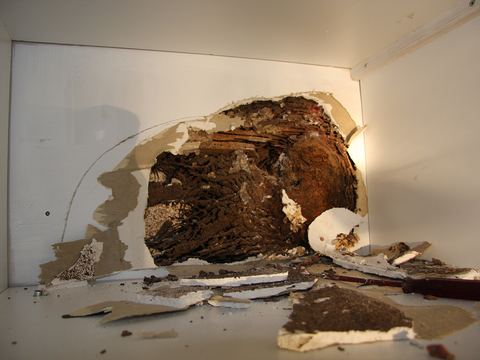
Through the timber, mostly. In a CSIRO survey, 86% of homes with termites noticed damaged wood, 34% saw mud tubes (the thin tunnels termites build over brick and concrete), and only 8% saw wings. Timber that sounds hollow when tapped, or paint that bubbles, is worth a closer look.
If you uncover them, stop there. Don't spray them, break the mud tubes or pull out the damaged timber: CSIRO says several treatment options rely on finding termites still active, so leave everything as it is for the inspector.
Buying? The seller's report or your own
| Seller's pest report | Your own inspection | |
|---|---|---|
| Who arranges it | The seller, for any home that has been occupied | You, with an inspector you choose |
| How recent | No earlier than 3 months before the home was first advertised | Whenever you book it before you commit |
| Class A units | Not required | Still available if you want one |
| Who you can question | Whoever wrote it, if the agent passes on details | Your inspector, during and after the visit |
Questions for a Canberra termite inspector
- Which areas will you inspect, and which couldn't you reach, such as a blocked subfloor or a low roof space?
- Will you look at the fences, stumps and gum trees near the house as well?
- If you find termites, will you tell me which kind before you recommend a treatment?
- Does the meter box have a termite notice, and what system and inspection schedule does it show?
- Which product would you use, and can I have its full name in writing?
Your part, and the inspector's
You can
- Fix dripping taps, leaking downpipes and overflowing gutters near the walls.
- Keep mulch and garden beds below the slab edge and away from weep holes.
- Stack firewood on a rack, well clear of the walls, rather than on the soil against the house.
- Keep the subfloor and roof space reachable, without stored boxes blocking the way.
Leave to a pest business
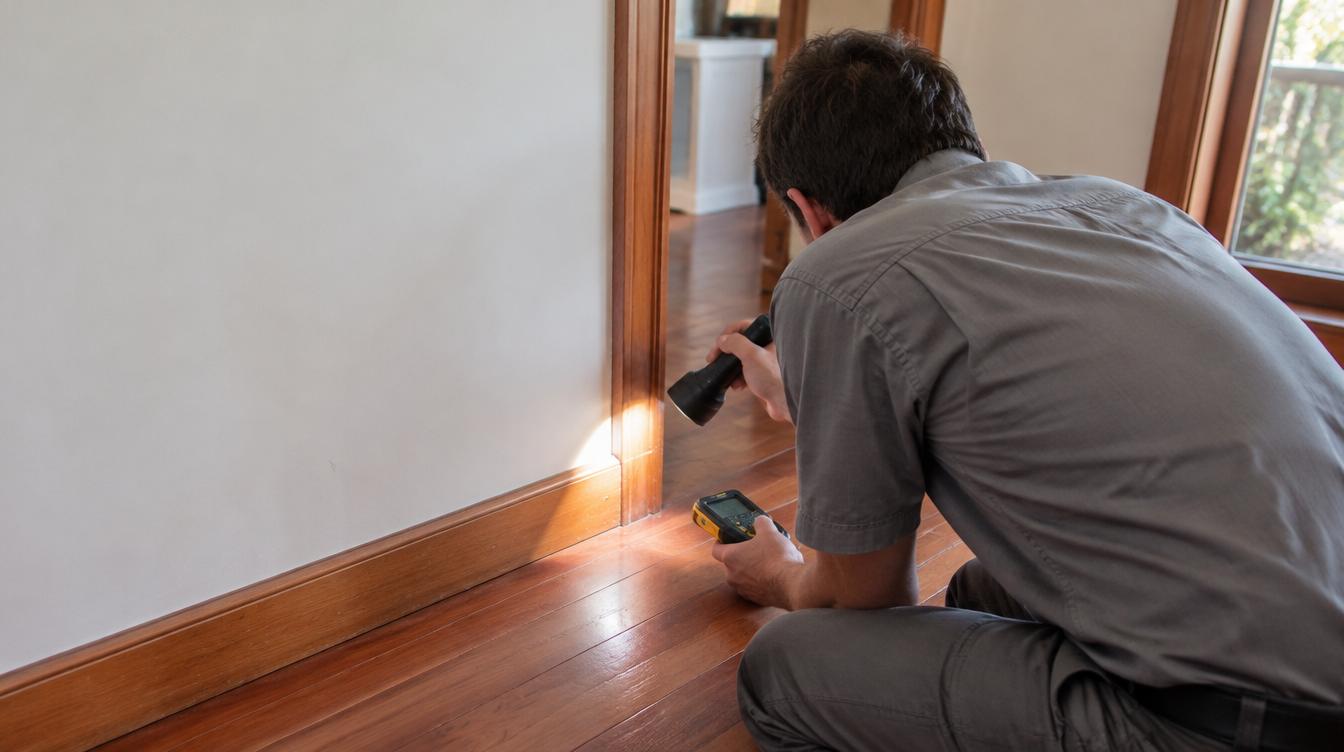
- Inspecting the roof space, subfloor, fences and trees.
- Working out which termite it is and whether it's active.
- Treatment, baiting or a termite management system around the house.

If it were our house in Canberra
We'd book an inspection if it's been a while, and straight away if a fence post or stump near the house turns out to have termites in it. Tap Termites and your postcode.
Want someone to look at it?
Tell us what you've seen and your postcode, and a local pest business that handles exactly that calls you to talk it through.