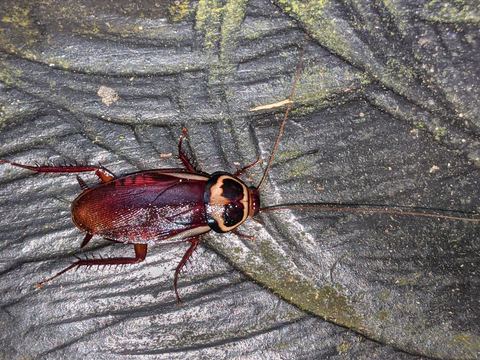
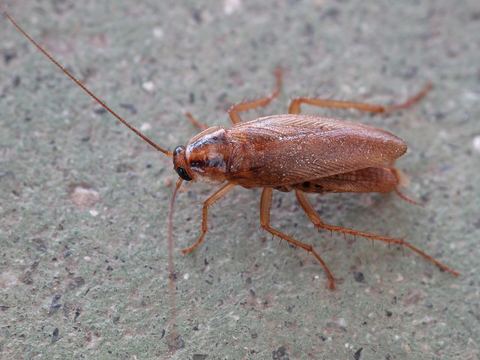
Is it a German cockroach or one of the big ones?
| German cockroach | American and other large cockroaches | |
|---|---|---|
| Size | 12 to 15 mm when fully grown, the smallest pest cockroach. | Roughly 30 to 40 mm. The American is the biggest common one. |
| Colour | Amber, with two dark stripes running lengthways. | Reddish brown to almost black. The American has a pale yellow border around the top of the thorax. |
| Where it lives | Kitchens: under the sink, in cupboards, drawers and appliances, near warm spots like the water heater. | Roof, wall and subfloor spaces, drains, grease traps, sheds and garden mulch. |
| How it arrives | Carried in, often in cardboard boxes or crates of food and drink. | Walks in from outside or the drains. The smokybrown can fly short distances in warm weather. |
| What a sighting tells you | Usually a population breeding inside, close to food. | Often a visitor from a population living in the roof, walls, subfloor or garden. |
Why the German cockroach is the hard one
The Australian Museum calls the German cockroach the hardest pest cockroach to get rid of. It's found right across Australia and, the museum says, is most troublesome in Sydney.
The numbers explain why. Each female carries an egg case of 30 to 48 eggs at the tip of her abdomen, and the museum puts her output at up to 20,000 young a year.
Seeing them in daylight is a clue too. Victoria's Department of Health says cockroaches active during the day often point to a large infestation.
Other signs to look for
Look for droppings and dark smears along shelf edges and cupboard hinges, cast skins and empty egg cases. Some cockroaches press their droppings onto surfaces to mark where they feed and gather, so the grubbiest corner is usually the busiest.
The big kinds leave fewer clues indoors. American cockroaches tend to stay in the roof, walls and subfloor and around drains and rubbish, while oriental cockroaches like cool, damp spots at or below ground level.
What a cockroach treatment usually involves
It starts with an inspection. The technician checks under the sink, behind the fridge and dishwasher, inside cupboards and, where they can get in, the roof space and subfloor, looking for where cockroaches live rather than where you happened to see one.
For German cockroaches, expect baits placed in the cracks and hinges where they hide, sometimes with a dust puffed into voids, and a return visit because more eggs hatch after the first treatment. For the big outdoor kinds, the work leans outside: the subfloor, roof space, drains and the edges of the house.
Either way, ask for the plan in writing, with the product names and whether a follow-up is part of it.
What makes the job bigger or smaller
How far they've spread matters most: one kitchen is a smaller job than the kitchen, bathroom and laundry. Built-in appliances, a crowded pantry and a low subfloor all add time.
Units and apartments are trickier, because cockroaches move between dwellings through shared walls and services. If yours is one unit of many, ask whether the neighbours or the body corporate are treating too.
What you can do, and what to hand over
You can
- Wipe benches and sweep before bed, and don't leave dishes or pet food out overnight.
- Keep rice, cereal and flour in sealed containers: German cockroaches prefer starchy food.
- Fix dripping taps and keep the area under the sink dry.
- Flatten and recycle cardboard boxes soon after unpacking them.
- Photograph droppings, an egg case or a cockroach (a dead one is fine) for the technician.
Leave to a pest business
- Finding where they breed, inside cupboards, appliances and wall voids, and treating it.
- The roof space, subfloor and drains for the big outdoor kinds.
- Follow-up visits as new cockroaches hatch.
- Working out whether they're coming from a neighbouring unit.
Questions to ask before they start
- Which cockroach is it, and where do you think they're breeding?
- What will you use, by full product name, and where exactly will it go?
- Is a return visit part of the quote, and roughly when?
- Do we need to empty cupboards or stay out of the house, and for how long?
- Is there anything we should avoid doing while the baits work?

Where we'd start with cockroach control
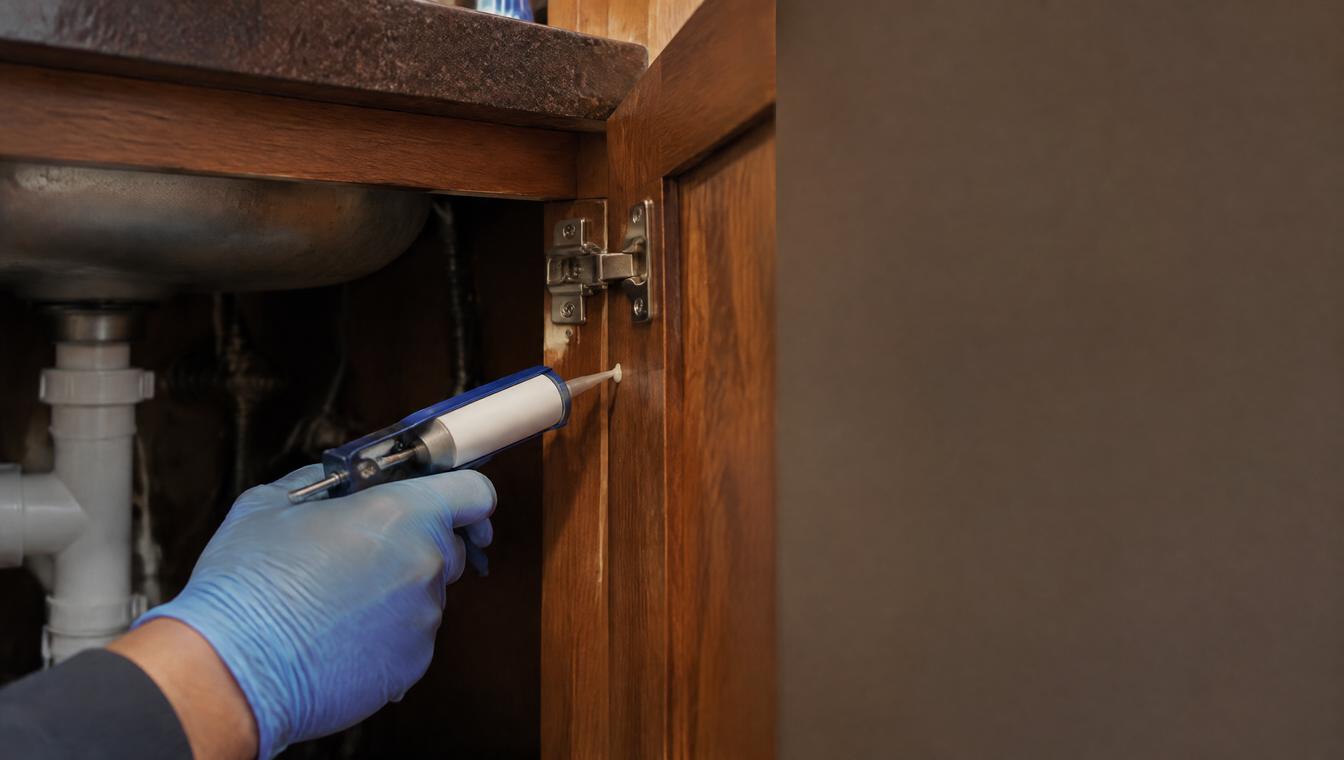
We'd get a clear photo of one and check its size. Small, amber and two stripes, in the kitchen? That's a German cockroach and it won't fade away on its own, so tap Cockroaches and say so. One big brown cockroach on a warm night is more likely a visitor: tidy up, seal the gaps under the sink and watch for a week.
Want someone to look at it?
Tell us what you've seen and your postcode, and a local pest business that handles exactly that calls you to talk it through.