
What a barrier does, and what it doesn't
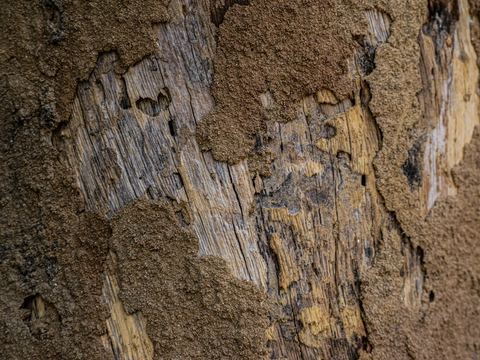
The building code calls it a termite management system. Its job is to stop subterranean termites coming up out of the soil and into the building where nobody can see them. CSIRO says termites build mud tubes over concrete and brickwork, so a barrier still needs someone looking.
It isn't meant to protect everything, either. WA Building and Energy says the code aims at the main structure, not cabinet work or furniture, and CSIRO notes termites can damage flooring, linings and architraves even where the structure is protected.
Physical or chemical?
| Physical barrier | Chemical barrier | |
|---|---|---|
| What it is | Stainless steel mesh, graded stone or metal shields | A termiticide in the soil under and around the building |
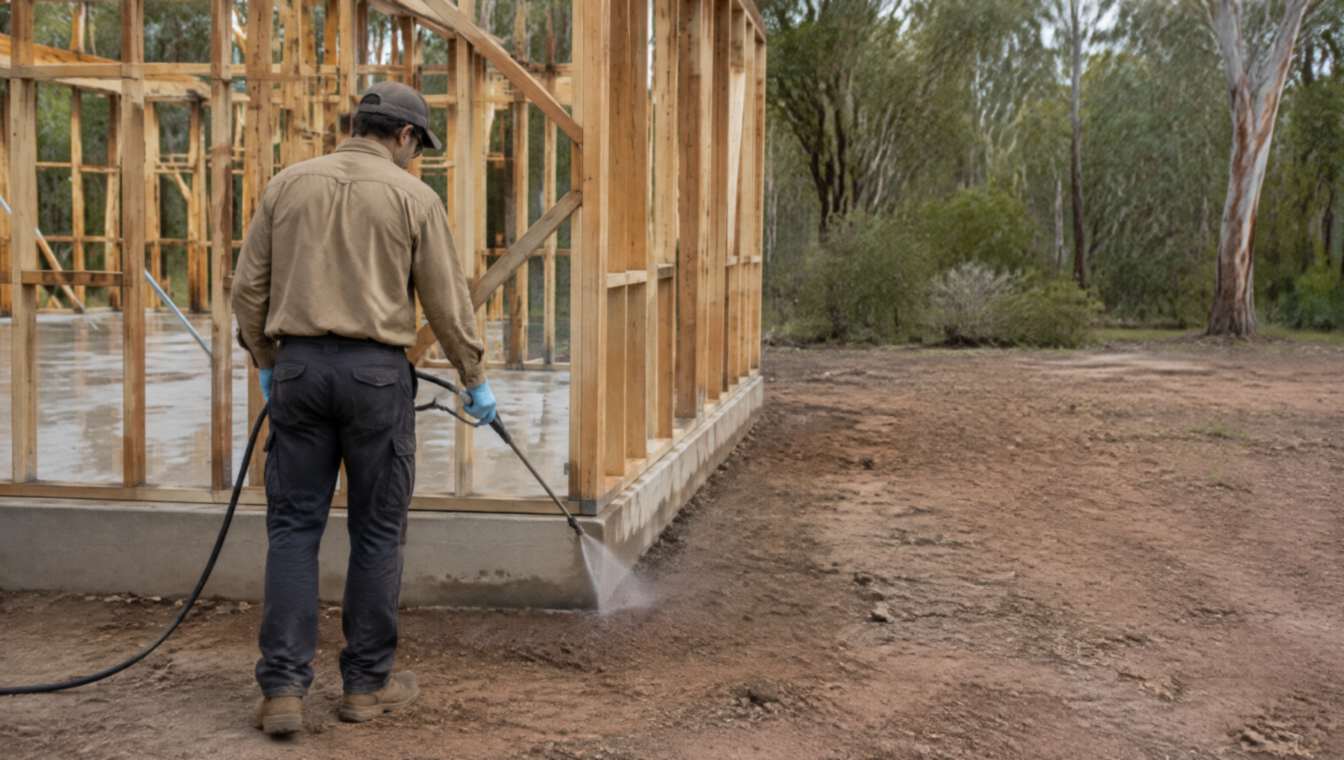
| Where it goes | Under the slab, around the perimeter, and around pipes coming through the floor | Under the slab and along the outside, including around footings and pipes |
| Upkeep | Keep it uncovered and undisturbed, and keep up inspections | Top-ups if the durable notice says so; a reticulation system lets it be re-applied |
| What undoes it | Renovations that cover, cut or bridge it | Paths, garden beds and fresh turf laid over the treated soil |
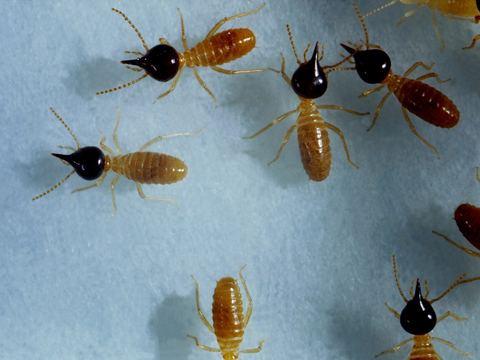
WA Building and Energy says the two are often used together. It also notes that graded stone doesn't suit the tropical north, where the giant northern termite can get through a standard granite chip barrier.
New homes: what the building code asks for
Under the National Construction Code's Housing Provisions Part 3.4, Class 1 and 10 buildings (houses, and outbuildings such as garages and sheds) need a termite management system wherever subterranean termites are known to be a risk. The system must comply with AS 3660.1, or have passed the tests in Section 5 of AS 3660.3.
The QBCC lists the usual choices for a new Queensland home: a monolithic concrete slab, chemicals under the slab and around the building (which also needs a reticulation system for top-ups), graded stone, stainless steel mesh, and termite resistant materials. Your builder may ask you to sign a form confirming you've discussed which one you picked.
The QBCC also says termites are particularly aggressive in North Queensland, and homes built in the north of the state need a higher standard of protection.
Read your house's termite notice first
A house built with a termite system should have a durable notice fixed somewhere prominent, usually the meter box. Under the NCC it names the system and the date it was installed, gives the installer's or maker's advice on future inspections, and for a chemical system shows the life expectancy from the product's register label.
Photograph it: it tells you what you've got, when it may need renewing, and what the inspector should check.
Adding a barrier to an existing home
It can be done, though it's more work than on a new build, and if you've found mud tubes, leave them intact for the inspector rather than scraping them off. WA Building and Energy says retrofitting may mean drilling through slabs, porches, floors and wall footings, as well as treating under the floor.
Where drilling isn't practical, or termites are already active, termite baiting is the other option to talk through. If termites are in the house now, the treatment comes first and the barrier follows.
Keeping a barrier working
The QBCC warns that new paths, garden beds, patios, pergolas, landscaping and even fresh turf can make a termite system less effective. WA Building and Energy says extensions and alterations must not remove an existing barrier, or the access needed to inspect it.
Chemical barriers have a working life; the QBCC tells owners to keep up maintenance such as yearly top-ups where the notice calls for them. Whichever kind you have, it still needs regular inspections.
Who can install one?
In Queensland, installing a particular physical system to the maker's specification sits in the QBCC termite management (physical) licence class. Pre-slab and perimeter chemical treatments sit in the chemical class, and anyone doing that work also needs a pest management licence from Queensland Health.
In NSW, the EPA doesn't require its licence to install a barrier that contains no pesticide. A chemical barrier is pesticide work, and NSW licenses the individual technician who applies it, not the business.
We couldn't confirm the building licence rules for physical barriers in other states, so ask the installer which licence covers the work where you live.
Offered a barrier in your lounge room?
Barriers are often offered straight after an inspection. If the visit turns into a sales pitch, it helps to know that the Australian Consumer Law can treat an agreement as unsolicited even though the consumer invited the business in, when the invitation was for a different service.
Consumer Affairs Victoria says a consumer must be given a written copy of an unsolicited agreement as soon as it's signed, and may cancel it orally or in writing, without penalty, during the cooling-off period. That period runs to the end of the tenth business day after the agreement was made.
Your state's fair trading or consumer affairs office can tell you whether those rules apply to your situation. Our advice is simpler: get the barrier quote in writing and decide on another day.
Looking after the barrier you've got
You can
- Find the durable notice and keep a photo with the house papers.
- Stop garden beds, mulch and soil building up against the walls or over the slab edge.
- Store nothing against the outside walls.
- Talk to the termite inspector before laying pavers, turf or a new garden bed beside the house.
- Keep subfloor vents and weep holes clear.
Leave to a pest business
- Installing a barrier, or retrofitting one to an existing house.
- Drilling and treating soil through slabs, paths or floors.
- Topping up a reticulation system.
- Inspecting the system and reporting on its condition.
Before you choose a system
- Is this a physical or a chemical barrier, and what's the product's full name?
- If the quote names a brand such as Kordon or HomeGuard, what type of system is it?
- Where exactly will it go, and what will need drilling or lifting?
- What will the durable notice say about its life expectancy and inspections?
- What maintenance does it need, and how often?
- Which licence or QBCC class covers you to install it in this state?

How we'd decide
On a new build, we'd ask the builder which system is going in and see the notice before handover. On an existing house, we'd get an inspection first, then compare a barrier with baiting for that house, both in writing. Tap Termites with your postcode.
Want someone to look at it?
Tell us what you've seen and your postcode, and a local pest business that handles exactly that calls you to talk it through.