
If you've found something
Leave it exactly as it is
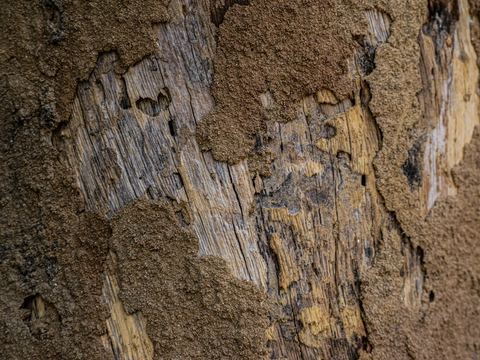
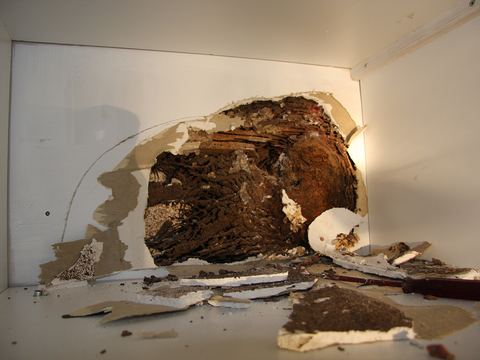
CSIRO says to take care not to disturb termites you find, because several control options depend on finding them still active. Don't spray it, poke it or pull the timber out.
Photograph it and note where
A skirting board in the bathroom, a door frame, a pier in the subfloor, a fence post near the house: the location helps the inspector plan the visit.
Tap Termites with your postcode
Say whether you've seen damage, mud, wings or live termites. Photos help.
Termites on the Gold Coast
Which termites attack houses here
Business Queensland names Coptotermes acinaciformis and Schedorhinotermes species as the subterranean termites found throughout Queensland that build enclosed mud galleries to get into houses. Both do their damage out of sight.
A wet subtropical summer
South East Queensland gets most of its rain in summer and autumn. Damp soil against the slab, a leaking downpipe or an overflowing gutter is the kind of spot termites look for, so after a run of storms is a good time to check your drainage.
Swarms around the porch light
Winged termites leave the nest during humid periods in the warmer months, often at dusk, CSIRO says. A swarm at an outside light means a colony is somewhere nearby, not necessarily in your house.
The signs that matter most
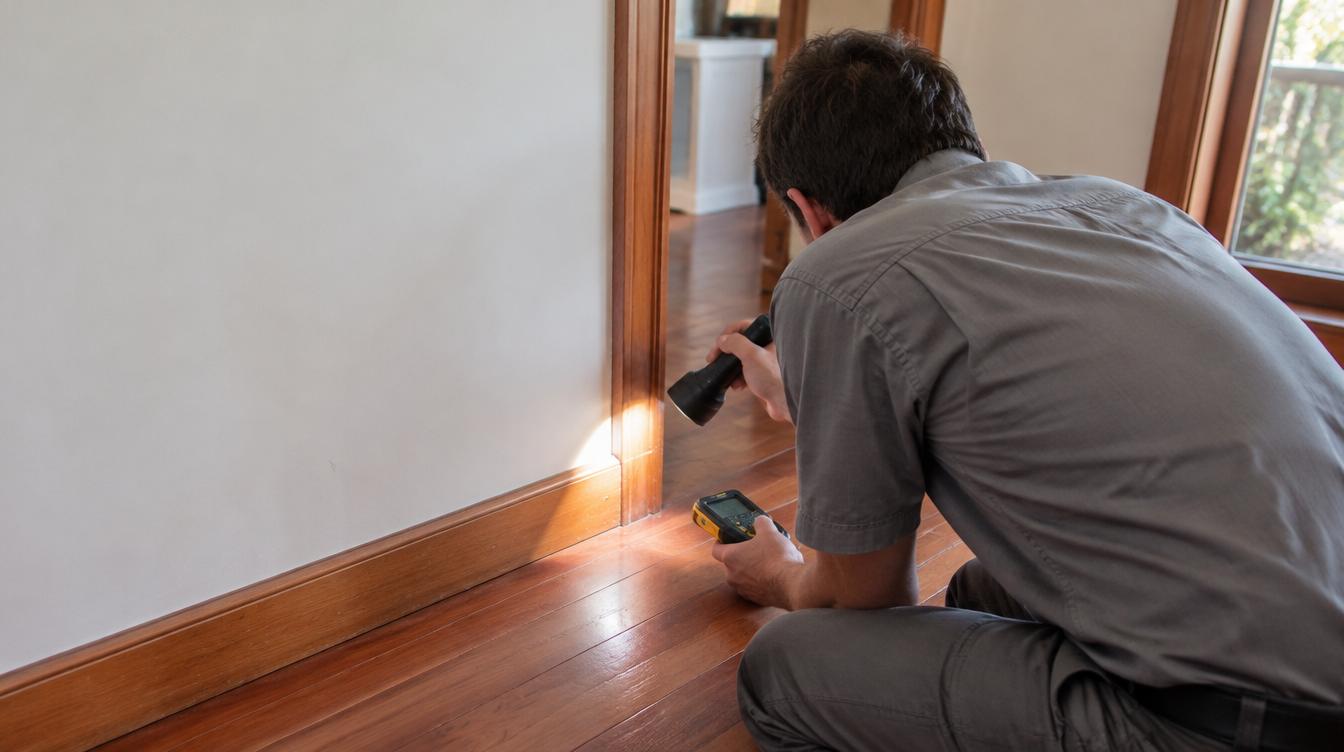
- Skirting boards, door frames or architraves that sound hollow or dull when tapped.
- Paint that bubbles or blisters for no obvious reason.
- Thin mud tubes running up the slab edge, piers, stumps or brickwork.
- Timber that looks sound but gives way, because termites leave a wafer thin outer skin.
- Discarded wings on window sills after a humid evening.
Damage first, wings last
In a CSIRO survey of homes that had termites, 86% of owners noticed them through damaged wood, 34% through mud tubes and only 8% through wings. So don't wait to see a flying termite before acting on soft timber or mud.
Two licences in Queensland
Queensland splits termite work between two regulators. Queensland Health issues the pest management licence, endorsed for timber pest control, that anyone needs to apply pesticides for a fee. The QBCC licenses termite management on buildings in two classes: chemical, which covers perimeter treatments and inspecting and reporting on termite systems and infestations, and physical, which covers installing barrier products to the maker's specification.
Anyone doing QBCC chemical termite work must hold the Queensland Health licence as well, and QBCC licensees have to show their licence number in their advertising. It's fair to ask any termite inspector which licences and endorsements they hold, and for the numbers.
What the job usually involves
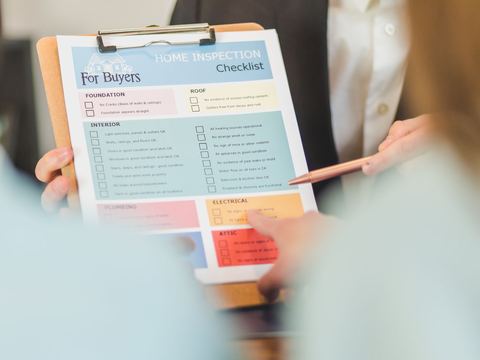
It starts with an inspection: the outside of the house, the subfloor, the roof void and each room, looking for live termites, damage, moisture and gaps in any existing protection. Newer homes should have a durable notice, often in the meter box, showing the termite system installed, when, and how often it should be inspected.
If termites are active, expect a written proposal that deals with the colony first and then protects the house, with a chemical treatment around the building, a baiting and monitoring system, or both. The job gets bigger with how far the activity has spread, how hard the subfloor or roof void is to reach, paving or garden beds over the slab edge, and timber a builder will need to replace.
What to ask a Gold Coast termite inspector
- Which Queensland Health endorsements and QBCC class do you hold, and what are the numbers?
- Will you get into the roof void and the subfloor, and what happens if part of it can't be reached?
- What does the meter box notice say about the system and its inspection schedule?
- If you find termites, which product would you use, and can I have its full name in writing?
- What does any warranty cover, and what do I have to keep doing for it to stay valid?

Our take on termite inspections and treatment on the Gold Coast
If you've never had one, book a termite inspection and insist on the written report. If you've already found damage, leave it untouched and tap Termites today; the colony won't wait for a convenient week.
Want someone to look at it?
Tell us what you've seen and your postcode, and a local pest business that handles exactly that calls you to talk it through.