If someone's been stung
Call 000 for noisy breathing, a swollen tongue or throat, wheeze or a persistent cough, a change in voice, dizziness or collapse. If they carry an adrenaline autoinjector, use it straight away, then call 000. healthdirect says a child with 5 or more stings, or an adult with 10 or more, should see a doctor straight away. For first aid advice, ring the Poisons Information Centre on 13 11 26.
Stingers on the Gold Coast
Fire ants sting too
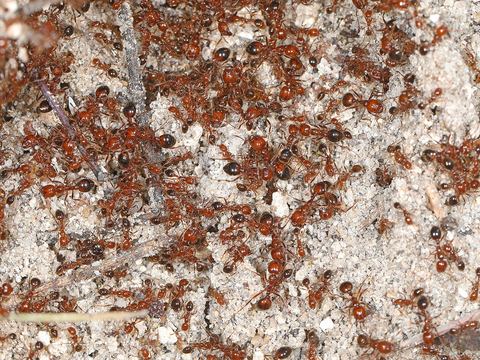
If the attack came from small coppery brown ants boiling out of a loose mound in the lawn, it may be fire ants, which swarm and sting repeatedly when the nest is disturbed. On the Gold Coast they're reported to Biosecurity Queensland, not booked as a pest job, and the council treats public land in the suppression zone but not private yards.
Swarms in spring
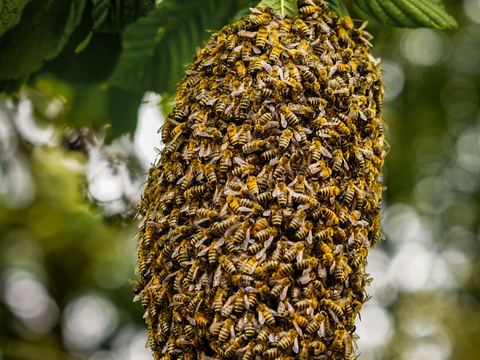
In Queensland, bees swarm naturally from spring to early summer, and a swarm left alone is usually placid. For a cluster on a branch or fence, ask a local beekeeping club; bees moving into a wall, roof or subfloor are a pest business job.
Odd looking bees
Suspected Asian honey bees must be reported to Biosecurity Queensland within 24 hours. They're about 10 mm long, smaller and less hairy than European honey bees, with sharp stripes.
Which wasp is it?
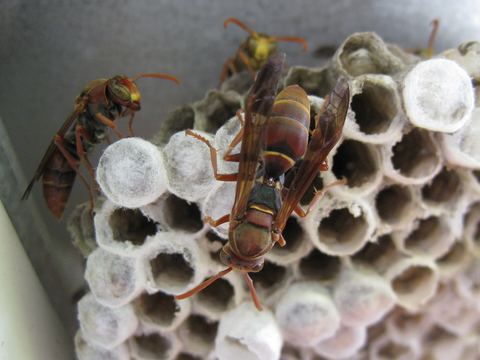
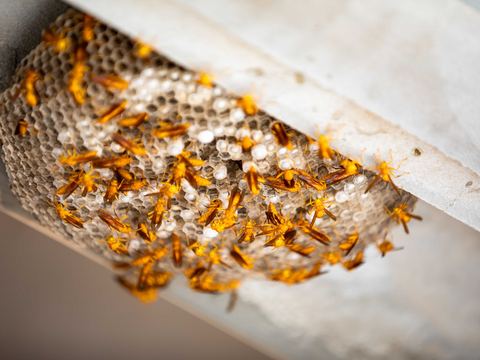
Paper wasps hang an open nest like an upside down cone of six sided cells under eaves, pergolas and branches, usually golf ball to side plate size. The Australian Museum puts the wasp at about 2.2 cm, slender, with a very narrow waist, a mainly black body with yellow or orange bands, and brown tinted wings. They let their back legs dangle as they fly.
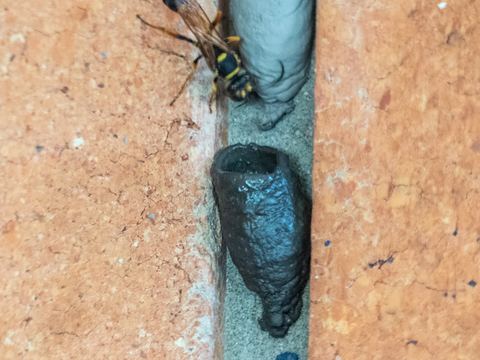
Mud daubers, about 3 cm long, build hard mud cells in sheltered corners of houses and sheds and stock them with paralysed spiders for their young. They can sting, but attacks are rare. The native yellow paper wasp is often mistaken for the European wasp; Victoria's Health department notes that mud nests are never European wasp nests.
Paper wasp or mud dauber?
| Paper wasp | Mud dauber | |
|---|---|---|
| Size | About 2.2 cm, slim | About 3 cm |
| Nest | Open comb of papery cells | Sealed cells of mud |
| Where | Under eaves, branches, pergolas | Sheltered walls, sheds, overhangs |
| Temper | Defends the nest if disturbed | Attacks are rare |
| Usually a job? | Yes, near doors, paths and play areas | Often not |
Have these ready for the pest business
- How high the nest is and what's under it: a path, a door, a pool gate.
- Whether it's paper, mud, or invisible because the wasps disappear into a gap.
- Anyone in the house with a known sting allergy.
- A photo taken from well back, only if you can get one without going close.
While you wait
You can
- Shut the nearest door or window and use a different one.
- Move the dog's bowl, toys and outdoor cushions away from beneath the nest.
- Cover sweet drinks and food outside.
Leave to a pest business
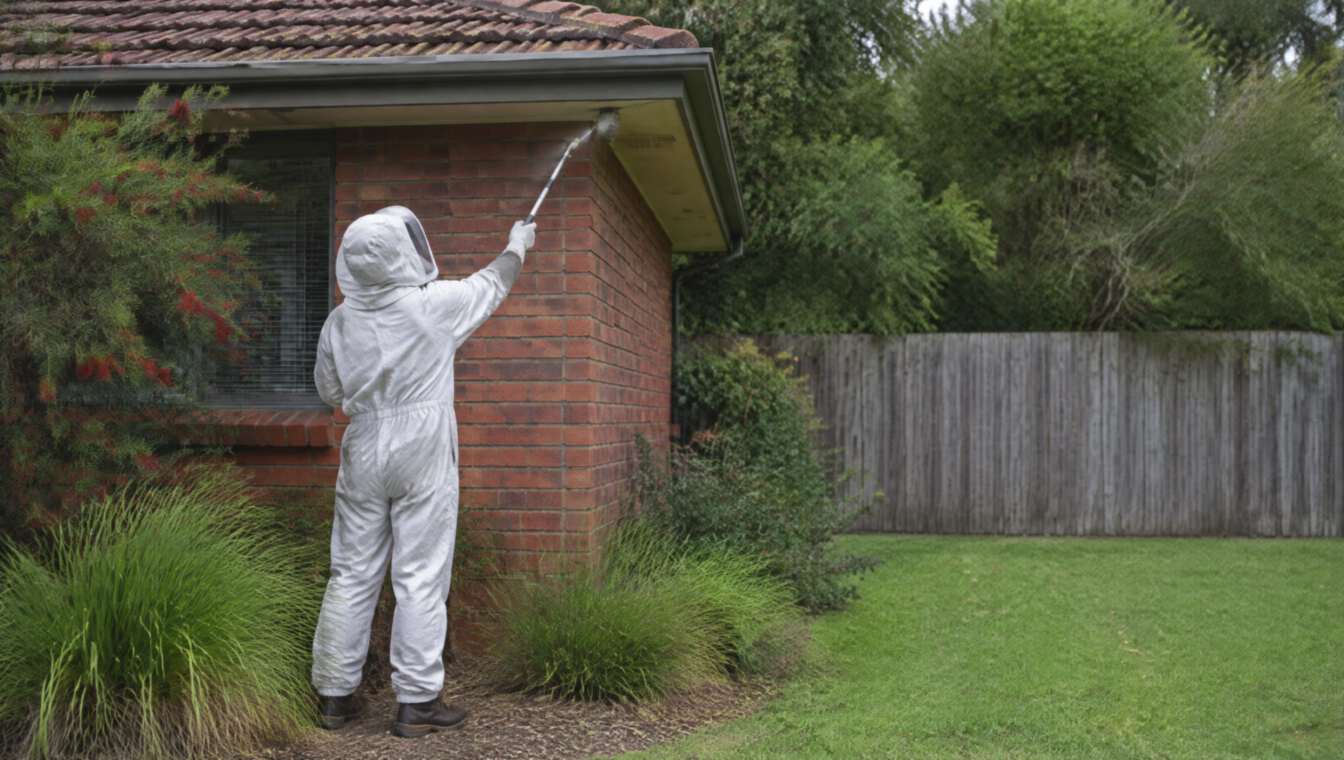
- Treating the nest, especially above head height or over a doorway.
- Anything inside a wall, roof or subfloor.
- Taking the nest down once the colony is dead, if that's part of the quote.

Where we'd start with wasp nest removal on the Gold Coast
Leave the fly spray in the cupboard, keep the area clear, and tap A wasp nest with where it is. If the stingers turn out to be ants coming out of the lawn, report them to Biosecurity Queensland instead.
Want someone to look at it?
Tell us what you've seen and your postcode, and a local pest business that handles exactly that calls you to talk it through.