First, keep clear
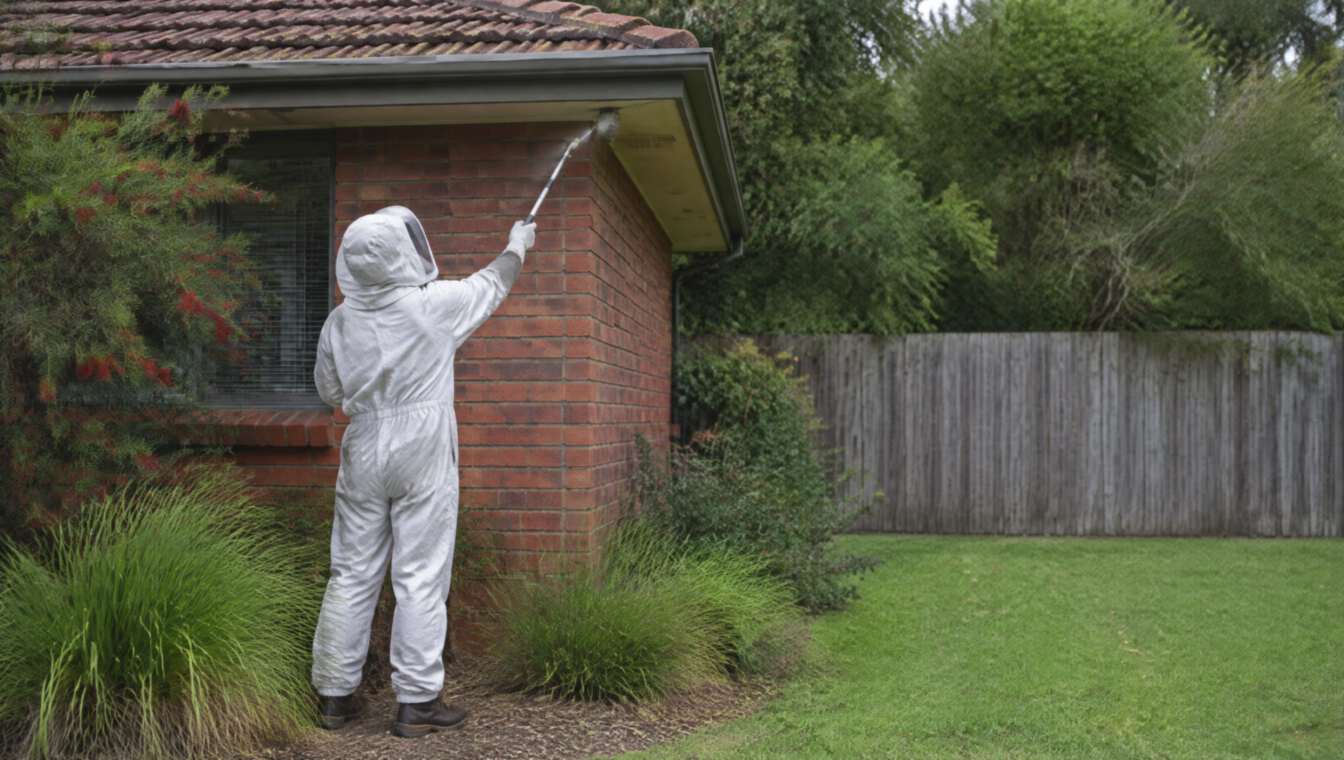
Keep children and pets away and don't pour anything down the hole, dig at it, block it or spray it; European wasps defend the nest and can sting more than once. If someone stung has noisy breathing, a swollen tongue or throat, wheezing, dizziness or collapses, use their adrenaline autoinjector if they have one and call 000.
What's different in Melbourne
Four in five nests are in the ground
Victoria's Department of Health puts about 80% of European wasp nests in the ground, with most of the rest inside buildings: roof spaces and wall cavities. The nest itself is usually hidden. What you see is a steady flight path into one hole in the lawn, a garden bed or a gap in the brickwork.
The nest may be next door
European wasps forage up to about half a kilometre from home, the department says. Wasps at your outdoor table don't prove the nest is on your block; a busy entrance does.
Autumn is peak season
A queen starts the nest alone in spring, it grows through summer, and in autumn the workers raise several hundred new queens and males. Over winter the males die off and the new queens hibernate. So late summer and autumn bring the biggest nests and the most wasps around barbecues and bins.
Some nests last more than a year
In Australia's warmer climate a nest can keep going over several seasons and grow past 100,000 wasps. A nest that seemed small last year may not be small now.
European wasp or paper wasp?
| European wasp | Paper wasp | |
|---|---|---|
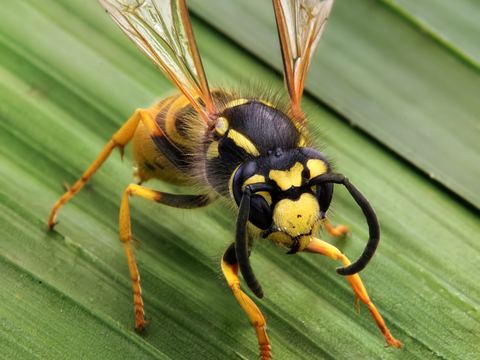
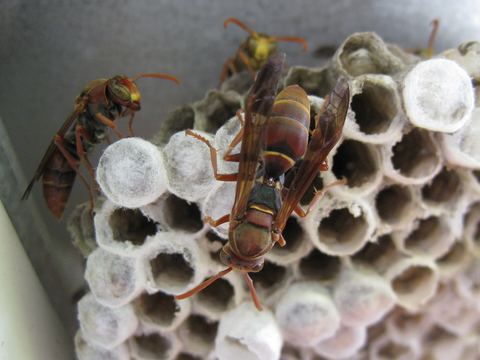
| Body | Stout, bright yellow and black bands, all black antennae | Longer and thinner, mostly black or brown with some yellow or orange bands, orange-brown antennae |
| Flight | Fast, legs tucked in, generally doesn't hover | Back legs dangle, often hovers over lawns and bushes |
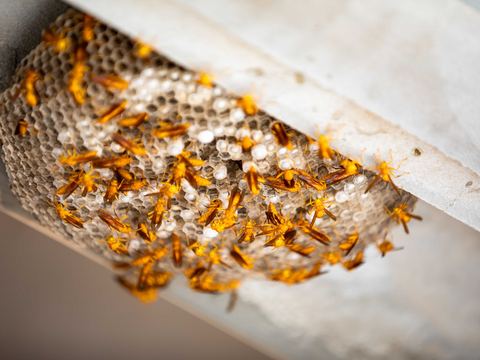
| Nest | Hidden in the ground or a cavity, papery, can reach basketball size | Open, upside down cone of cells under eaves or branches, golf ball to side plate size |
| Mood | Defends the nest hard, can sting more than once | Less aggressive, but stings if the nest is disturbed |
Paper wasps near the house
Native paper wasps feed caterpillars to their young, which helps in the garden, so a nest at the far end of the yard can often stay. Victoria's Department of Health still says they shouldn't be allowed to nest in or near the home, because they'll attack if the nest feels threatened. One above a door or a clothesline is worth having dealt with.
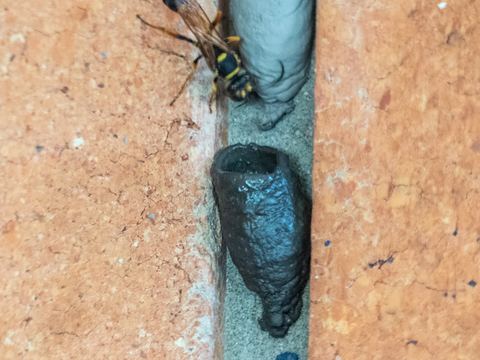
Mud nests are neither: they belong to mud wasps, which build with clay, not wood pulp.
Have these ready for the pest business
- Where the entrance is: lawn, garden bed, wall, eaves or roof line.
- How far it is from doors, paths, the clothesline and where kids play.
- Whether anyone in the house is allergic to stings.
- A photo of the entrance, taken from well back.
- Access: a locked side gate, a dog, or a roof that needs a ladder.
Questions before they start
- What product will you use, and what's its full name?
- How long should we stay away from the area afterwards?
- For a nest in a wall, will the entry be sealed, and when?
- What if wasps are still flying in and out a few days later?

If it were our yard in Melbourne
We'd find the entrance from a distance, keep everyone well back, and tap A wasp nest with where it is. We'd also mention any sting allergy in the house straight away, because it changes how urgent the job is.
Want someone to look at it?
Tell us what you've seen and your postcode, and a local pest business that handles exactly that calls you to talk it through.