Keep clear of the nest
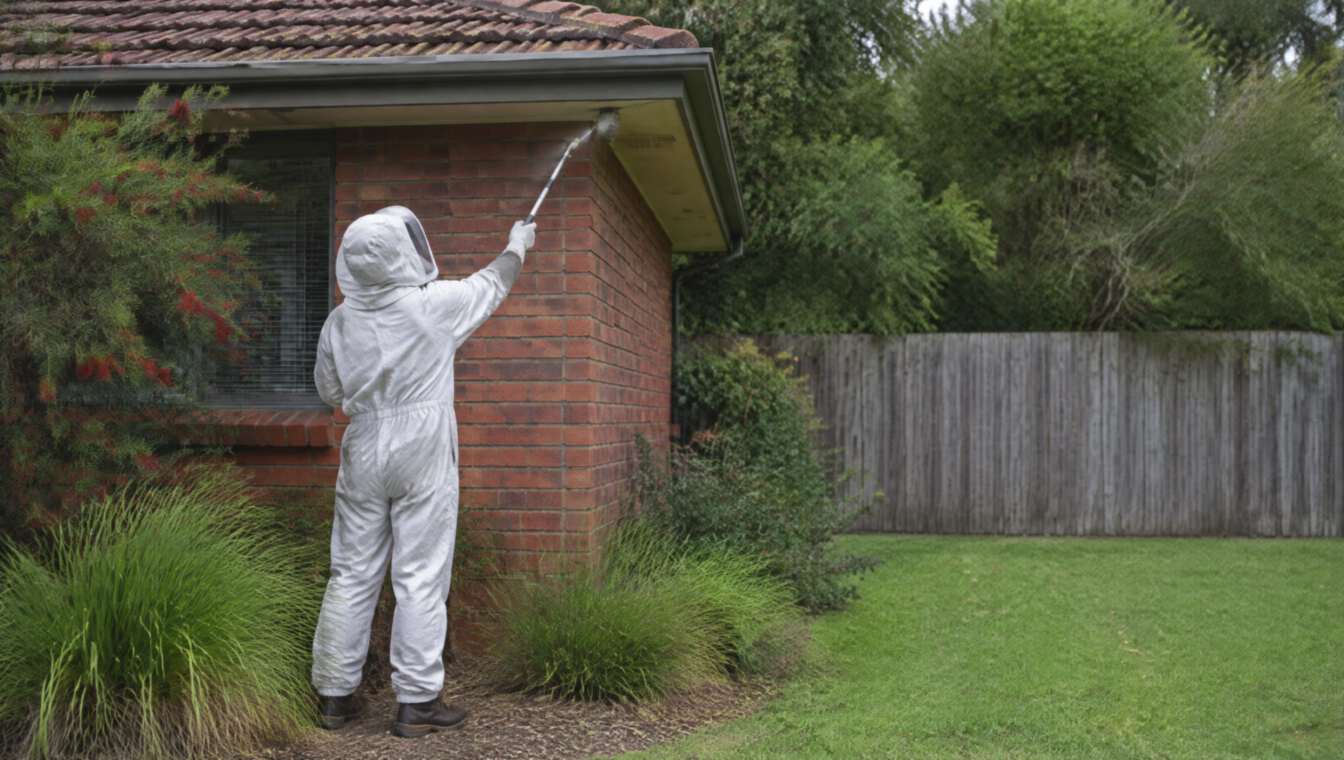
Don't spray, block or poke at the entrance: SA's environment department says European wasps are highly aggressive once disturbed, and they can sting more than once. Call 000 if someone stung has noisy breathing, a swollen tongue or throat, a wheeze or persistent cough, a change in voice, dizziness or collapse.
Wasps and Adelaide councils
Very common here
The City of Adelaide says European wasps are very common across the city, and nest in vents, building cavities, ceilings, trees and the ground. Left alone they aren't aggressive, it adds; the trouble starts when someone gets close to the nest.
West Torrens arranges removal
In the City of West Torrens, the council arranges removal of European wasp nests on council land or private property in its area. It says European wasps are the only wasps it pays to remove, so a paper wasp nest there is left to the owner.
The City of Adelaide doesn't, on private land
The City of Adelaide does not currently destroy European wasp nests on private property and refers residents to a pest controller. Nests in public areas can be reported to it with a photo or the exact location.
Other councils
Adelaide has many councils, and their wasp rules differ. A quick look at your own council's website before booking can save a job.
Which wasp is it?
| European wasp | Paper wasp | Mud wasp | |
|---|---|---|---|
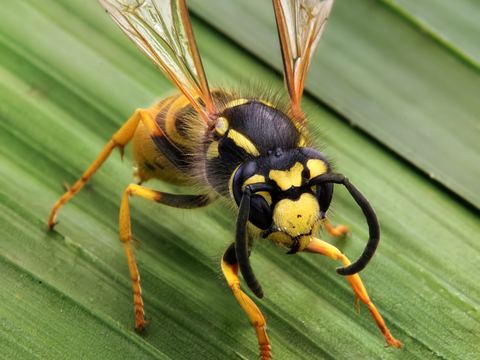
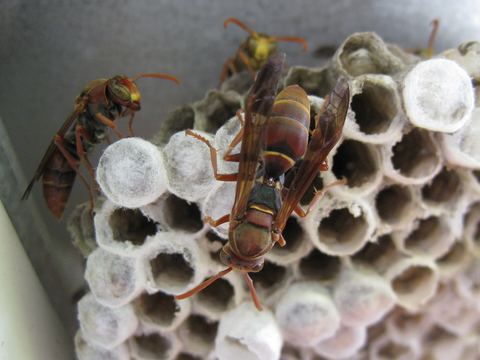
| Look | Stout, bright yellow and black bands, black antennae | Slender, mostly black with some yellow or orange bands, back legs dangling in flight | Larger, often seen collecting mud and water |
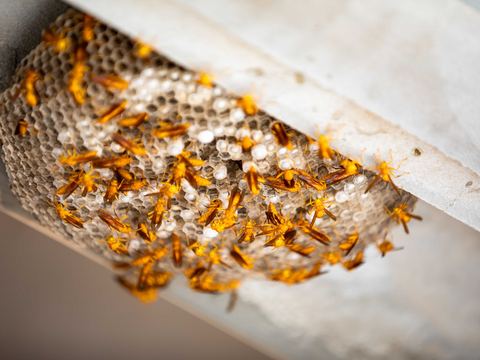
| Nest | Hidden: mostly in the ground, or in a wall or roof cavity | An open, upside-down cone of cells under eaves or branches | Mud cells in sheltered corners |
| Stings | Defends the nest hard, stings repeatedly | Stings when it feels its nest is threatened | Seldom stings people, the City of Adelaide says |
Finding a European wasp nest
Victoria's Department of Health says about 80% of European wasp nests are in the ground and most of the rest are inside buildings. The City of Adelaide's tip is to watch the wasps: they generally fly in a straight line, so the flight path points back toward the nest. Watch from well away, and remember the nest may be over the fence, since workers forage up to half a kilometre from home.
Colonies start in spring with one queen and grow through summer, so a nest found in late summer or autumn is usually at its biggest.
Make your yard less inviting
- Pick up fallen fruit and don't leave food scraps out.
- Cover pet food and food on the outdoor table.
- Use bins with tight-fitting lids.
- Cut back easy water sources, such as dripping taps and open containers.
Before the technician starts
- Is it a European wasp nest, and does my council handle those?
- Which product will you use, and what's its full name?
- How long should people and pets stay away from that area?
- If the nest is in a wall, will you seal the gap afterwards, and when?

Where we'd start with wasp nest removal in Adelaide
We'd check the council's website first, because in some Adelaide areas the council covers European wasp nests. If yours doesn't, tap A wasp nest and say exactly where it is. A ground nest by the clothesline or a gap above the back door is worth treating soon.
Want someone to look at it?
Tell us what you've seen and your postcode, and a local pest business that handles exactly that calls you to talk it through.