First, put distance between you and it
Keep everyone back from the nest and the line the wasps fly along, and don't spray, block or poke at it. Call 000 if a stung person wheezes, has a swollen tongue or throat, changes voice or collapses. healthdirect says to see a doctor straight away if a child has 5 or more stings, or an adult 10 or more.
European wasps are part of Sydney now
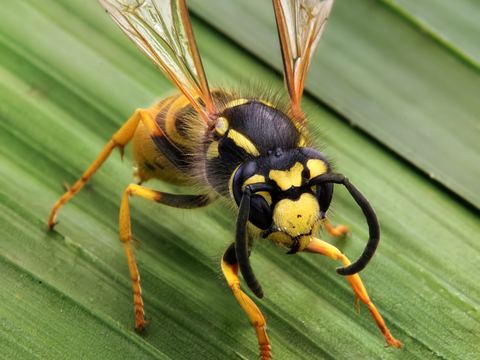
The Australian Museum says European wasps are firmly established in metropolitan Sydney. A single queen starts a colony in spring, the nest grows through summer, and new queens and males hatch in autumn, which is when wasps seem to be everywhere around the barbecue.
They're more aggressive than bees, can sting more than once, and are drawn to meat, sweet food and drink. In Australia's warmer climate a nest can carry on over several seasons and grow beyond 100,000 wasps.
Sydney specifics
Beyond the city too
The Australian Museum also records European wasps in the Blue Mountains, Bowral and Moss Vale, so a weekender in the hills isn't exempt.
It might be the neighbour's nest
European wasps forage up to half a kilometre from the nest, says Victoria's Department of Health, so wasps at your outdoor table may live a few doors away.
Unit blocks can move fast
Common area pest work in a NSW residential complex usually needs 5 working days' notice, but emergency work on wasps can go ahead sooner if a notice is displayed and records are kept.
Mud nests are something else
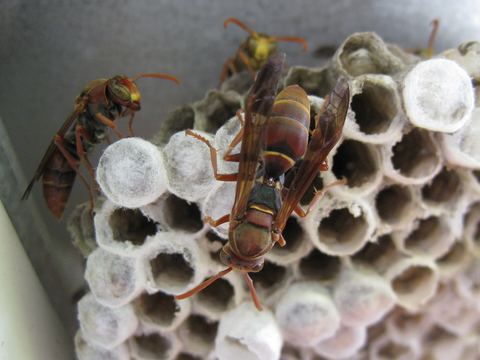
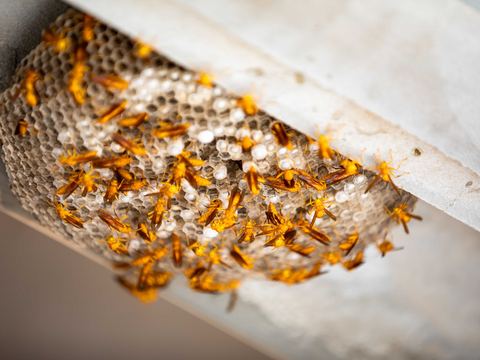
European wasp nests are papery, made from chewed wood pulp. A nest made of mud belongs to a different wasp; see our mud wasp page.
Tell the pest business
- Whether the wasps go into the ground, a wall, the roof, or hang from an open comb.
- How close the nest is to doors, the pool gate, a clothesline or a play area.
- Whether anyone at home has had a serious reaction to a sting.
- In a unit block, who manages the common property.

Where we'd start with wasp nest removal in Sydney
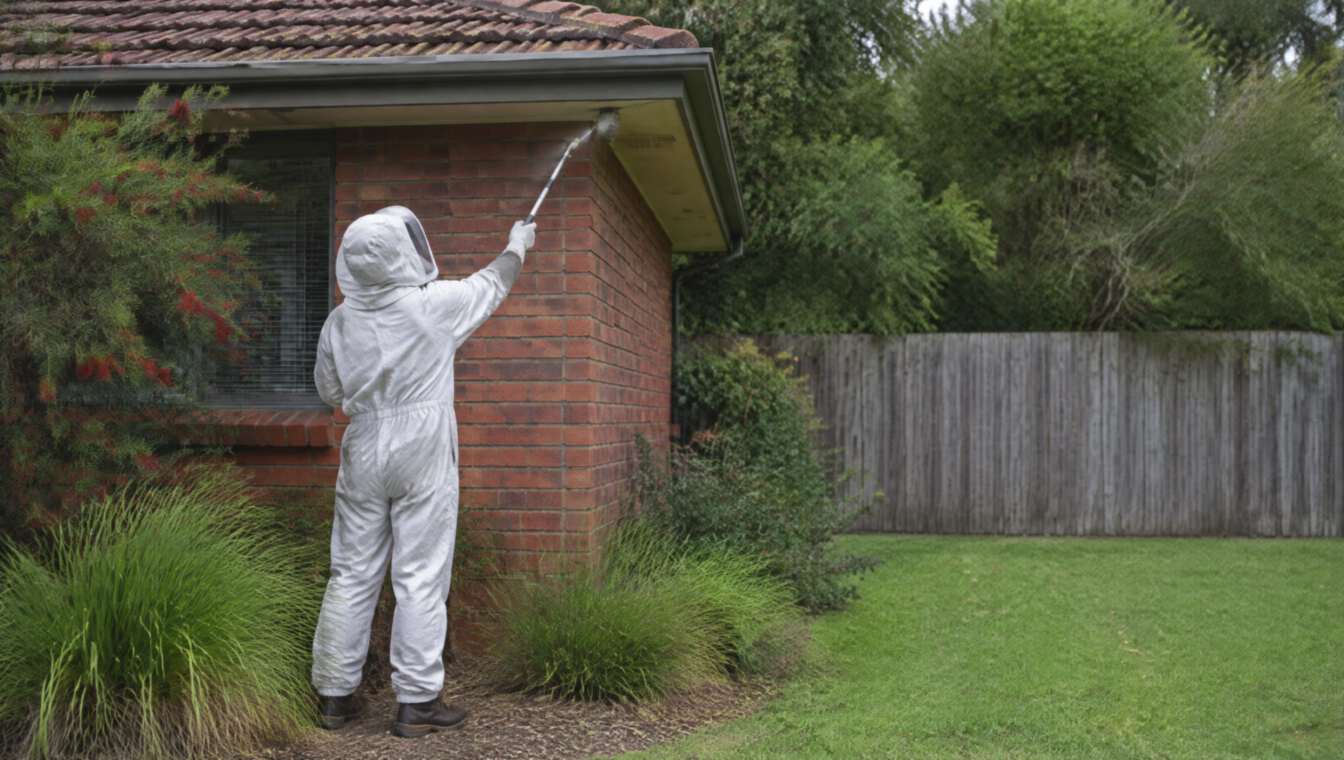
Watch from a window to see where the wasps fly in, note it, and tap A wasp nest. Don't pour or spray anything into a ground nest; leave the colony undisturbed for the technician.
Want someone to look at it?
Tell us what you've seen and your postcode, and a local pest business that handles exactly that calls you to talk it through.