Which bird is it?
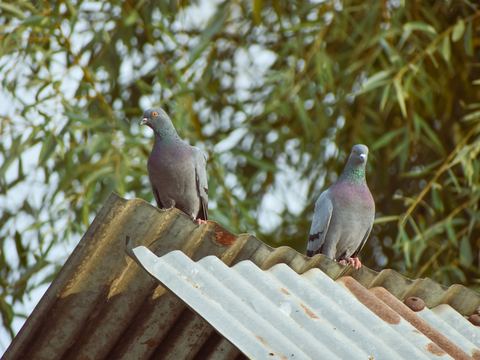
Feral pigeons, also called rock doves, roost on ledges and rooftop equipment. Bland Shire Council says they come from Europe, Africa and Asia and live in large numbers in Australian cities and towns. Their nests are simple, often a few twigs on a ledge, a beam, an air conditioner or a window sill, and the dry gap under a rooftop solar panel suits them just as well.
Common mynas are brown with a black head, a yellow bill and yellow legs, and flash white wing patches in flight. The Australian Museum says their favoured nest sites are in the walls and ceilings of buildings, roof voids serve as communal roosts, and they breed from October to March along the east and south-east coasts.
If it's a native bird nesting, check the rules before anything is blocked. In NSW all native birds are protected, and harming one can need a licence.
Why it's worth doing
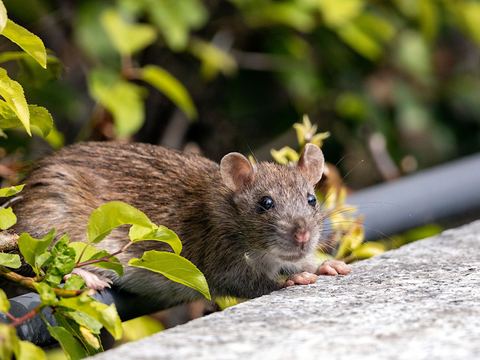
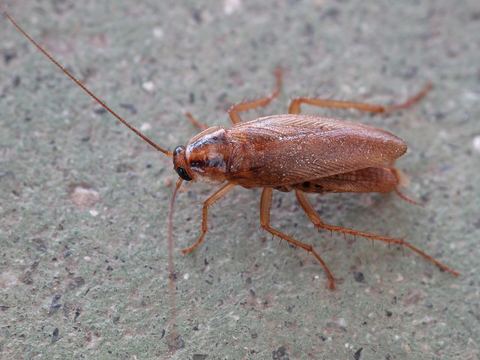
Bland Shire Council's list of pigeon problems is a good summary: corrosive droppings that damage buildings, debris that blocks gutters and drains, damage to air conditioners and rooftop machinery, bird mites, odour and noise. It adds that pigeons can attract cockroaches and rats.
Under solar panels, nests and droppings pile up out of sight, so the cooing and scratching overhead is often the first clue.
What bird proofing usually involves
It starts on the roof: where the birds land, roost and nest, and every gap they use to get under the panels or into the roof void.
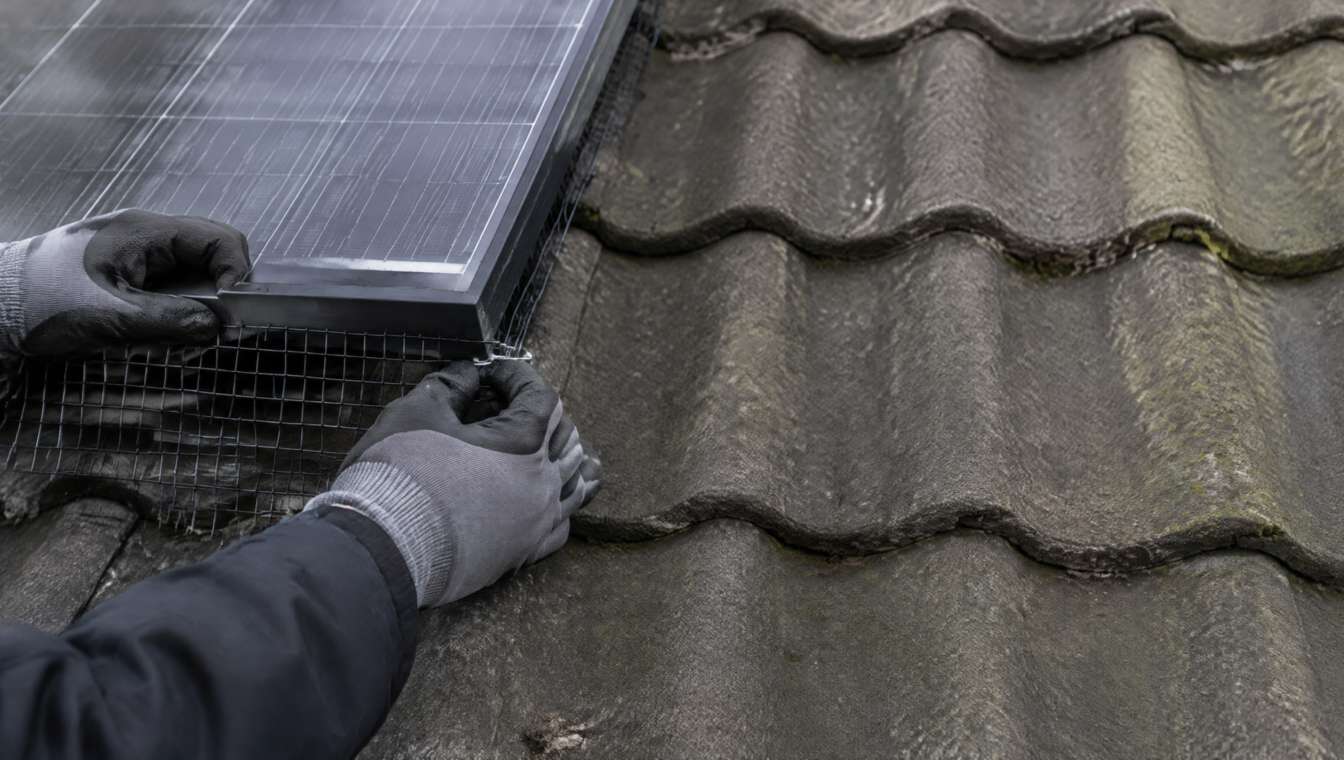
Nests and droppings are cleared, then access is closed. For solar panels that usually means a mesh guard fitted around the edge of the panels so birds can't get underneath. Elsewhere it can be netting, wire coils, spikes or gel on ledges, gutter guards, and sealing open eaves and gaps into the roof.
Done badly, proofing traps birds. Bland Shire Council warns that poorly designed or maintained pigeon proofing can trap birds fatally, and says it should be installed by a professional. Ask how they'll make sure no bird is shut in.
What changes the size of the job
The number of panels and how they're laid out, the height and pitch of the roof, how much nesting and droppings there are to clear, and whether birds are also inside the roof void all count.
Neighbours count too. Bland Shire Council says pigeons are very persistent, and unless nearby properties are proofed as well, the birds simply move the problem around.
On the ground, and up top
You can
- Stop feeding birds, and bring in pet bowls and bird feeders. Bland Shire Council's advice is never to feed feral pigeons.
- Keep bins lidded and clear food scraps from outdoor areas.
- Photograph the roof and panels from the ground, and note where the birds come and go.
- Talk to neighbours with the same problem about proofing at the same time.
Leave to a pest business
- Anything on the roof. Don't climb up to pull nests from under the panels yourself.
- Clearing nests and droppings from under the panels and in gutters.
- Fitting mesh, netting, spikes or gel so no bird ends up trapped.
- Closing gaps into the roof void once the birds are out.
Questions before you agree
- Which birds are these, and are any of them native?
- How will you check no bird is left trapped behind the mesh or netting?
- Will you clear the nests and droppings from under every panel first?
- What will you fit, and how is it attached without damaging the panels?
- Will you come back to check it's holding?

How we'd play it
We'd stop any feeding, watch for a few days to see where the birds land and get in, and photograph it from the ground. Then tap Possum or birds and say whether it's the solar panels, the roof or both. Clearing nests without closing the gaps just invites the birds back.
Want someone to look at it?
Tell us what you've seen and your postcode, and a local pest business that handles exactly that calls you to talk it through.