Which cockroach is it?
| Size and colour | Where it lives | |
|---|---|---|
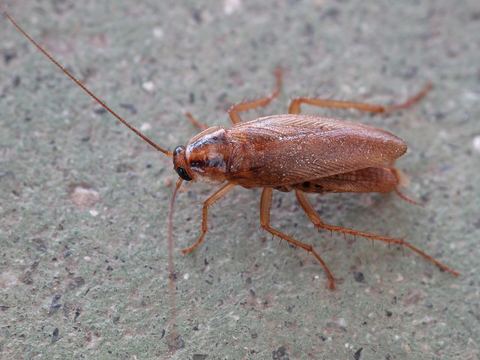
| German | 12 to 15 mm, amber, two dark stripes | Kitchens: cupboards, under sinks, in appliances |
| Brownbanded | 10 to 15 mm, pale glossy brown, pale bands | Warm spots near ceilings, in upholstered furniture and appliances |
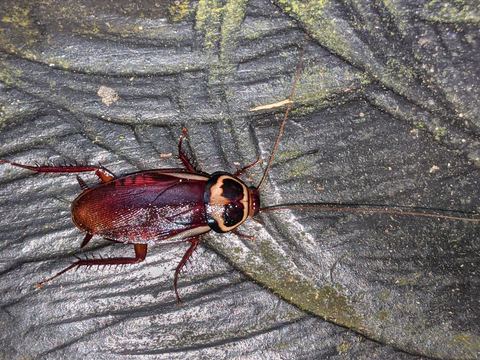
| American | 35 to 40 mm, reddish brown, pale yellow border on the thorax | Roofs, walls and subfloors, sewers, grease traps, rubbish |
| Australian | About 35 mm, dark brown, yellow markings on the thorax and wing edges | Outside around shrubs and trees, sometimes in wall and roof voids |
| Smokybrown | About 30 mm, shiny dark brown to black, flies short distances in warm weather | Sheds, wall and roof voids, mulch, drains |
| Oriental | 20 to 25 mm, dark brown to black, females with short wings | Cool, damp places: leaf litter, damp subfloors, drains |
Most cockroaches aren't pests at all
About 450 cockroach species live in Australia, ranging from 3 mm to 70 mm, and the Australian Museum counts only five as pests. Our table shows the six the Victorian Department of Health describes. Household pest species are almost never native; they're introduced. Most native cockroaches avoid people and live in vegetation, leaf litter and soil, and some are brightly coloured. A lone native wandering in from the garden isn't a sign of anything.
How to get rid of the small indoor kinds
German and brownbanded cockroaches live and breed inside, so the treatment happens inside too, and it often takes more than one visit. They arrive in things you carry in: cardboard boxes for the German, furniture and luggage for the brownbanded. Our German cockroach page has the detail.
How to get rid of the big outdoor kinds
American, Australian, smokybrown and oriental cockroaches mostly come in from outside, so the job is about where they shelter: subfloors, wall and roof voids, drains, grease traps and mulch. Sealing gaps, fixing damp and clearing garden litter from the walls do a lot, and a treatment targets those outdoor and void spaces rather than your kitchen cupboards.
The Victorian Department of Health adds that American cockroaches tend to live indoors in cool regions and outdoors in warm regions, so where you are changes the answer. Australian cockroaches are most common in warm subtropical to tropical places.
Do cockroaches make people sick?
The Australian Museum is careful here: cockroaches may spread disease-causing organisms, it says, but there's very little evidence this actually happens. It also says many introduced cockroaches carry Salmonella, and that pest species living in sewers and around rubbish can carry contaminated material into homes. They can trigger strong allergic reactions in some people. Keep them off food and benches, and don't lose sleep over a single sighting.
Start here, whichever kind it is
You can
- Keep food sealed and benches and floors clean overnight.
- Fix dripping taps, and dry out leaks under sinks.
- Seal gaps around pipes, doors and vents.
- Keep drains clear, and rubbish bins lidded and away from doors.
- Pull mulch and leaf litter back from the walls.
Leave to a pest business
- Confirming which cockroach you've got.
- Treating inside kitchens, or subfloors, roof and wall voids.
- Follow-up visits for German cockroaches.
Before you say yes to a treatment
- Which cockroach do you think this is, and where is it living?
- Where will you treat, inside, outside or both?
- What's the product's full name, and any time we need to stay out?
- Will it need a follow-up visit, and what will that cover?

How we'd handle it
One big cockroach that came in from the garden isn't a reason for a treatment; sweep it out and check your door seals. Small ones in the kitchen are the opposite: they rarely sort themselves out. Note the size and where you saw it, then tap Cockroaches. Our cockroach control page explains the job.
Want someone to look at it?
Tell us what you've seen and your postcode, and a local pest business that handles exactly that calls you to talk it through.