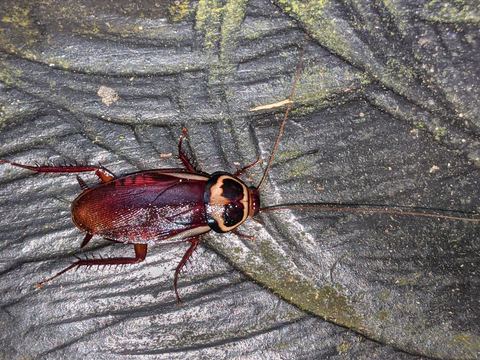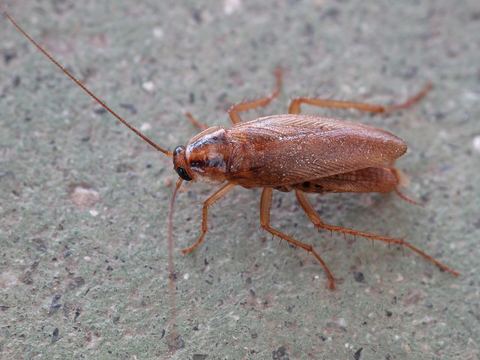
How to identify a German cockroach
This is the smallest of the pest cockroaches: amber coloured, 12 to 15 mm when grown, with two dark stripes running lengthways. It has wings that reach past the abdomen, but the Victorian Department of Health says it doesn't appear to fly.
Look for a female carrying a small capsule at the end of her body. That's her egg case, and each one holds 30 to 48 eggs.
German or brownbanded?
| German cockroach | Brownbanded cockroach | |
|---|---|---|
| Size | 12 to 15 mm | 10 to 15 mm |
| Markings | Amber, with two dark stripes along the body | Pale glossy brown, with very pale bands across it |
| Where it lives | Kitchens: under sinks, in cupboards, drawers and appliances | Warm spots near the ceiling, behind wall decorations, in upholstered furniture |
| How it arrives | In cardboard boxes and crates of food and drink | In furniture, luggage and household items |
Signs in the kitchen
- Droppings and dark smears in cupboards and drawers.
- Cast skins and empty egg cases, often near the sink or stove.
- Groups of them near warm spots, such as a hot water unit, the dishwasher or the back of the fridge.
- Cockroaches inside electrical appliances.
- Any you see in daylight: the Victorian Department of Health says day activity often points to a large infestation.
Why they're so hard to shift
The Australian Museum calls the German cockroach the hardest pest cockroach to get rid of. Part of that is breeding speed: one female can produce up to 20,000 young a year. Part is that they live close together in warm, hidden spots, right inside the appliances and cupboards you use every day.
They usually reach a new place as stowaways in cardboard boxes or crates of food and drink, which is how a spotless home or cafe can end up with them. They eat almost anything, with a preference for starchy food such as potatoes, rice and cereal.
Do they matter for health?
Whether cockroaches pass on disease is less clear than people assume: the Australian Museum says they may spread harmful organisms, but there's very little evidence it actually happens. Allergy is the firmer concern, with strong reactions in some people. Either way, keeping them out of food areas is worth the effort.
What helps, while you sort it out
You can
- Flatten cardboard boxes and get them out of the house.
- Wipe benches, sweep crumbs and keep food sealed, especially cereal and rice.
- Fix dripping taps and leaks under the sink.
- Clean behind and under the fridge and stove.
Leave to a pest business
- Finding where they're living inside cupboards and appliances.
- A targeted kitchen treatment, with follow-up visits.
- Anything in a commercial kitchen, where one visit is rarely the end of it.
Questions for the pest business
- Which areas will you treat, and what do I need to empty first?
- How many visits should I expect?
- Can I have the full product name, and any time we need to stay out?
- What should I stop doing while the treatment works?

Our honest advice
One German cockroach usually means more. Clean up, clear the cardboard and tap Cockroaches. Our cockroach control page covers what the job involves. Say it's the small striped kind, because that changes the treatment.
Want someone to look at it?
Tell us what you've seen and your postcode, and a local pest business that handles exactly that calls you to talk it through.