The NT pest management technician licence
NT pest management technician licences are administered by the Department of Health's Medicines and Poisons Control, and last up to 3 years.
Each licence authorises the holder to use the pesticides stated in it, and can carry conditions, such as working under a more qualified licensee's direct supervision. So the useful question isn't just whether someone has a licence, but whether it covers the product they plan to use.
The licence number belongs on the ad
Under s 112C of the Act, an advertisement for pest control offered by a business must state a pest authorisation number: the owner's, or that of at least one person employed or contracted to do the work. Advertisement means any form of advertisement or notice, however it's displayed, including a social media post or a flyer on a noticeboard.
Under s 112B, it's an offence to represent, by any means, that you carry out pest control with a pesticide for fee or reward without a pest authorisation. Both are strict liability offences with a maximum of 100 penalty units.
That gives you a simple check. The number should be on the flyer or the post, and if it isn't there, ask for it before anyone starts.
What to ask in the Territory
- What's the pest authorisation number, and whose licence is it?
- Does the licence list the pesticide you plan to use at my place?
- Are you working under someone else's supervision, and who are they?
- What's the full name of the product, and how long until we can go back inside?
What we couldn't confirm
We couldn't read the NT Government's own pages, so we haven't confirmed a public licence register, a termite category, or the Territory's rules on possums, rentals or biosecurity. They're left off this page rather than guessed.
Anywhere in Australia, an unusual plant pest or disease can be reported to the Exotic Plant Pest Hotline, which connects you to the Territory's agency.
Mosquitoes, midges and termites up north
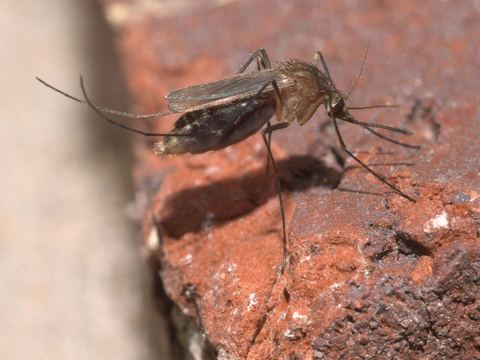
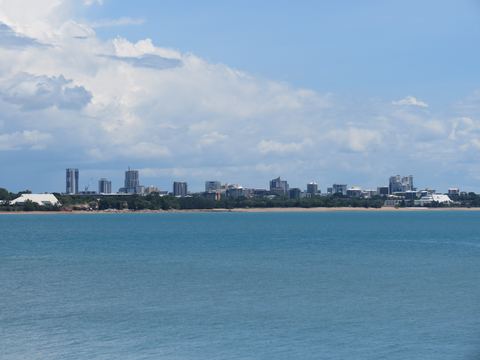
NT Health says the northern salt marsh mosquito is the most important pest mosquito in the Top End, because it bites aggressively day and night and emerges suddenly in very high numbers. In Darwin, very high numbers can usually be expected between October and mid January. Mangrove biting midges cause the greatest problems up to 2 km inland from mangroves, peaking between August and November.
Both are health and nuisance matters for NT Health rather than pest control jobs; its 2021 salt marsh mosquito calendar lists Medical Entomology in Darwin as the contact.
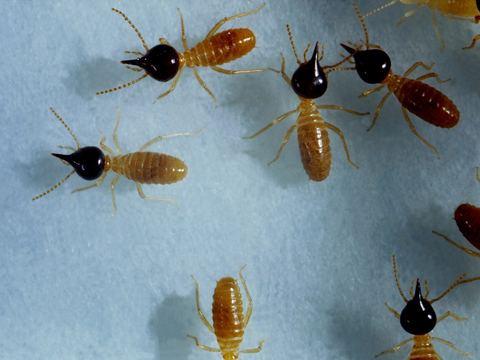
Darwin and Palmerston lie above the Tropic of Capricorn, where CSIRO says the giant northern termite is a particularly voracious species. In Alice Springs, the Town Council can arrange a snake catcher, and snakes are a snake catcher's job.

What we'd ask for
Before anyone sprays in the NT, we'd ask for the pest authorisation number and the product name, then check the licence covers that product. An ad for pest control with no number on it would make us ask why.
Want someone to look at it?
Tell us what you've seen and your postcode, and a local pest business that handles exactly that calls you to talk it through.