
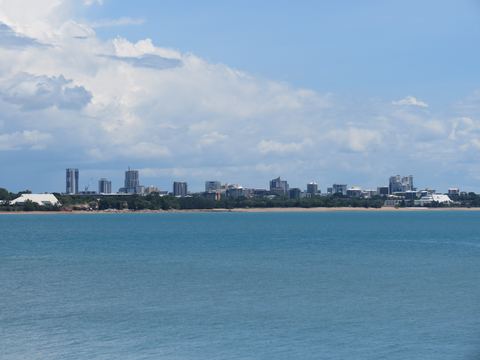
Palmerston, Northern Territory
Pest control in Palmerston, NT
Tropical termites, and midges from the mangroves.
Palmerston sits in the tropics, where CSIRO calls the giant northern termite particularly voracious, and the mangrove creeks nearby bring biting midges and salt marsh mosquitoes in their seasons.
- Matched to what you've seen
- Only one local pest business gets your number.
Matched to what you've seen
Before a pest business can take jobs from Which Pest, we record the jobs it handles, so a termite job never goes to a business that only sprays for spiders.
Only one local pest business gets your number.
We pass your contact details to one local pest business so it can contact you about this job.
Pest control in Palmerston, NT: what to know before anyone calls
On this page
What's different in Palmerston
The giant northern termite
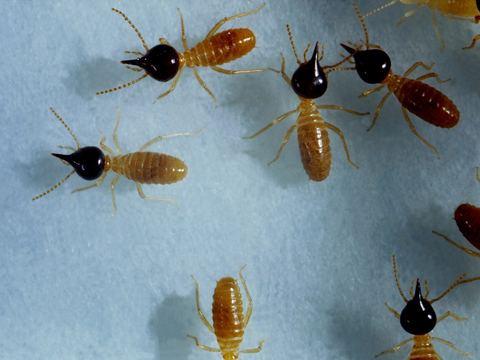
Palmerston is north of the Tropic of Capricorn, where CSIRO describes Mastotermes darwiniensis as a particularly voracious species. The Australian Museum says it has the greatest potential for destruction of any termite, and it's limited to tropical northern Australia. Its soldiers can reach 13 mm.
Midges along the creeks
In April 2008, NT Health's Medical Entomology unit assessed Palmerston's planned eastern suburbs. It placed parts of Bellamack, Mitchell and Zuccoli within 1.5 km of the tidal mangroves on Mitchell Creek, Brooking Creek and the Elizabeth River, in country with potentially high numbers of biting midges.
Midge months
NT Health says the mangrove biting midge causes the most trouble up to 2 km inland from mangroves, with the highest numbers from August to November. They're worst in the 2 hours either side of sunrise and sunset, and about 3 days either side of the full moon.
Salt marsh mosquitoes
NT Health's salt marsh mosquito calendar covers the Darwin area and says coastal NT places near breeding sites get the same peaks. Very high numbers usually arrive between October and mid January, depending on tides and rain.
Termites come first
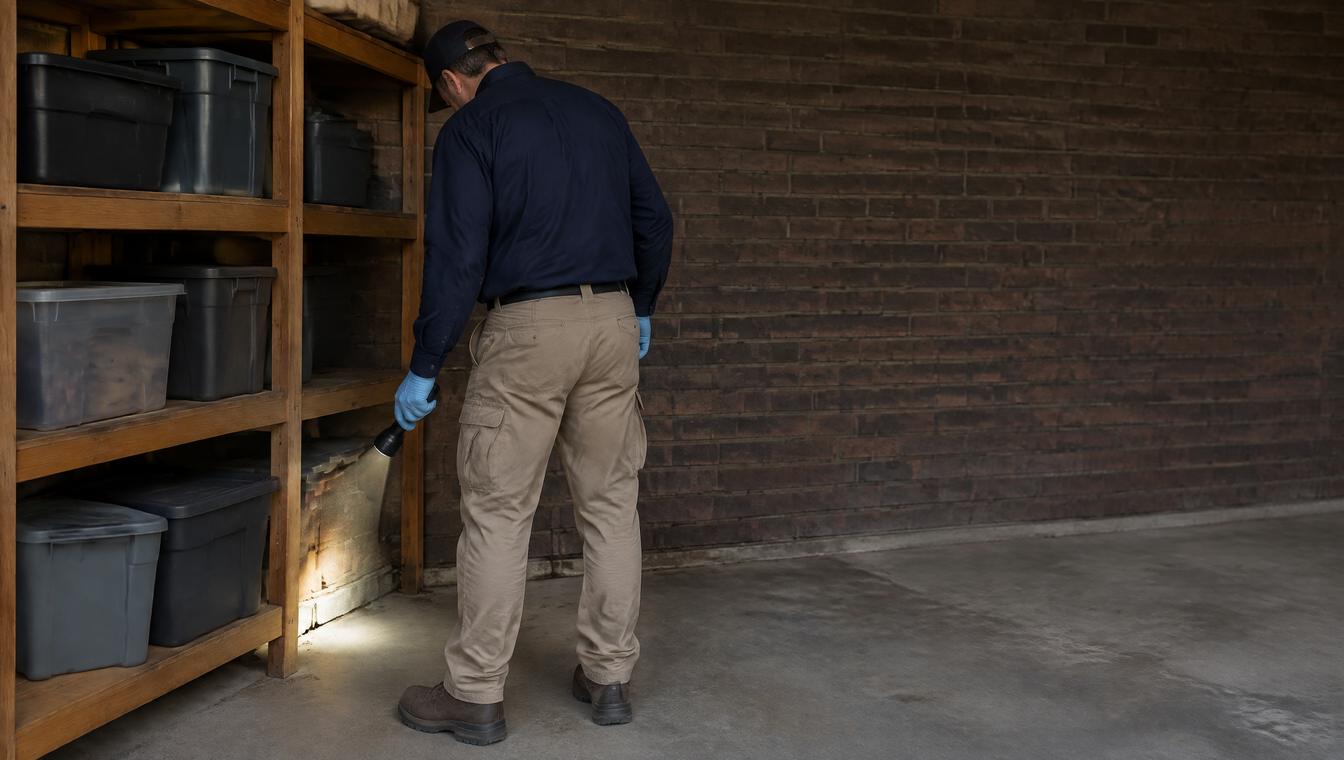
CSIRO puts the risk of termite attack highest in the subtropics and tropics, and Palmerston is well inside that band. Most people first notice termites through damaged timber or mud tubes rather than flying swarms, so look along skirting boards, door frames, stairs and anywhere timber is close to the ground.
If you find soft timber or mud, leave it alone. CSIRO says several control options depend on finding the termites still active, so breaking into a tube or spraying it can make the job harder. Then ask for a termite inspection; our Darwin termites page covers what a Top End termite job usually involves.
Newer homes should have a durable termite notice, usually in the meter box, showing the system installed, when, and how often it should be inspected.
The other jobs in a tropical house
Heat and wet seasons suit the big cockroaches. Victoria's health department says Australian cockroaches are most common in warm subtropical and tropical places, and American cockroaches live outdoors in warm regions, coming in from drains and gardens.
The black rat has spread through much of coastal Australia and climbs well, so scratching in the ceiling at night is worth a look. Paper wasps and mud daubers are found right across the country, and redbacks, found right across Australia, hide in dry corners outside.
The common brushtail possum is a protected species in Australia. We haven't confirmed the Northern Territory's own rules for possums in a roof yet, so ask the pest business what the NT allows before anything is done.
Mosquitoes and midges: a pest job or not?
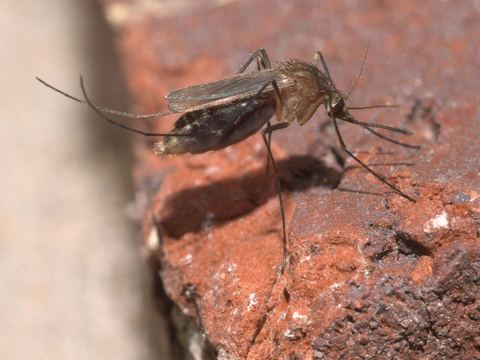
Mostly not. Salt marsh mosquitoes breed in mangroves, brackish swamps and tidal flood plains, and the midges come from the mangroves too, so a yard treatment can't reach where they breed. What helps at home is emptying anything that holds water, screening windows and keeping outdoor time away from the worst hours.
Salt marsh mosquitoes can carry Ross River virus and Barmah Forest virus, and NT Health says December and January are the highest risk months for those viruses in the Top End. That's health advice, not a pest control job: for more, NT Health's 2021 calendar points readers to Medical Entomology in Darwin.
Midges are a nuisance rather than a disease risk: NT Health says they don't pass diseases to people in Australia, though scratched bites can get infected.
How pest licences work in the NT
In the Northern Territory, anyone providing pest control services needs a pest management technician licence under the Medicines, Poisons and Therapeutic Goods Act 2012. The Department of Health's Medicines and Poisons Control issues them, for up to 3 years, and each licence lists the pesticides its holder may use. Some carry conditions, such as working under a more qualified licensee's direct supervision.
NT law also says an advertisement for pest control offered by a business, including a flyer or a social media post, must show a pest authorisation number. If a quote, flyer or website doesn't show one, ask for it. Our Northern Territory licence page has the detail.
Before the wet season
- Tip out pot plant bases, buckets, tyres and anything else that holds rain.
- Clear the gutters so water doesn't sit in them.
- Get stacked timber and firewood up off the soil, well clear of the walls.
- Fix leaking taps and air conditioner drains near the walls.
- Find the termite notice in the meter box and check when the next inspection is due.

What we'd do about pests in Palmerston
If the house has never had a termite inspection, or the meter box notice says one is due, we'd start there. For midges and mosquitoes, we'd plan around the calendar rather than pay for a yard treatment.
Want someone to look at it?
Tell us what you've seen and your postcode, and a local pest business that handles exactly that calls you to talk it through.
Questions
Pest control in Palmerston, NT: common questions
Is this page about Palmerston North?
No. This is Palmerston in the Northern Territory, near Darwin. Palmerston North is in New Zealand and has its own pages.
Can someone get rid of the midges?
Not from your yard. They breed along the mangroves, and NT Health says they cause the most trouble up to 2 km inland. Screens, covering up and staying in around dawn and dusk near the full moon help most.
Do I need to be in a particular suburb?
No. Enquiries can come from anywhere in Australia. Give your postcode with what you've seen, and we pass it to a local pest business, who contacts you about the job.
Seen a pest in Palmerston? Tell us what it is.
What you have seen, one tap about it and your postcode. Then a local pest business that handles exactly that calls you.
Before anyone starts
The licence rules where you live
Related help
More on pest control in Palmerston
 Pest control in the Northern TerritoryThe NT pest licence, the licence number rule for ads, and what to ask before work starts.Read itPest control in DarwinThe giant northern termite, tide-driven mosquitoes, mangrove midges and the NT rules.Read it
 Termite inspections and treatment in DarwinGiant northern termites, the signs to look for, and what to ask before a Darwin treatment.Read it
 Termites (white ants)What termites look like, how they differ from ants, and what to do when you find them.Read it
 Mosquitoes around the houseWhere mosquitoes breed in a backyard, which repellents health advice names, and what a yard treatment can do.Read itTermite inspectionsWhat a termite inspector looks at, how often to book, and what the report should include.Read it
Where this information comes from
- CSIRO Managing Termites: understanding termites and reducing their risk to buildings (Building Technology Resource), checked 3 November 2026
- NT Health, Top End Health Service, Medical Entomology (NT Health Digital Library) Salt Marsh Mosquito Pest Calendar for Coastal NT 2021, checked 3 November 2026
- NT Department of Health, Centre for Disease Control, Medical Entomology (NT Health Digital Library) Biting Midge Pest Calendar for Coastal NT (Culicoides ornatus) 2017, checked 3 November 2026
- Australian Museum Redback spider, checked 3 November 2026
- Which Pest How Which Pest works, checked 3 November 2026
- NT Department of Health (Medical Entomology), via the NT Health Digital Library Palmerston eastern suburbs biting insect assessment (Warchot A and Whelan PI, technical report), checked 3 November 2026
- Australian Museum Termites as pests, checked 3 November 2026
- Business Queensland (Queensland Government) Subterranean and drywood termites, checked 3 November 2026
- CSIRO and Forest and Wood Products Research and Development Corporation (copy hosted on a pest management company website) Termite Survey and Hazard Mapping, Cookson and Trajstman, Table 9: How termites were noticed (interviews 1996 to 1998, 5122 dwellings, not a random sample), checked 3 November 2026
- Victorian Department of Health Cockroaches: pest control, checked 3 November 2026
- Australian Museum Black Rat, checked 3 November 2026
- Australian Museum Paper wasps, checked 3 November 2026
- Australian Museum Mud-dauber wasp, checked 3 November 2026
- Australian Museum Common Brushtail Possum, checked 3 November 2026
- Australian Building Codes Board (ncc.abcb.gov.au) NCC 2025 Housing Provisions, Part 3.4 Termite risk management, checked 3 November 2026
- Australian Business Licence and Information Service (business.gov.au) Pest Management Technician Licence, NT, checked 3 November 2026
- Northern Territory Government (legislation.nt.gov.au) Medicines, Poisons and Therapeutic Goods Act 2012, as in force at 10 February 2026, sections 112A to 112C and 126, checked 3 November 2026
Rules and advice change, so check the source before you act on anything here. How we write and check these pages.