Who holds the licence in Victoria?
Victoria's Department of Health licenses the individuals who run or work for a pest control business. The business itself isn't what's licensed, so the question is always about the person doing your job. Each licence is held as either a technician or a trainee.
The law behind it is the Public Health and Wellbeing Act 2008. Under s 99, someone in the pest control business must not use a pesticide unless licensed as an authorised user of it. Under s 110, an unlicensed person must not claim to hold a pest control licence, whether out loud, in writing or by implication.
Which authorisation covers termites?
| What it covers | Right for a termite job? | |
|---|---|---|
| General authorisation including timber pests | Any pest, including rodents and timber pests, except a pest animal | Yes |
| General authorisation excluding timber pests | Doesn't cover timber pests such as termites | No |
Checking a Victorian licence
- Search the Department of Health's register of current licence holders. It shows the operator's name and the licence expiry date.
- Make sure the name on the register belongs to the person doing your job.
- For termites, ask which authorisation they hold: it needs to include timber pests.
- Fumigation needs its own fumigant authorisation on the licence.
- Better Health Channel also suggests checking they carry enough insurance.
Termite declared areas aren't termite maps
Victorian councils set termite declared areas under the Building Regulations 2018 for new building work. They're building rules, not a record of where termites live, and an explanatory note in the National Construction Code says only that parts of Victoria are a lesser risk.
Glen Eira, in Melbourne, has declared its whole municipality likely to be subject to termite infestation, while the City of Stonnington says it isn't currently considered at risk, though termites may still damage structures there. The City of Ballarat says Ballarat isn't a declared area, yet there's always a risk of attack. So we'd never tell anyone their Victorian suburb has no termites.
Possums: the trapping rules are strict
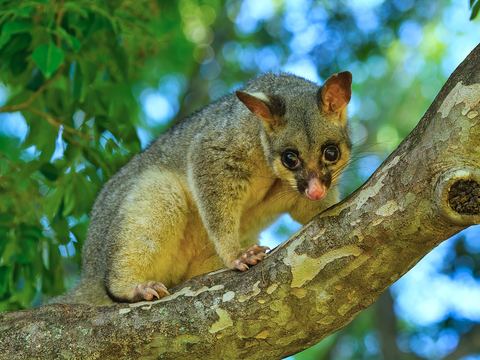
Possums are protected in Victoria under the Wildlife Act 1975, and must not be harmed or kept without approval from DEECA, the state environment department, Bayside City Council says.
Only certain people may trap a common brushtail: home owners or occupiers and their families, building managers or their staff, or DEECA licensed wildlife controllers. It has to be a cage trap designed not to injure, and the brushtail must be released on the same property, no more than 50 metres from where it was caught, after sunset on the same day.
Trapping a ringtail possum without a permit is illegal. Lethal control needs an Authority to Control Wildlife from DEECA, given only once every practical non-lethal option has been tried. Our possums page covers proofing, which is the part that lasts.
Renting in Victoria
Consumer Affairs Victoria says the law doesn't always settle who fixes or pays for a pest problem in a rental. A renter may be responsible if their actions contributed, like rubbish drawing ants, mice or cockroaches, or fleas from a pet they didn't treat. The rental provider may be, where pests were a problem at move-in or a building fault, such as a hole in the roof, let them in.
Pests caused by the building structure that make a rental unsafe or unsecure are an urgent repair. If you can't agree who pays, either side can apply to VCAT. Rental providers can't take an extra bond as a pet bond, and must supply rubbish and recycling bins that are vermin proof.
Wasps, bees and the northern mosquito season
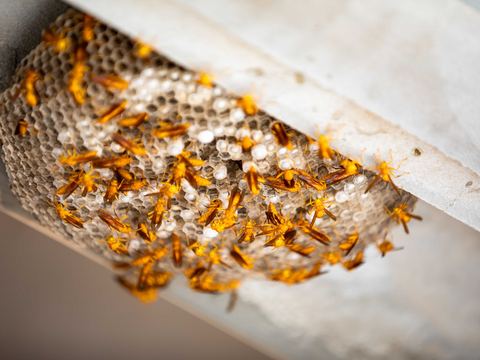
About 80% of European wasp nests are in the ground, Victoria's Department of Health says, and most of the rest are inside buildings. Some councils put the job on the owner: Bendigo's local law requires owners or occupiers to destroy European wasp colonies within five days of being directed by an authorised officer, and Warrnambool and Wangaratta have wasp rules of their own. In Baw Baw Shire, around Warragul, a nest on private land is the owner's to deal with.
Bees are a different call. The Department of Health tells pest control operators to refer bee enquiries to a beekeeper or the Victorian Apiarists Association.
In the north, mosquito-borne disease is the local health story. The Department of Health lists 24 local government areas as high risk for Japanese encephalitis, including Mildura, Greater Shepparton, Wodonga, Horsham and Campaspe around Echuca. Buruli ulcer is being identified in parts of Melbourne and Geelong, and along the coast, including Gippsland and Bairnsdale, a salt water loving mosquito can spread Ross River virus. Those are matters for the health department, not pest control jobs. Traralgon and the other cities we cover are listed below.

Our take on pest control in Victoria
We'd look the technician up on the Department of Health register first, then ask which authorisation they hold. For termites it has to include timber pests. For a possum, we'd spend the money on proofing and leave any trapping to a DEECA licensed wildlife controller, remembering that a ringtail can't be trapped without a permit.
Want someone to look at it?
Tell us what you've seen and your postcode, and a local pest business that handles exactly that calls you to talk it through.