Affordable, or just cheap?
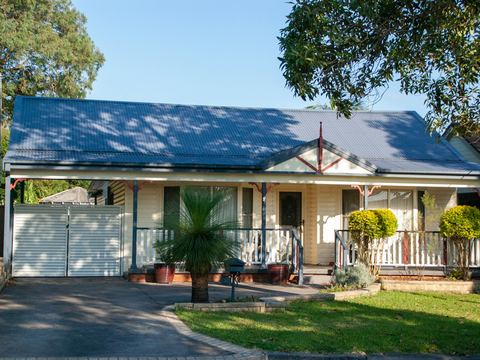
We show no prices for pest work, because nobody can price a job fairly without seeing the house. What we can explain is what makes a job bigger or smaller: how far the pest has spread, how easy the roof space or subfloor (the space under a raised floor) is to reach, whether a follow-up visit is part of it, and whether proofing (closing the gaps pests use) is included.
So the fair comparison is two written quotes for the same work. A lower figure that leaves out the roof space, the second visit or the warranty is a different job, not a better deal.
Choosing someone, in five steps
Work out what you've got
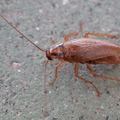
A termite job, a rodent job and a spider treatment can need different licences and different skills. If you're not sure, the pest identification pages and the room by room guides help you name it first.
Check the licence for your state
Each state does it differently (the table below). Ask to see the licence card, and check it covers your job: termite treatments need their own licence category or endorsement in NSW, Victoria and Queensland.
Ask the questions before anyone starts
The product's full name, its safety data sheet, the re-entry time and what any warranty covers. A good technician answers these without fuss.
Get the quote in writing
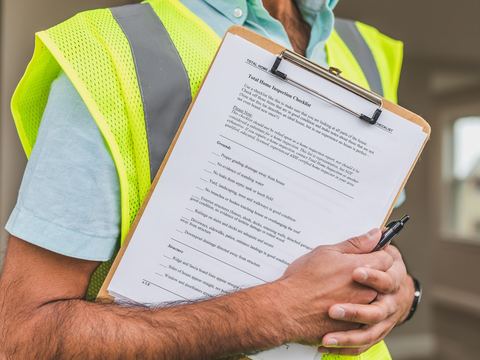
It should list the areas covered, the product, any follow-up and any proofing. A figure given over the phone for a house nobody has looked at isn't a quote.
Keep the treatment record
After the job, ask for a record of the product used, where it went and the re-entry time. You'll want it if the pest comes back, or if a lease or a future buyer asks.
Who issues the licence, and how to check it
| Who licenses pest control | How to check | |
|---|---|---|
| NSW | The NSW EPA, to the individual technician; a licence can't be issued to a business or business name. Anyone first licensed or renewed after 17 December 2021 needs the timber pest management technician licence for timber pest treatments. | Every EPA pesticide licence is on a public register. The EPA also says to look at the photo licence card, check the photo matches the person doing the work, and check the expiry date. |
| Victoria | The Department of Health issues two types of licence, technician and trainee, and a trainee works under a fully qualified technician's supervision. Termite work needs the general authorisation including timber pests; fumigation needs a fumigant authorisation. | Ask to see the licence and check its authorisation covers your job. Better Health Channel also suggests checking they carry enough insurance. |
| Queensland | Queensland Health issues pest management licences endorsed for urban pest control, timber pest control or fumigation. Termite barriers and termite reports also fall under QBCC termite management licence classes. | We found no online Queensland Health register, so ask to see the licence and its endorsements. The QBCC's register of licensed contractors is published as open data and refreshed daily. |
| WA | WA Health licenses each technician, endorsed for the treatments they're qualified to do, and every pest management business must be registered with the Department of Health. | The business register isn't public, but WA Health may give its information on request. A registered business shows its name and registration number on its treatment vehicles. |
| SA | SA Health: a Pest Controller's Licence to run the business, and a Pest Management Technician's licence for each person who applies pesticides. | We couldn't confirm an online register. Ask to see both licences, or check with SA Health's pest licensing team. |
| ACT | The ACT EPA issues an Environmental Authorisation for commercial pest control, and requires specific training for termiticides and liquid fumigants. | Look the operator up on the public register that Access Canberra keeps for pest and weed control. |
| Tasmania | NRE Tasmania: a Commercial Operator Licence for the business, and a Certificate of Competency in the Pest Management Technician category for the person. | No public register was found. Ask to see both documents, or check with NRE Tasmania. |
| NT | The Department of Health's Medicines and Poisons Control issues pest management technician licences, which last up to 3 years. | Under NT law, an advertisement for pest control offered by a business must state a pest authorisation number, so look for it on their flyer, post or website. |
Questions to ask before you say yes
- Can I see your licence card, and does it cover this job?
- What's the full name of the product you'll use, and can I have its safety data sheet?
- How long before we can go back in, and what should we do with pets, fish tanks and the veggie patch?
- Will you come back for a follow-up visit, and is that in the quote?
- If the pest comes back after the job, what happens then, and is that written into the warranty?
- Will I get a written record of what was used and where?
What a good written quote includes
- The pest, and every area covered: inside, outside, roof space, subfloor.
- The product by its full name, and how it goes on: baits in locked stations, a gel, a dust puffed into a wall cavity, a spray along the outside.
- Any follow-up visit, and roughly when.
- Any proofing work, listed separately so you can see it.
- What any warranty covers, how long it runs and what would end it.
- Who does the work, with their licence details.
Warning signs
- A promise that the product can't hurt anyone, or that the pests will never return.
- A figure over the phone for a house nobody has inspected.
- Pressure to sign today, or a knock on the door offering a termite inspection you didn't ask for.
- No written quote, or a warranty that only exists in conversation.
- Reluctance to tell you the product's full name.
- In NSW, a licence card in a business name: NSW pest licences only go to individuals.
If the offer came from a knock on the door
Under the Australian Consumer Law, an agreement can count as unsolicited when you didn't invite the dealer for that service, and asking someone merely to quote a price isn't an invitation to negotiate (s 69). An unsolicited agreement can be ended up to the end of the tenth business day after the day it was made (s 82).
Consumer Affairs Victoria adds that during that cooling-off period the supplier must not supply the services or accept any payment. If you're unsure where you stand, your state's consumer affairs office can tell you.

How we'd choose a pest controller
We'd ask for the quote in writing, look at the licence card, and get the product's full name and the re-entry time before anyone starts. The lowest number on the page means little until you know what it leaves out.
Want someone to look at it?
Tell us what you've seen and your postcode, and a local pest business that handles exactly that calls you to talk it through.