Just found some? Leave them be
Don't touch, spray or dig
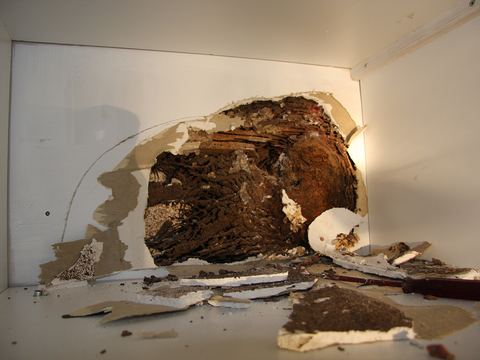
CSIRO says to take care not to disturb termites you've found, because several control options rely on finding them still active. WA Building and Energy adds: no household sprays, and don't pull out the eaten timber.
Take photos from where you stand
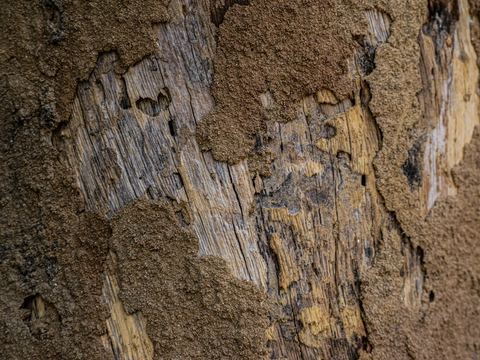
Photograph the damage or mud and note where it is: a doorframe, a skirting board, a pier under the house. That's all the termite inspector needs from you.
Look in the meter box
Newer homes carry a durable notice, often in the meter box, naming the termite management system installed and when. Note what it says.
What does a termite look like?
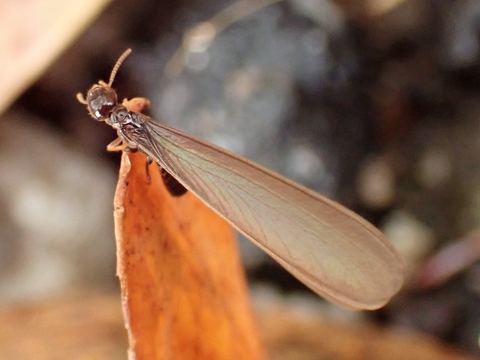
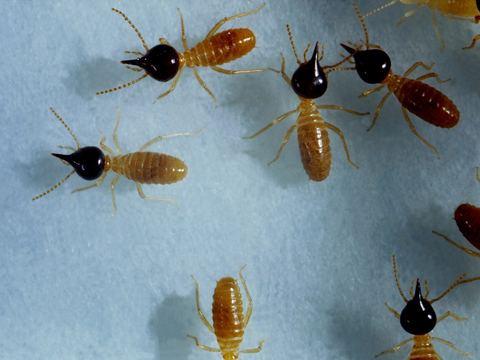
A termite has a pale brown to white body with a darker head, no pinched waist between its body sections, and antennae made of small bead-like segments. Subterranean termites, the kind behind most house damage, are generally 3 to 7 mm long, though giant northern termite soldiers reach 13 mm.
They're called white ants for their colour and shape, but CSIRO points out they're closer relatives of cockroaches than of ants. Australia has more than 350 species, and only about 20 do any real damage to buildings.
Is it a termite or an ant?
| Termite | Ant | |
|---|---|---|
| Body shape | Straight sided, no waist | Pinched in at a narrow waist |
| Antennae | Straight, beaded like a necklace | Bent at an elbow |
| Colour | Pale, creamy to light brown, darker head | Varies by species |
| Wings, on the ones that fly | Four wings the same size, shed soon after landing | Front wings bigger than the back ones |
Why you rarely see the termites themselves
Subterranean termites travel from a nest in the soil, a stump or a tree, usually within 30 m of it, but occasionally 100 m or more. To stay damp and out of the sun they build mud shelter tubes over concrete and brickwork, and they eat timber from the inside, leaving a thin outer skin.
That's why a CSIRO survey of homes found most people noticed termites through damaged wood, and only a small share by spotting the insects or their wings. Our page on termite signs and damage shows what to look for.
What they eat, and where the risk is higher
Structural timber is the worry, but CSIRO lists flooring, linings, architraves, books, furniture and even the paper on plasterboard as things termites damage, sometimes where the frame itself is protected.
On the mainland, CSIRO says the risk generally rises the further north you go, peaking in the subtropics and tropics, where the giant northern termite lives. Tasmania is the one state CSIRO rates as negligible risk, and some areas around Melbourne are low.
How to get rid of termites
Getting rid of termites is a job for a termite inspector, and it starts with finding them still active. WA Building and Energy describes the usual approach as several parts together: dealing with the termites in the timber, finding the nest where possible, putting barriers back in place and inspecting regularly afterwards. Our termite treatment page covers each option, and termite systems by name explains brands you might see on a quote.
Some inspectors carry extra tools such as a moisture meter or a termite radar. Ask which tools they'll use, and what each one can and can't pick up behind a wall.
Your part, and the inspector's
You can
- Get plumbing, drainage and roof leaks fixed quickly: WA Building and Energy says damp attracts termites.
- Keep garden beds, mulch and stored timber away from the walls.
- Stack firewood off the ground and well away from the house.
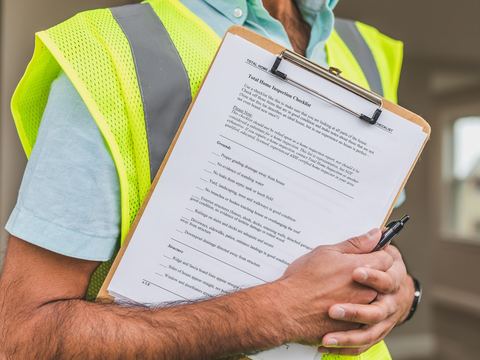
- Have the place inspected every year; QBCC suggests more often in high hazard areas.
Leave to a pest business
- Confirming they're termites and which kind.
- Tracing where they're getting in, and finding the nest if it can be found.
- Any treatment, bait station or barrier work.
- Anything that means opening up walls, floors or the subfloor.

Where we'd start with the termites (white ants)
Leave what you've found exactly as it is, take a couple of photos, and tap Termites with your postcode. If you haven't seen anything but the house hasn't had an inspection in over a year, that's worth booking too.
Want someone to look at it?
Tell us what you've seen and your postcode, and a local pest business that handles exactly that calls you to talk it through.