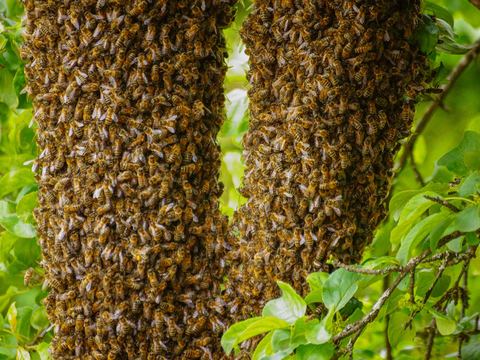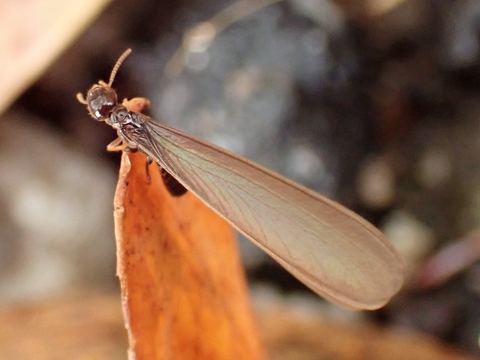
A swarm says a colony is close. Damage says it's in the house
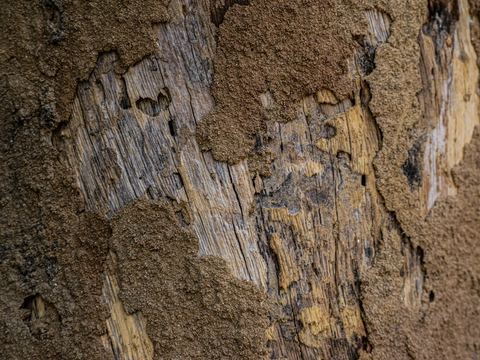
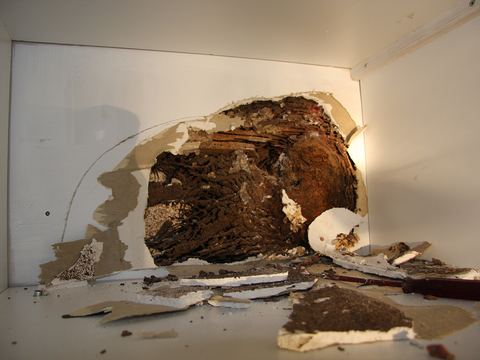
Wings are the rarest way people find termites. In CSIRO's survey of homes in the late 1990s, only 8% of properties with termites noticed them by wings, against 86% by damaged timber. So whatever the swarm turns out to be, the next useful step is checking for termite damage and mud tubes, not studying the insects.
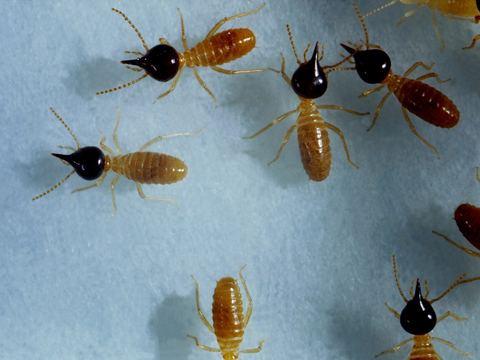
Winged termites are a colony's future kings and queens. After their flight a pair drops its wings, digs a small chamber and the queen starts laying, which is how new colonies begin.
Termites vs ants, with wings
| Flying termite | Flying ant | |
|---|---|---|
| Wings | Two pairs, front and back the same size | Front pair larger than the back pair |
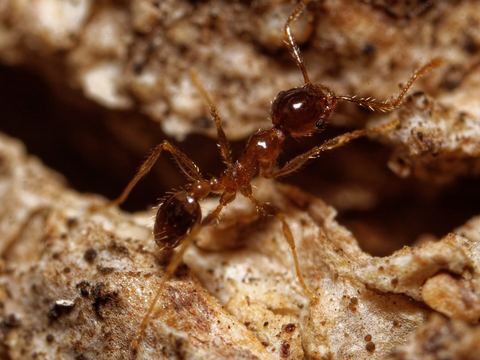
| Antennae | Straight | Elbowed, with a sharp bend |
| Waist | None, the body is thick all the way along | A narrow pinch in the middle |
| After landing | Drops its wings readily, so you find loose wings on sills | Usually keeps its wings |
When termites swarm
The Australian Museum says colonising flights happen in warm, humid weather, usually in spring and autumn. CSIRO adds that swarms often leave the nest at dusk during humid spells in the warmer months.
Winged termites (swarmers) are drawn to light, so a cloud around a porch light or a pile of wings on a windowsill the next morning is the usual way people meet them.
Inside the house or around the outside light?
Swarmers circling an outdoor light could have come from a nest in a tree, a stump or the garden next door: subterranean termites usually forage within 30 m of home. That's still a reason to keep an eye on the house.
Swarmers coming out of a crack in a wall, a skirting board, a window frame or the floor are a different matter. That's a strong reason to book a termite inspection soon, and to leave the spot they came from untouched.
A termite swarm in the house: what to do
Don't spray the spot they came from
WA Building and Energy says household sprays disturb termites, and CSIRO says some control options rely on finding them active.
Note where they appeared
Which room, which wall, near which window or light. Take a photo of the insects and any dropped wings.
Look for damage nearby, without poking
Blistered paint, mud in gaps or along the skirting, or a frame that looks swollen or warped.
Tell an inspector
Tap Termites, and mention the swarm and where it came from.

What we'd do about flying termites
Swarmers outside on one humid night: we'd note the date and check the house for damage and mud. Swarmers coming out of a wall or floor inside: we'd leave the spot alone and get a termite inspection booked.
Want someone to look at it?
Tell us what you've seen and your postcode, and a local pest business that handles exactly that calls you to talk it through.