How people actually notice termites
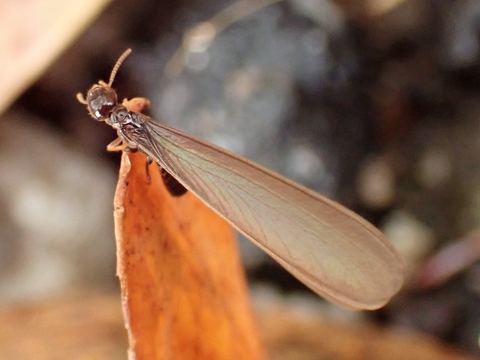
In a CSIRO survey of homes from 1996 to 1998, 86% of the properties with termites noticed them by damaged wood, 34% by mud tubes and 8% by wings. It wasn't a random sample, but the order is the point: look for damage first.
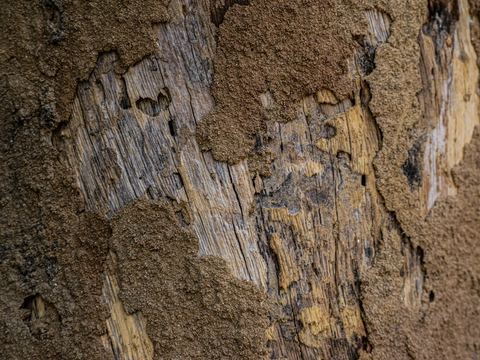
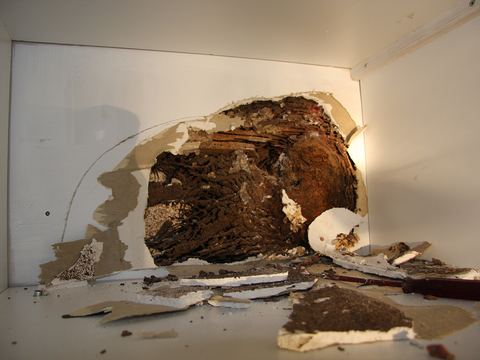
Damaged timber often looks fine from the outside. Termites hollow wood out and leave a wafer thin skin on the surface, because the shell stops them drying out.
Termite signs worth a closer look
- Mud tubes: thin, earthy tunnels running up a pier, a brick wall, a slab edge or across timber. WA Building and Energy says a wafer thin mud tunnel on timber is often the first sign.
- Mud packed into gaps around doorframes, skirting boards or cracks.
- Blistered or bubbling paint, which Consumer Affairs Victoria lists as a possible sign.
- A wall that changes colour slightly, then warps where timber panelling lines it.
- Timber that sounds dull and hollow, or that a finger would push straight through (don't test this).
- Gritty droppings like sand or ground pepper under tiny holes in wood, which point to drywood termites rather than the subterranean kind.
Termite mud tubes, up close
Subterranean termites build these shelter tubes over concrete, brickwork and durable timber to stay moist and out of the sun. Look on subfloor piers and stumps, along the edge of a slab, in the garage and behind anything stacked against an outside wall.
An inspector will want to see the tube as you found it. Termites still moving inside it are what make several treatment options possible, so a broken tube costs you information.
Termite damage, and what it can reach
Inspectors check timber by tapping it with a hard tool such as a screwdriver handle and listening for a dull, hollow sound. Drywood termites are different again: their holes can be as small as 1 mm, with gritty pellets underneath.
Structural timber matters most, but CSIRO notes termites also eat flooring, architraves, linings, books and furniture, and even the paper face on plasterboard.
Found a sign? In this order
Stop and leave it
Don't break the mud, poke the timber or spray anything. WA Building and Energy warns against household sprays and pulling out infested wood.
Photograph it
A wide shot and a close one, with a note of where in the house it is.
Check your termite notice
Under the building code, newer homes have a durable notice, often in the meter box, naming the system installed and how often it should be inspected.
Get an inspection
Tap Termites with your postcode, and say what you found and where.
What to ask the inspector
- Are these termites active now, or is this old damage?
- Where do you think they're getting in?
- Will I get a written report showing what you found and where?
- Which areas couldn't you reach, and why?

Where we'd start with the signs of termites in the house
We'd leave the mud tube or soft timber exactly as it is, photograph it, and get a termite inspection booked rather than reaching for a can. A sign you leave alone is worth far more to the inspector than one that's been sprayed.
Want someone to look at it?
Tell us what you've seen and your postcode, and a local pest business that handles exactly that calls you to talk it through.