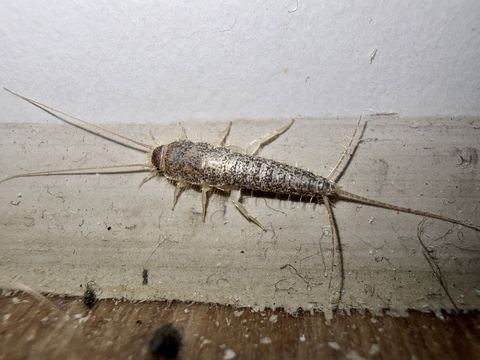
Is it a silverfish?
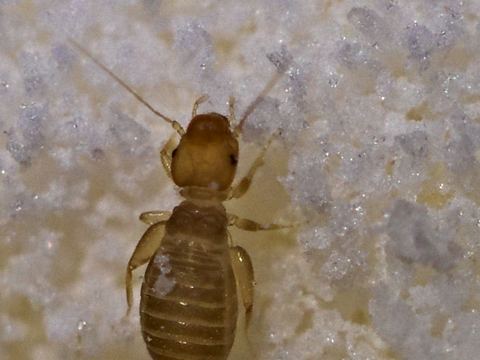
The Australian Museum describes silverfish as wingless insects with a teardrop shaped body that looks hard and scaly, six short legs, long antennae as fine as thread and three thin tails at the back. Grown household silverfish are silvery grey and about 15 mm long, though Australian species range from 2 mm to 18 mm.
You usually see one when you switch on the bathroom light at night: it freezes, then runs for cover or hops. They're mostly nocturnal and keep to dark, quiet, humid places, so one sighting often means more out of view.
Silverfish or something else?
| What it looks like | What it means | |
|---|---|---|
| Silverfish | Silvery grey, scaly, three tails, runs fast | Damp, plus paper, glue or starch nearby |
| Bristletail | Like a silverfish, but big eyes that touch, a much longer middle tail, and it jumps | A look-alike, so check the eyes and tails before deciding |
| Booklice | Tiny, 1 to 2 mm, slightly transparent brown, no wings | Mould on paper or packets, in a warm, humid spot |
What they damage
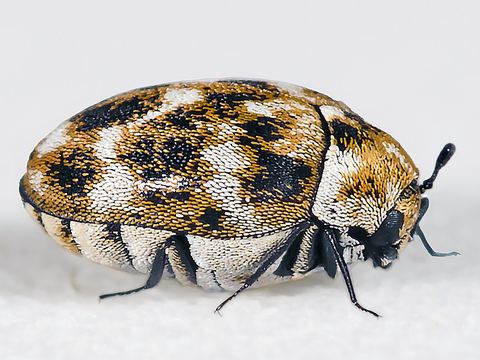
Silverfish feed on paper, sizing, glue, cotton and starchy things. Indoors that means wallpaper paste, book bindings, photographs, stored documents and cotton clothing, usually as grazed or chewed patches rather than neat holes. Neat holes in woollens point to carpet beetles or clothes moths instead.
Booklice leave damage that looks much the same, but they're feeding on the microscopic mould growing on damp paper. Both are a sign the room or cupboard is staying humid.
What the pest business does
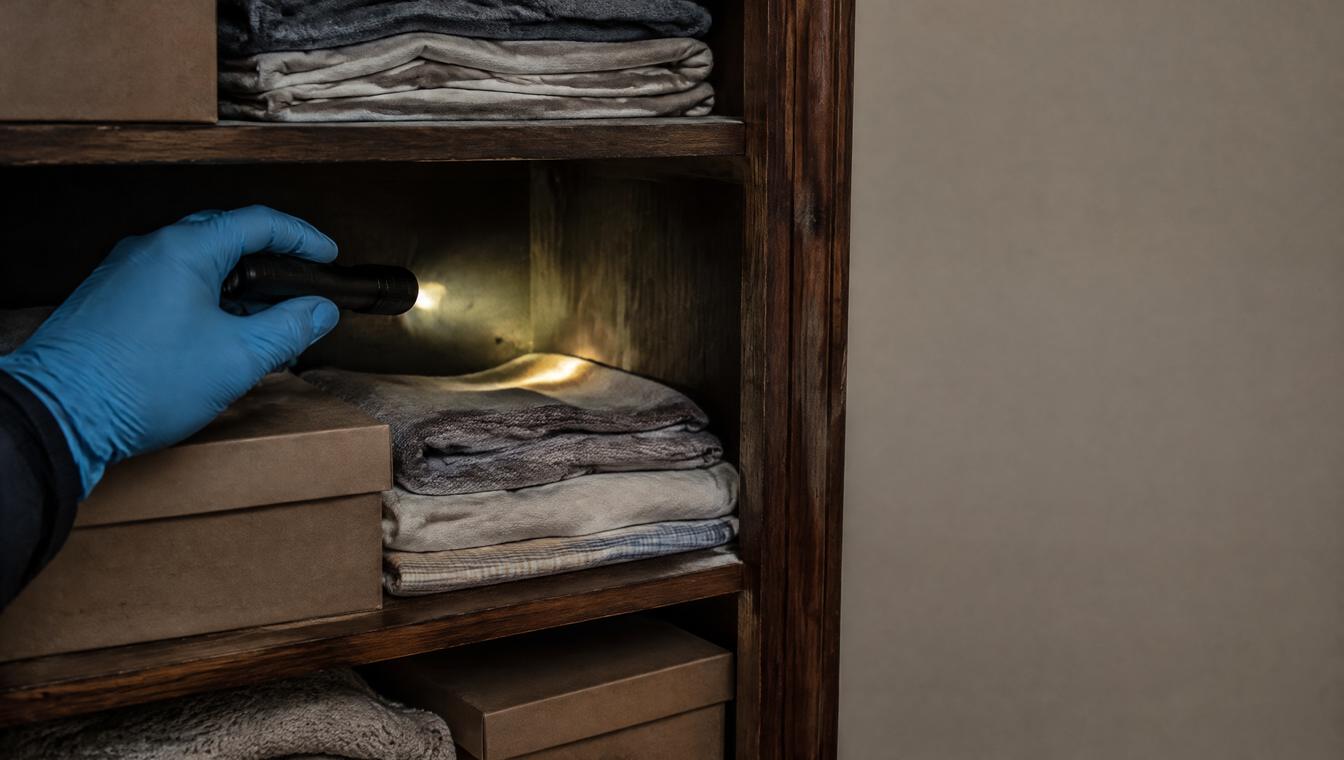
A good technician looks before treating: which rooms, which cupboards, whether it's silverfish or booklice, and why the space is damp. The treatment then goes into the cracks and voids they hide in, such as skirting gaps, the backs of cupboards and wardrobes, and wall or roof voids, often as a fine dust puffed into the cavity rather than a spray across open surfaces.
Expect them to point out the damp as well. If a leaking shower, a blocked exhaust fan or a wet subfloor is behind it, the silverfish will be back once the product wears off unless that gets fixed, and that's often a job for a plumber or builder rather than a pest business.
What changes the size of the job
One damp bathroom is a small job. Silverfish through several rooms, in the roof space or walls, or among boxes of stored papers, books and photos make it bigger, as does a house that stays damp because of a leak or poor airflow. A follow up visit may be suggested if they were widespread.
What you can do this week
You can
- Run the bathroom and laundry exhaust fans, and open windows after showers.
- Fix dripping taps and leaks, and get a plumber to look at any wet wall or floor.
- Store papers, photos and books in sealed plastic tubs, up off the floor.
- Vacuum along skirting boards and inside cupboards and wardrobes.
- Swap cardboard boxes in storage for plastic ones.
Leave to a pest business
- Treating wall voids, the roof space and the cracks silverfish hide in.
- Working out whether it's silverfish or booklice before anything is applied.
Questions to put to the technician
- Is this silverfish or booklice, and where do you think they're breeding?
- Where exactly will you apply the product, and what's its full name?
- Do clothes and linen need to come out of the wardrobes first?
- What damp problem should we fix so this doesn't come back?

Where we'd start with silverfish control
A few silverfish in the bathroom is a damp problem before it's a pest problem, so we'd fix the airflow and move paper into sealed tubs first. If new damage keeps turning up on books, papers or clothes after that, tap Not sure what it is and mention silverfish in the note.
Want someone to look at it?
Tell us what you've seen and your postcode, and a local pest business that handles exactly that calls you to talk it through.