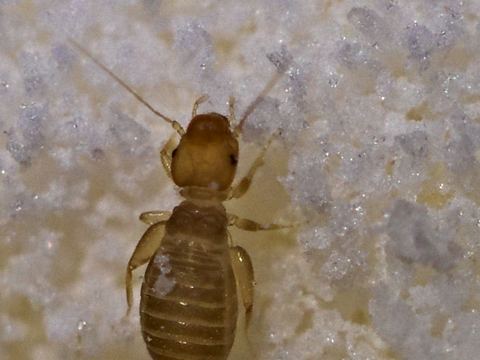
What they look like
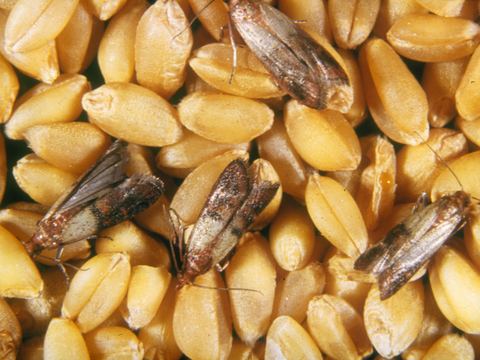
You'll usually notice movement before you can make out an insect. The Western Australian Museum describes indoor booklice as very small, 1 to 2 mm, slightly transparent brown and wingless. Up close, CSIRO notes the group (psocids) has soft bodies, a large head and long antennae.
Despite the name, they're after mould, not people. They live on the microscopic moulds on paper, plus glues, bindings and mouldy plant material.
Where they turn up
Old books, boxes of papers and the pantry. CSIRO says a few psocid species live alongside people and turn up among books or in food products, and Queensland's primary industries department lists them as occasional pests of stored grain.
What those places share is moisture. Booklice favour warm, humid, quiet and undisturbed spots, and CSIRO says psocids in general prefer moist environments. One kind, Liposcelis, can build up to large numbers in houses and other buildings.
Booklice or silverfish?
| Booklice | Silverfish | |
|---|---|---|
| Size | 1 to 2 mm | About 15 mm when mature |
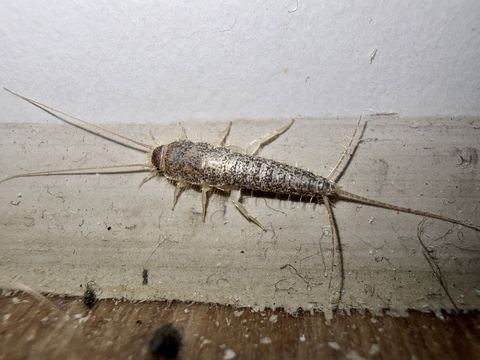
| Body | Soft, with a large head and long antennae | Teardrop shaped and scaly, with three thread-like tails |
| Colour | Slightly see-through brown | Silvery grey |
| Food | Mould on paper, glue and stored food | Paper, glue, starchy items and cotton |
Are they harmful?
They're a nuisance rather than a danger. The damage on books looks a lot like silverfish damage, and they can spoil stored grain and food. The sources we rely on don't list any health risk from booklice themselves; the damp they point to is the bigger worry for a house.
Drying them out
You can
- Find the damp: a leak, a cupboard on a cold outside wall, a bathroom without an exhaust fan.
- Air the room, run a dehumidifier and leave cupboard doors open for a while.
- Move books and boxes off damp floors and away from outside walls.
- Throw out mouldy paper and any food with specks moving in it, and store dry food sealed.
Leave to a pest business
- Leaks in the walls, roof or plumbing: a plumber or builder first.
- Large numbers that are still there after the area has been dry for a while.

Our take on the booklice
Fix the damp before paying for anything. A pest treatment can't dry out a wall, and booklice favour humid, undisturbed corners, so a dry, aired room suits them far less. If they're still thick after you've sorted the moisture, tap Not sure what it is and mention booklice and the damp.
Want someone to look at it?
Tell us what you've seen and your postcode, and a local pest business that handles exactly that calls you to talk it through.