How to identify a silverfish
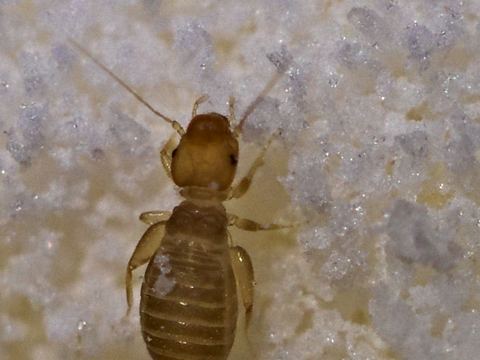
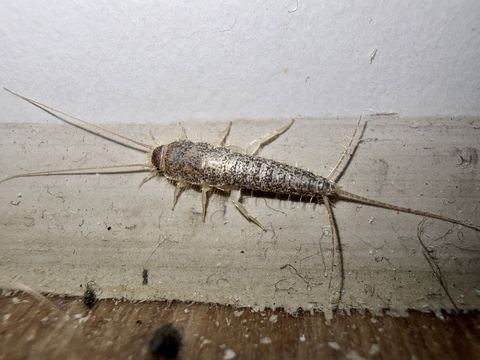
Silverfish have a teardrop or spindle shaped body that looks hard and covered in scales. They range from 2 mm to 18 mm, and the Western Australian Museum puts mature household silverfish at about 15 mm and silvery grey.
Look at the ends. The antennae are thread-like and longer than half the body. At the other end are three thread-like tails of similar length, and at rest the outer two angle away from the body. They have six short legs and no wings.
Silverfish or bristletail?
| Silverfish | Bristletail | |
|---|---|---|
| Eyes | Not large or touching | Large eyes that touch |
| Tails | Three, all about the same length | Middle tail much longer than the others |
| When disturbed | Freezes, runs for cover or hops | Jumps |
What silverfish eat
Indoors they go for starch and glue: wallpaper paste, book bindings and photographs. The Western Australian Museum, which has to protect collections from them, adds paper, sizing (the starchy finish on paper and cloth), cotton and rotting wood. So you may notice the damage to old books, boxes and papers before you see the insect.
Where you'll find them
They like it dark, quiet, humid and undisturbed, which is why you rarely see them and why bathrooms suit them so well. They're mostly active at night, so you might meet one in the bath or on a shelf when the light goes on. Outdoors they live under bark and rocks, in leaf litter, in soil and even in ant and termite nests.
Almost 50 species have been described in Australia, and the Australian Museum names Ctenolepisma longicaudata as a household pest.
How to get rid of silverfish
Change the conditions first, because that's what brought them in. Dry out damp rooms, get leaks fixed and move what they eat out of reach. If you're seeing them often despite that, or they've got into stored papers, a pest business can treat the cracks and voids where they shelter. Our silverfish control page explains the job.
What you can do
You can
- Run the exhaust fan and keep bathrooms and laundries dry.
- Fix dripping taps and damp patches.
- Move old books, papers and photos out of the garage or roof space and into sealed containers.
- Clear stacks of cardboard and paper; they're food and shelter in one.
Leave to a pest business
- Treating cracks, wall voids and roof spaces they're sheltering in.
- Working out whether something else is damaging your books or clothes.

Our take on the silverfish
A silverfish in the bath now and then isn't worth a call-out. Dry the room out and box up anything precious. If you're seeing them in stored papers or clothes, or you're not sure it's a silverfish at all, tap Not sure what it is and describe what you've found.
Want someone to look at it?
Tell us what you've seen and your postcode, and a local pest business that handles exactly that calls you to talk it through.