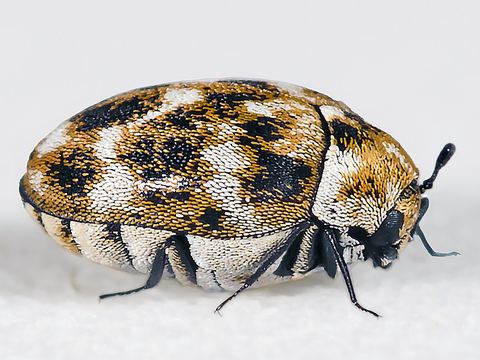
What a carpet beetle looks like
Adults are about the size of a pinhead: the Australian Museum puts the Australian carpet beetle at 2 to 3 mm. The common Anthrenus kind is round and dark, with four wavy white bands across its back, according to the Western Australian Museum.
The larva is the one to learn. It's a small, hairy grub, and it grows bigger than the adult beetle. Its hairs snap off easily, so leave it be and brush it into a bag rather than picking it up.
The signs they leave
Empty hairy skins are the classic sign. Larvae moult as they grow and leave their old skins behind, usually tucked into carpet edges, the folds of stored blankets or the bottom of a wardrobe.
Beetles gathering on windowsills are the other giveaway. Adults feed on pollen and nectar outdoors, and the Australian Museum says finding them on sills inside may mean larvae are growing somewhere in the house.
The damage itself is irregular holes or bare, grazed patches in natural fibres. Furniture, clothing, blankets, furs and carpets are all on the menu, and wool, feathers, silk and fur are what the larvae are after.
Carpet beetle or clothes moth?
| Carpet beetle | Clothes moth | |
|---|---|---|
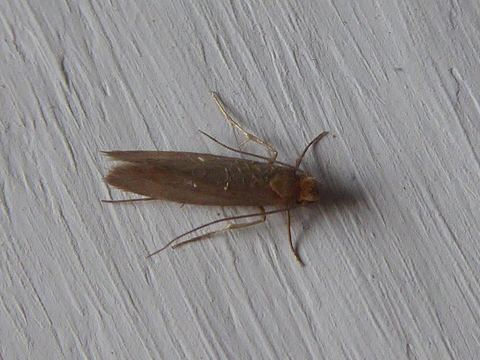
| What you see first | Small round beetles on windowsills | Small moths that hide from the light |
| The young | Hairy grubs, bigger than the adult | Creamy white caterpillars with dark heads |
| What's left behind | Shed hairy skins | Silk cases and droppings |
| Where | Carpet edges, under furniture, stored blankets | Dark wardrobes and drawers |
Why they hang around so long
Each female lays 40 to 90 eggs, which hatch in 8 to 15 days. Larvae then feed for anywhere from 60 days to a year or more, and the whole life cycle can take 1 to 3 years. The adults only live about two weeks.
Larvae hatch in spring and early summer, which is when new beetles turn up on the sills. Warm weather speeds everything up, so a mild house with a forgotten wool rug can keep a population going quietly for years.
Are they harmful?
Not to the house itself, but they can ruin heirloom rugs, woollen jumpers and anything with feathers. The Australian Museum also warns that the larval hairs can cause allergic reactions in some people, which is worth knowing if someone has an unexplained itch near the linen cupboard.
What helps, and who does it
You can
- Vacuum thoroughly and often, especially along carpet edges and under furniture, as the Australian Museum recommends.
- Empty the vacuum into the outside bin straight after.
- Take out stored wool, feathers and furs, check them in good light and clean anything with holes or skins.
- Store clean natural fibres in sealed bags or tubs.
Leave to a pest business
- Damage spreading through several rooms after months of vacuuming.
- Valuable rugs, collections or wall to wall wool carpet you can't keep lifting.

Where we'd start with carpet beetles
With the vacuum, not a spray. The Australian Museum says treating indoors doesn't work long term because the adults fly straight back in, so finding and cleaning the source matters most. If you've done that and the grubs keep turning up in more than one room, tap Not sure what it is, mention carpet beetles and a pest business can tell you whether a treatment is worth it.
Want someone to look at it?
Tell us what you've seen and your postcode, and a local pest business that handles exactly that calls you to talk it through.