Mud tubes on a pier or wall
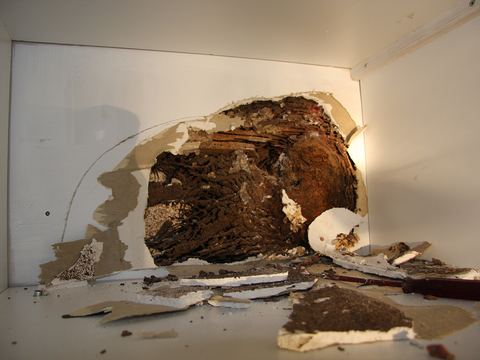
Leave them alone: don't break, scrape or spray them, and don't pull out any damaged timber. CSIRO says several control options depend on finding the termites still active, so take a photo and let the inspector see them as they are.
Termites: tubes and timber
Subterranean termites build shelter tubes of mud over concrete, brickwork and durable timber, CSIRO says, to stay moist and out of the sun. Under a house, that means piers, stumps, footings and the inside face of the outer wall. In WA, Building and Energy says the first sign is often a wafer thin mud tunnel running over timber.
Termites usually forage within 30 m of their nest, and occasionally 100 m or more, so a colony in a stump or the neighbour's yard can reach your floor. Even where the main structure is protected, CSIRO says they can damage flooring and linings. Our termite inspection guide explains what the inspector does underneath.
Borer: pinholes and honeycomb
Business Queensland says the common furniture beetle leaves exit holes 1 to 2 mm across, and its tunnels give timber a honeycombed look. Floorboards and joists that crumble at the edges are worth pointing out to a timber pest inspector, who checks for borer as well as termites, especially when you're buying a home.
Cockroaches, rats, ants and fleas
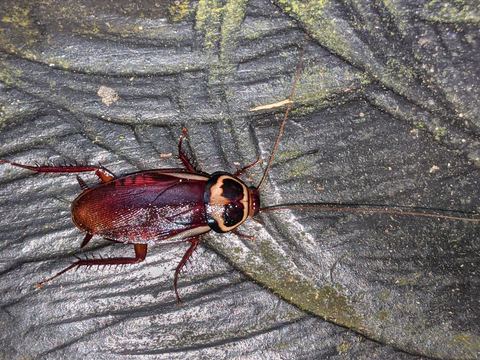
Victoria's Department of Health says oriental cockroaches prefer cool, damp places such as damp subfloors and drains, American and smokybrown cockroaches live in subfloors and wall voids, and Australian cockroaches sometimes move in from the garden. Black house ants commonly nest in subfloor areas too.
Rockhampton Regional Council lists under buildings among the places rat burrows are found. And if the dog sleeps under the house, check there for fleas: the department says to look in subfloors, sheds and dog houses where pets rest. In Queensland, Asian honey bees have been found nesting under floorboards; report suspected ones to Biosecurity Queensland within 24 hours.
Checking from the outside
Look through the access door or vents
With a torch, check the nearest piers and the bottom of the walls for mud tubes. Crawling right through is the inspector's job.
Find the water
Look for a leaking pipe, a downpipe draining under the house or soil that stays wet. WA Building and Energy says damp conditions attract termites.
Check what's stored underneath
Timber offcuts, old doors and cardboard sitting on the soil are food and shelter.
Walk the edge of the house
Garden beds, mulch or paving built up over the base of the walls or across the vents make hidden entry easier.
Photograph and leave it
A clear photo of anything odd is more use to a pest business than a sample.

Where we'd start with pests under the house
We'd clear whatever's stored under the house and fix any leak, then let a termite inspector have the first proper look. If the dog sleeps under there and the house has fleas, that's where we'd ask the pest business to start. Tap Termites or Fleas or end of lease.
Want someone to look at it?
Tell us what you've seen and your postcode, and a local pest business that handles exactly that calls you to talk it through.