If a bite flares up
Try not to scratch: the Victorian Department of Health says that's how bites get infected, so see a doctor if one looks infected. If someone is very unwell after a bite, call 000. The Poisons Information Centre on 13 11 26 gives first aid advice, day or night.
What flea bites look like
A flea bite is extremely itchy and forms a red, swollen lump within 30 minutes, which may blister about a day later. The Victorian Department of Health says they're concentrated on the legs and feet, and that some people become more sensitive to them over time.
Fleas can also carry tapeworm larvae and, uncommonly, typhus. Bubonic plague, the one everyone remembers from school, isn't known to occur in Australia.
What fleas look like
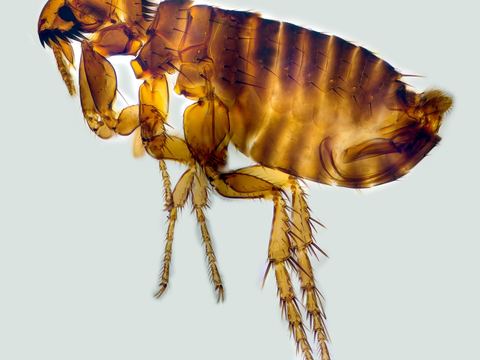
Adult fleas are small, wingless, brown and oval, 2 to 4 mm long, with hind legs that jump more than 200 times their body length. If it vanishes when you reach for it, that's a good clue.
The cat flea is the most common in Australia, and it happily bites dogs, rats and people. The dog flea looks similar but is less common, and the human flea is now uncommon. Larvae are translucent and worm-like, about 3 mm long.
How to confirm it's fleas
Check the pet
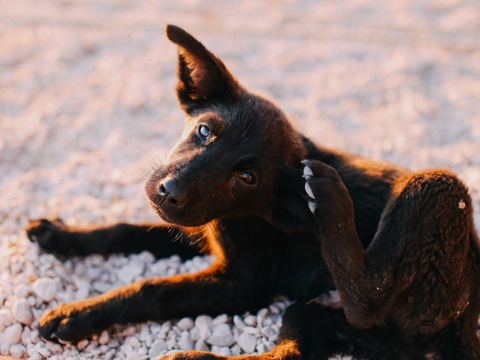
Part the fur, especially around the ears and rump, and look for fleas or droppings like tiny dark specks.
Do the tissue test
Put a few specks on a lightly dampened white tissue. Flea droppings leave a ring of blood.
Check where pets rest
Beds, rugs and favourite corners inside; subfloors, sheds and dog houses outside.
Why an empty house can be full of fleas
Fleas pass through egg, larva, pupa and adult, which takes anywhere from 2 weeks to 8 months depending on temperature, humidity and food. Adults can sit in their cocoons until they sense vibration, heat, noise or carbon dioxide, so moving into a house that's been empty can set off a wave of bites on the first day. They can also survive many months without feeding.
How to get rid of fleas (and where flea spray fits)
Start with the pets. The Victorian Department of Health calls treating them essential to stop fleas coming back, so talk to your vet about that first. Then deal with where the pets rest. Rodents can bring fleas too, so if you also have rats or mice, the two jobs may need doing together.
A flea spray or fogger from the supermarket only reaches what it touches, and cocoons in carpet and under furniture can sit through it. If you use one, read the label and follow it. Fleas still waiting in cocoons are why bites can carry on after a treatment, and why a pest business will talk about a follow-up.
Your side of it
You can
- Treat every pet in the house; ask your vet what suits them.
- Wash pet bedding and vacuum carpets, rugs and under furniture often.
- Keep pets out of the subfloor and sheds if you can.
- Sort out rats or mice at the same time.
Leave to a pest business
- Inside treatment across carpets, floors and pet areas.
- Subfloors, sheds and yards where animals shelter.
- A follow-up plan for fleas still hatching from cocoons.
Worth asking the pest business
- Do my pets need to be treated before you come?
- What do I need to do with pets, fish tanks and food on the day?
- Which product will you use, and how long until we can come back in?
- Should we expect to see some fleas after the treatment, and for how long?

Where we'd start with the fleas in the house
Check the pet first, and treat it with your vet's help. If you're still getting bitten after that, or the house was empty when the bites started, tap Fleas or end of lease. Tell them about any pets, so they can plan around them.
Want someone to look at it?
Tell us what you've seen and your postcode, and a local pest business that handles exactly that calls you to talk it through.