If the bites are bothering you
Wash bites with antiseptic soap, use an ice pack for swelling, and try an anti-itch cream such as calamine. See your doctor if a bite becomes infected or the itch is severe. Very rarely, people have a severe allergic reaction: if someone has trouble breathing or swelling of the face or throat, call 000.
What bed bugs look like
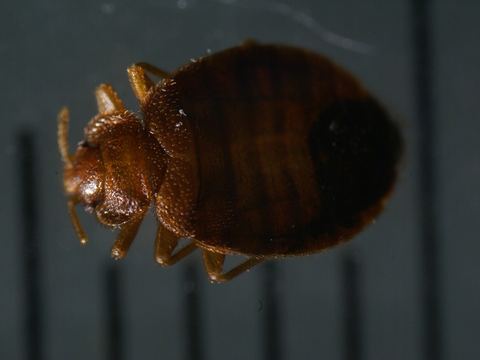
Adults are flat, oval and wingless, up to 6 mm long, light brown until they feed, then rust red. Young bed bugs are cream coloured and darken to red or black after a meal. The eggs are cream too and about 1 mm long, tucked into cracks where you'd never think to look.
They feed only on human blood, mostly at night, though they'll also bite during the day. A feed takes around five to 10 minutes.
Signs on the bed and around it
- Tiny spots of blood on sheets or the mattress.
- Brown or rusty spotting from droppings on the mattress, bedding or walls.
- Live bugs, shed skins or eggs in the mattress seams.
- Waking with new bites, again and again.
- A sickly sweet smell, in large infestations.
Where bed bugs hide
Mattress seams come first. After that, healthdirect lists bed frames, bedside tables, picture frames, behind wallpaper, under carpet edges and behind skirting boards. NSW Health says infestations stay around where people sleep, so that's the place to check, with a torch, before pulling anything apart.
Why only one of you has bites
Some people don't react for up to 9 days, and healthdirect says as many as 1 in 5 don't react at all. So one person with bites and one without doesn't rule out bed bugs. On black or brown skin the bites may look purple and be harder to see.
NSW Health says bed bugs aren't known to spread disease, but itching and lost sleep are real, and heavy scratching can lead to a skin infection.
How to get rid of bed bugs
This isn't a one-can job. The Victorian Department of Health says a mix of non-chemical and chemical treatment is typically needed, and Better Health Channel says repeat visits may be needed because bed bugs pass through several life stages. They can also survive for months without feeding, so leaving a room empty for a while won't solve it.
Better Health Channel advises against putting pesticide on bedding, so a pest business will tell you what to do with sheets and covers. More on what the job involves is on our bed bug treatment page.
What helps, and what doesn't
You can
- Photograph any bugs, spots or shed skins.
- Check second-hand furniture before it comes inside.
- When you travel, check the bedding and mattress stitching before you unpack.
- Keep furniture where it is until it's been inspected, so you don't carry bugs to another room.
Leave to a pest business
- Confirming it's bed bugs, and finding every hiding place.
- The treatment itself, usually over more than one visit.
- Telling you what to do with bedding, clothes and furniture.
Ask before the first visit
- How many visits should I expect, and how far apart?
- What do I need to do with bedding, clothes and furniture first?
- What's the full name of the product you'll use?
- How soon can we sleep in the room again?

What we'd do about bed bugs
Check the mattress seams with a torch and photograph what you find. Don't start throwing out beds or spraying sheets. Once you've got something to show, tap Bed bugs and your postcode.
Want someone to look at it?
Tell us what you've seen and your postcode, and a local pest business that handles exactly that calls you to talk it through.