What have you seen?
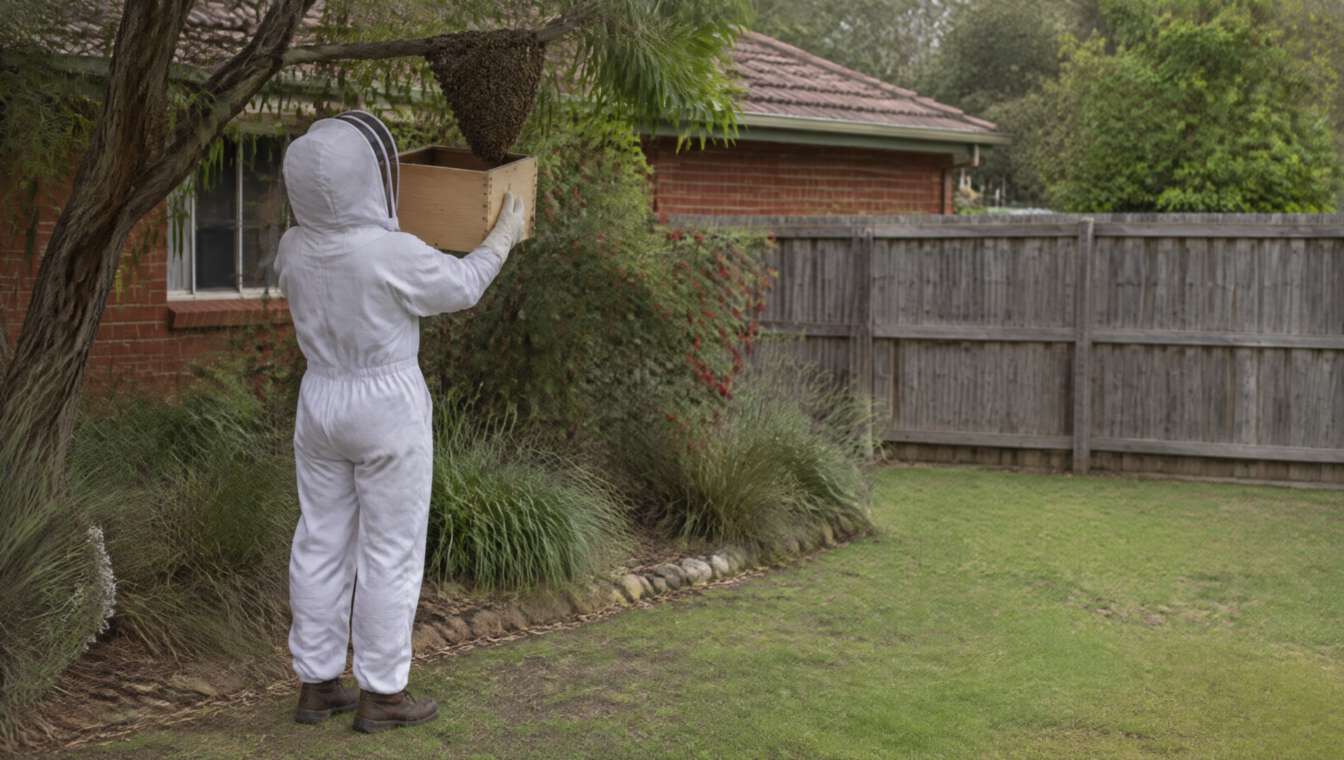
A beekeeper in a white suit and veil holding a timber box up under a swarm of bees on a branch

Sydney, New South Wales

Bee removal in Sydney

A swarm passing through is a beekeeper's job.

Sydney bee calls come in two kinds: a swarm resting outside, which a registered beekeeper may collect, and bees living inside a wall or roof, which is work for a pest business.

Seen a pest in Sydney?

Don't spray them, and keep people and pets away. Trouble breathing after a sting: call 000.

Only one local pest business gets your number.

  • Matched to what you've seen
  • Only one local pest business gets your number.
  • Matched to what you've seen

    Before a pest business can take jobs from Which Pest, we record the jobs it handles, so a termite job never goes to a business that only sprays for spiders.

  • Only one local pest business gets your number.

    We pass your contact details to one local pest business so it can contact you about this job.

What happens next

A local pest business calls you.

What have you seen?
  1. Tell us what you've seen

    The pest, one detail about it, and your postcode. A few taps.

  2. We pass it on

    We pass your enquiry to one local pest business that handles exactly this. They quote, do the work and deal with you directly.

  3. They call you

    The pest business talks it through, usually inspects first, and quotes in writing. You decide.

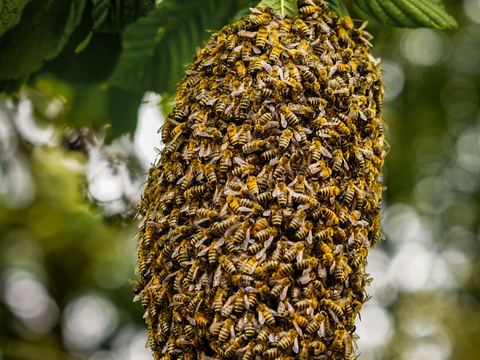
A honey bee swarm hanging from a branch
A honey bee swarm resting on a branch.

Updated 3 November 2026 · Written by the Which Pest team · How we check our facts

Give them room

Keep children and pets clear of the cluster and its flight path, and don't try to move or spray it; the City of Ryde says not to interfere with a swarm. If someone stung struggles to breathe, use their adrenaline autoinjector and call 000. Scrape a bee sting out with a fingernail or card; pulling it can squeeze the venom sac.

Bees around Sydney

Spring is swarm season

The City of Ryde says overcrowding in a hive can prompt bees to swarm, usually between September and December as the weather warms.

Every hive is registered

In NSW, anyone who keeps European honey bees must register as a beekeeper, even with one hive, so a swarm that's collected ends up in a registered hive.

Councils handle public land

The City of Sydney responds to swarms and nests on public land. On private land they're the owner's responsibility, and it points to registered beekeepers who may collect and rehome a swarm.

Inside the walls

Once bees have moved into a wall cavity or another place nobody can reach, the City of Ryde says it's a job for a pest controller.

Swarm or hive?

SwarmHive in the house
What you seeA ball of bees on a branch, fence or letterboxBees going in and out of one gap, day after day
TemperNot usually inclined to sting if left aloneBees defend a hive aggressively
Who usually helpsA registered beekeeper or swarm collectorA pest business
What you doKeep clear and call a beekeeperKeep clear and tell us where the gap is

If they've moved in

  1. Find the entry from a distance

    Watch from inside a window: under a roof tile, a gap in the brickwork, a wall vent or the eaves.

  2. Leave the gap as it is

    Don't seal it; the technician needs to see where the bees come and go.

  3. Ask about the comb

    Ask what will happen to the honeycomb and whether the wall or ceiling needs opening.

  4. Tap Bees

    Say where the gap is and how long they've been there.

Where we'd start with bee removal in Sydney

Swarm on the fence: ring a registered beekeeper and keep the dog inside. Bees flying into the wall for more than a few days: tap Bees and tell us where the gap is.

Want someone to look at it?

Tell us what you've seen and your postcode, and a local pest business that handles exactly that calls you to talk it through.
What have you seen?

Questions

Bee removal in Sydney: common questions

Will a beekeeper take bees out of my wall?

Some might, if the hive can be reached. The City of Ryde says bees in a wall cavity or other inaccessible place need a pest controller.

Bees or wasps?

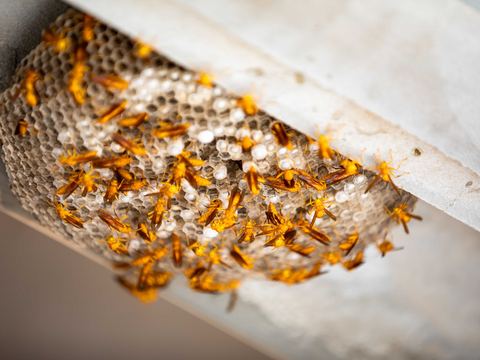
Bees are rounder and usually hairy, and feed on pollen and nectar; wasps are slender and smooth. If they're shiny yellow and black and going into the ground, see our Sydney wasp page.

Seen a pest in Sydney? Tell us what it is.

What you have seen, one tap about it and your postcode. Then a local pest business that handles exactly that calls you.

Before anyone starts

The licence rules where you live

Where this information comes from

Rules and advice change, so check the source before you act on anything here. How we write and check these pages.

What have you seen?