Stings first
Keep people and pets back, and don't spray or block the entrance. Get a bee sting out by scraping it with a fingernail or card; pulling it may squeeze the venom sac. Wash the spot, then ice it for 15 minutes. For noisy breathing, tongue or throat swelling, wheeze, dizziness or collapse, use their adrenaline autoinjector if they carry one, then ring 000.
Swarm or established colony?
| Swarm | Colony in the house | |
|---|---|---|
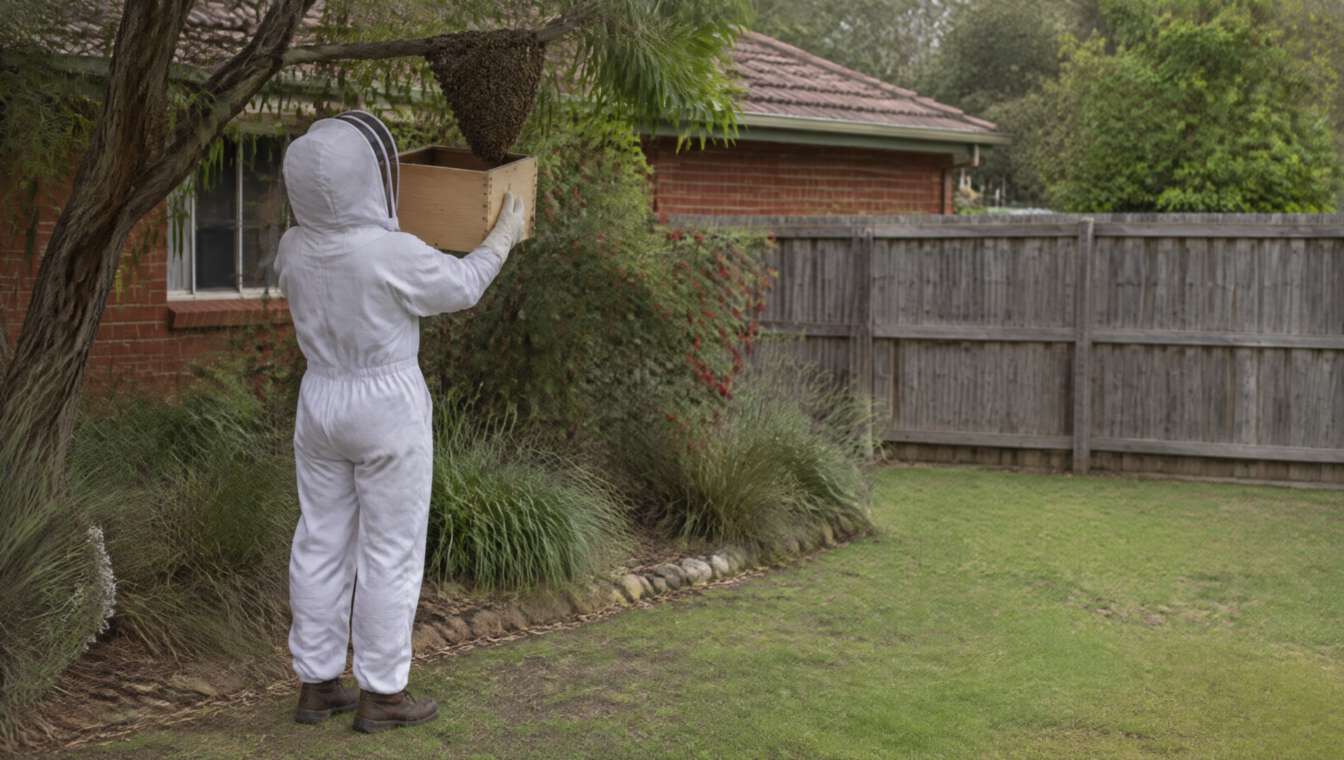
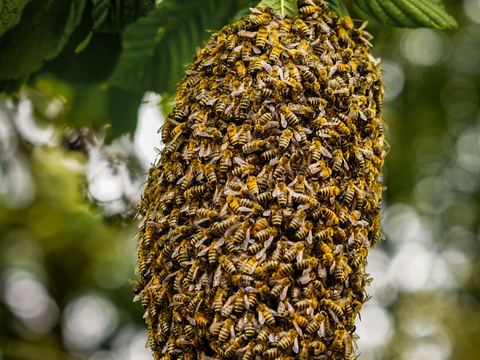
| What it looks like | A ball of bees hanging off a branch, fence or wall | Bees coming and going through one gap, all day |
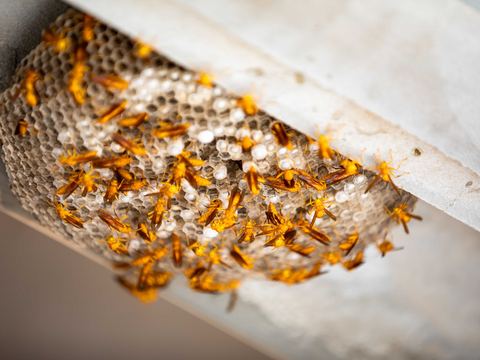
| What it's doing | Looking for somewhere to start a new nest | Already nesting, with comb inside the cavity |
| Who handles it | A local beekeeper | A pest business |
| Through our form | Not sent as a job: we show you the beekeeper option | Sent, and marked urgent |
Bees and Adelaide's councils
Private property is yours to sort
The City of Adelaide deals with nuisance bees in public areas. On private land, it leaves the owner to organise and pay for any work.
West Torrens points elsewhere
The City of West Torrens says it can't destroy bees, and refers residents to a qualified pest control agent, an apiarist (a beekeeper) or the South Australian Bee Keepers Society.
Most local bees aren't honey bees
The City of Adelaide counts over 300 native bee species in Adelaide and the Mt Lofty Ranges, mostly solitary and not aggressive. European honey bees are the ones that live in big colonies and sting when approached or provoked.
Spring is busy
The City of Adelaide says October is the most active time for bees in the Park Lands, which is when many people first notice traffic around a wall vent or roof gap.
What happens with bees in a wall
First the technician locates the colony, estimates its size, and works out whether the comb can be reached by opening a wall, eave or roof sheet. Then the colony is treated or taken out, and the entrance can be closed so the next swarm doesn't settle in the same cavity.
What makes it bigger: comb high in a two-storey wall, a cavity behind brick or tiles, or a colony that's been there for seasons. It's fair to ask whether a beekeeper might take the colony alive first; some will, if they can get to it.
While you wait
You can
- Shut windows and doors on that side of the house.
- Keep children and dogs inside or well clear.
- Mark which gap they're using, from well back.
- Get a photo of the cluster or entrance for whoever comes.
Leave to a pest business
- Anything involving comb inside a wall or roof.
- Closing the entrance once the colony is dealt with.
- Anything up a ladder or close to power lines.

If it were our place in Adelaide
A swarm on the fence? We'd leave it alone and ring a local beekeeper. Bees going into the wall day after day? Tap Bees, say where the gap is, and let a pest business work out what's inside.
Want someone to look at it?
Tell us what you've seen and your postcode, and a local pest business that handles exactly that calls you to talk it through.