
If you think you've found termites
Leave them exactly as they are
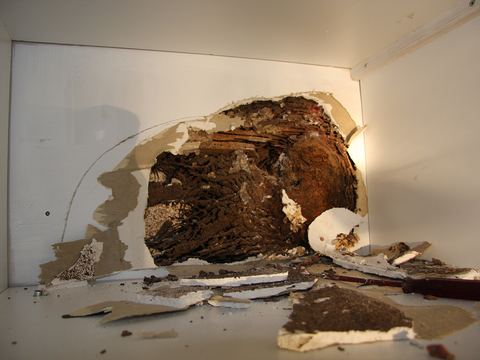
CSIRO says to take care not to disturb termites further, because several control options depend on finding them active. So no fly spray, no prising off the skirting, no breaking the mud.
Photograph what you can see
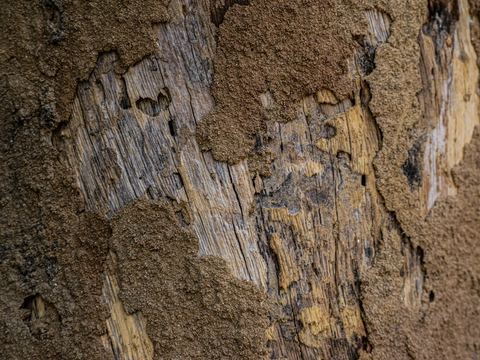
A photo of the damaged timber or mud tube, and where it is in the house, helps the termite inspector plan the visit.
Book an inspection
Tap Termites with your postcode. The inspector confirms what they are, how far they've gone and where they're likely coming from.
Termites around Adelaide
The framing termite
Adelaide Hills Council says Coptotermes frenchii is common wherever houses are framed in softwood or Oregon, and causes most of the timber pest damage to buildings in the South Australia region.
Colonies in gums and stumps
The same council says Coptotermes colonies often live in the root crown or lower trunk of trees, particularly eucalypts, and in old stumps, poles and filled-in verandahs where timber was buried. A big gum near the house is worth mentioning to the inspector.
Damp timber species
Heterotermes ferox goes for damp and rotting timber, often fences, poles and anything sitting in the soil, the council says. A leaking downpipe against a timber post is an invitation.
A mound in the bush isn't your house
Adelaide Hills Council leaves termite mounds alone, because the heath goanna, listed as vulnerable in South Australia, lays its eggs in them. Most termites recycle dead wood; only a handful of species damage buildings.
How people usually notice them
In a CSIRO survey, 86% of homes with termites found them through damaged wood, 34% through mud tubes and only 8% through wings. So look for timber that sounds hollow when tapped with a screwdriver handle, paint that has bubbled, or thin mud tracks running up a brick pier or across a slab edge.
Termites keep a wafer-thin outer layer on the timber they eat, so a skirting board can look fine until something pushes through it.
What the job usually involves
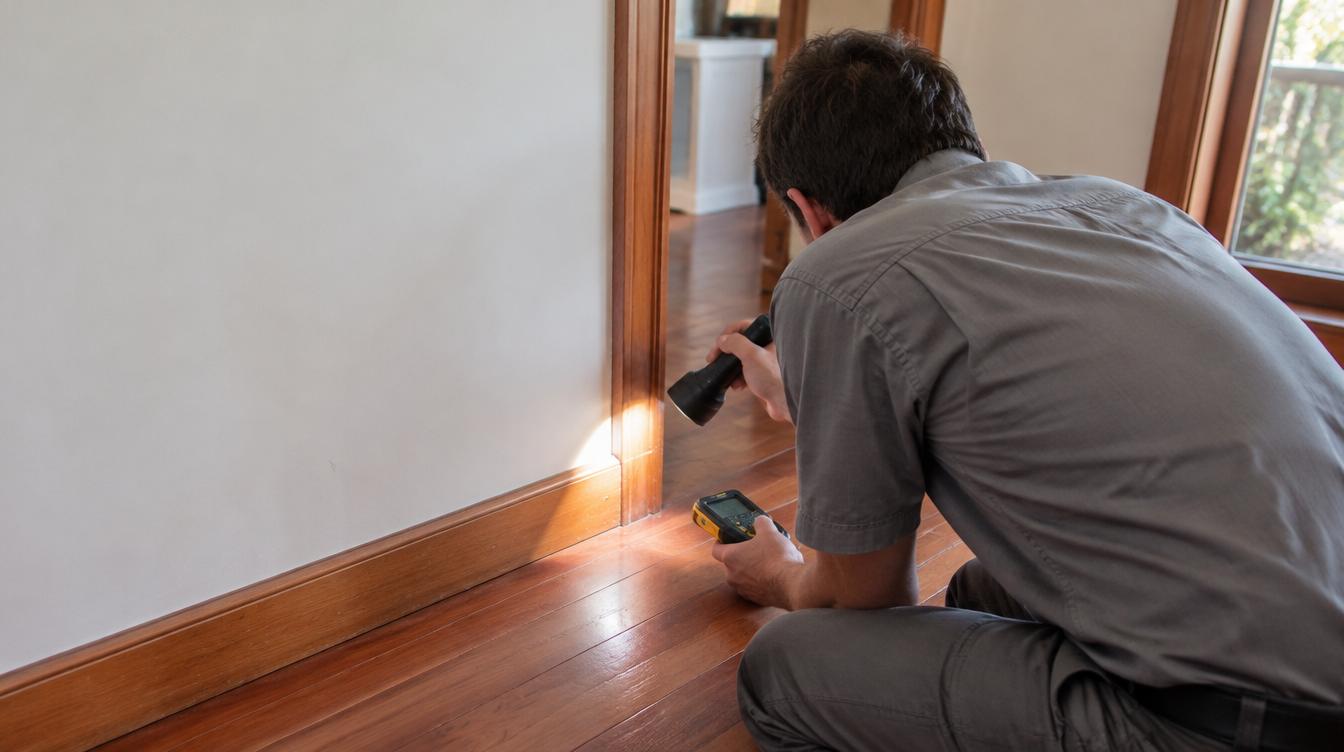
A visual inspection of the house, the subfloor (the space under a raised floor), the roof space and the garden comes first. If termites are active, the options are to treat the colony through the workings, to put in a termite barrier (a chemical or physical layer that stops termites getting into the house unseen), or to run baiting stations around the house, sometimes in combination.
What makes the job bigger: how far the damage runs, whether the subfloor and roof can be reached, concrete paths or extensions that hide the slab edge, and repairs to timber once the termites are dealt with. Ask for the inspection report in writing, with photos.
The meter box notice
On newer homes, the National Construction Code requires a durable notice, usually in the meter box, showing which termite management system was installed, when, and the recommended frequency of inspections. Find it before the inspector arrives; it tells them what they're working with.
Questions for the termite inspector
- Which species is it, and where do you think the colony is?
- Can you treat the colony itself, or only the house?
- Which product will you use, and can I have its full name?
- What does any warranty cover, and what inspections does it depend on?
- Do you hold an SA Pest Management Technician's licence, and what timber pest training do you have?

Where we'd start with termite inspections and treatment in Adelaide
If you've seen damage or mud, leave it alone and get an inspection booked. If you've seen nothing but haven't had a check in years, and there are gums, stumps or old fence posts near the walls, we'd still book one.
Want someone to look at it?
Tell us what you've seen and your postcode, and a local pest business that handles exactly that calls you to talk it through.