
When you find something
Step back from it
Don't poke, spray or pull at the damage. CSIRO says several control options rely on finding active termites, and disturbing them makes that harder.
Take photos
Note the room and the wall, and whether it's near a bathroom, a leaking pipe, a garden bed or a deck.
Look in the meter box
Newer homes should have a durable termite notice there, naming the system installed, its installation date and how often it should be inspected.
Tap Termites
Give your postcode and say what you found. The inspector will want to see the photos.
Termites on the Sunshine Coast
Queensland's house termites live here too
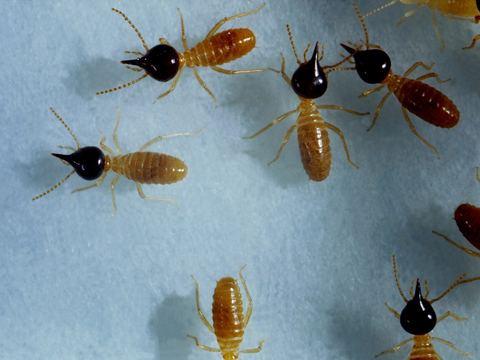
Business Queensland says Coptotermes acinaciformis and Schedorhinotermes, the subterranean termites that reach houses through enclosed mud galleries, occur throughout Queensland. Coast or hinterland, the inspection is the same.
Wet summers, humid evenings
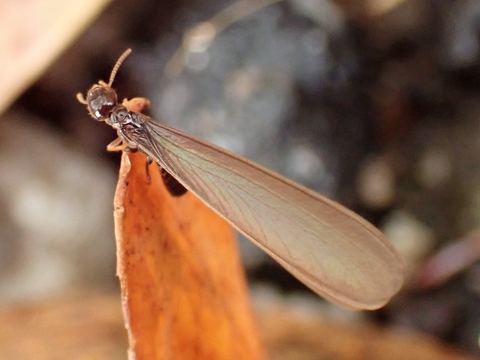
Most of South East Queensland's rain falls in summer and autumn, and CSIRO says winged termites fly from the nest in humid weather in the warmer months, often at dusk. Wings on the sills after a sticky night are worth mentioning to an inspector.
Two councils, one set of rules
Sunshine Coast Council and Noosa Shire Council both sit under Queensland's termite rules: Queensland Health licenses the pesticide work, and the QBCC licenses termite management on buildings.
Flying termite or flying ant?
| Flying termite | Flying ant | |
|---|---|---|
| Antennae | Straight, with bead like segments | Elbowed |
| Wings | Two pairs of equal size, shed easily | Front pair larger than the back pair |
| Waist | None: thick from front to back | Narrow waist |
| What it means | A colony somewhere nearby; worth an inspection | Usually a nuisance, not a building pest |
How an inspector confirms termites
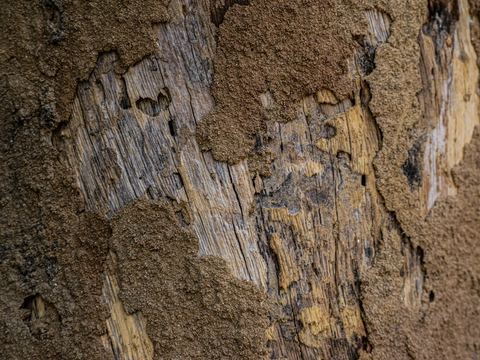
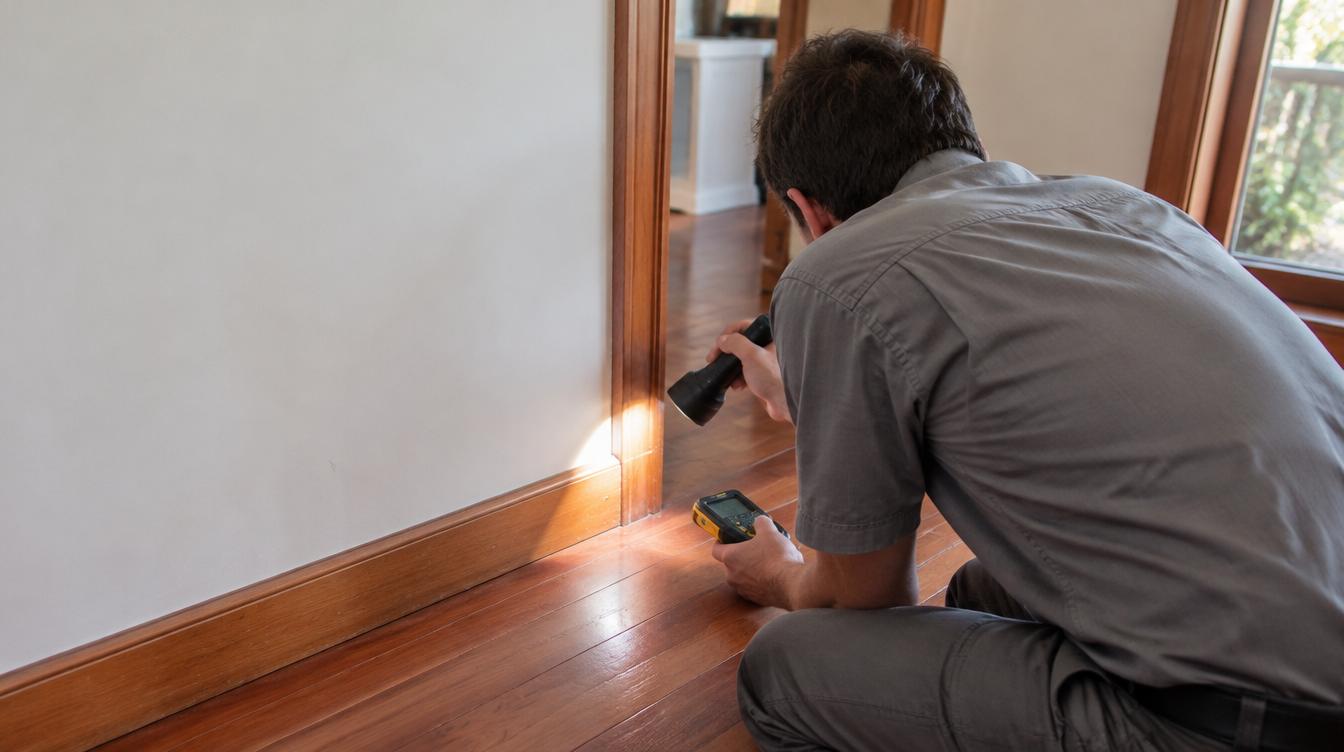
A termite inspector usually starts outside, around the slab edge, stumps, piers and garden beds, then works through the subfloor, the roof void and each room. They're looking for live termites, mud tubes, hollow or paper thin timber, and the moisture that draws termites in. Termite damaged timber can keep a thin outer skin, CSIRO says, so it can look sound from the outside.
Identifying the species and finding where they're coming from shapes everything after that. Subterranean termites usually forage within 30 m of their nest and occasionally 100 m or more, so the colony may not even be on your block.
What treatment usually involves
If termites are active, expect a written proposal: deal with the activity, then protect the house from hidden entry, with a chemical treatment around the building, a monitoring and baiting system, or both, plus a schedule of inspections. In Queensland, the QBCC's chemical termite class covers perimeter treatments and inspecting and reporting on infestations, and anyone doing that work also needs a Queensland Health pest management licence.
What makes the job bigger: how far the termites have spread, how hard the subfloor and roof void are to reach, concrete paths or decking over the slab edge, and damaged timber that will need a builder once the termites are dealt with.
Before you agree to a treatment
- Did you find live termites, and which species?
- Which system or product are you proposing, and what is its full name?
- What will happen to the paving, garden beds or decking along the walls?
- How often will you come back to inspect, and is that written into the proposal?
- What does the warranty cover, and what do I need to keep doing for it to apply?

Where we'd start with termite inspections and treatment on the Sunshine Coast
Don't rush into a treatment you don't understand, and don't put it off either. Get the inspection, read the written proposal, ask every question above, then decide. Tap Termites to start.
Want someone to look at it?
Tell us what you've seen and your postcode, and a local pest business that handles exactly that calls you to talk it through.