
Termites on the range
Found statewide
Business Queensland says Coptotermes and Schedorhinotermes, the subterranean termites that move above ground in enclosed mud galleries to reach a house, occur throughout Queensland. Sitting about 700 metres up on the Great Dividing Range doesn't take Toowoomba off that list.
Termite or borer?
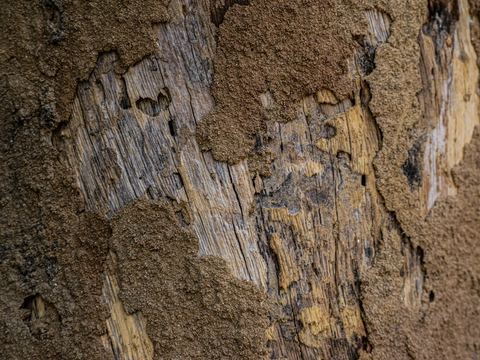
The Darling Downs also has the common furniture beetle, a borer of old European pine. Small round holes with powder beneath point to borer; soft, hollow timber and mud point to termites. The fix is different, so the inspector needs to name which.
Garden makeovers
The QBCC says new garden beds, paths, patios, pergolas, landscaping and turf can make a termite system less effective. If the garden has changed since the system went in, tell the inspector.
Termites or furniture beetle?
| Termites | Common furniture beetle | |
|---|---|---|
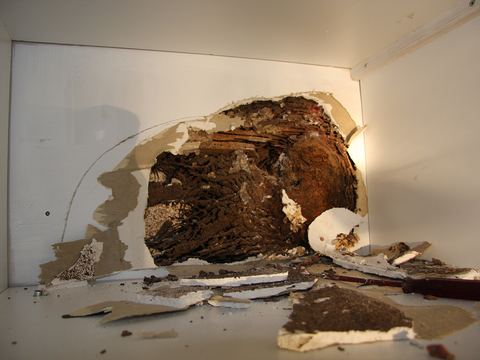
| What you notice | Damaged timber with a thin outer skin, or mud tubes | Round exit holes 1 to 2 mm across, with fine dust |
| What they eat | Most timber in a house, even the paper on plasterboard | Mainly European pine in service for more than 20 years |
| Who to call | A termite inspector | A pest business that handles timber pests |
Found some? Leave them alone
Don't spray them, break open the mud or pull out damaged timber. CSIRO says several control options rely on finding termites still active, so the less they're disturbed before the inspection, the more options the technician has.
Most people find termites by the damage. In a CSIRO survey of homes with termites, 86% noticed damaged wood, 34% mud tubes and only 8% wings.
How a termite job usually runs
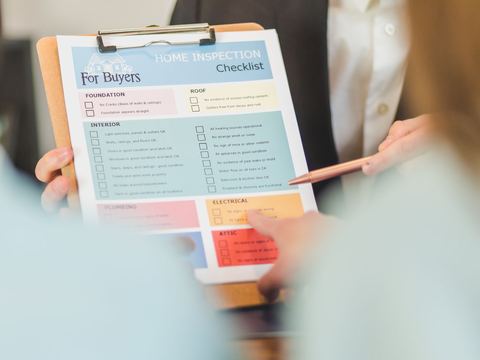
First comes a full inspection of the roof space, subfloor, walls and garden, with a written report of what's active and where. Treatment then targets the colony and the way in: commonly a chemical barrier in the soil around the house, a baiting system, or both, plus follow-up visits to confirm the activity has stopped.
After that, the QBCC advises an inspection every year, or more often where termites are more active. Our pages on termite barriers and termite baiting explain each option.
The Queensland licences behind the work
A pest management licence from Queensland Health is needed to apply pesticides for a fee, with endorsements such as timber pest control. The QBCC's termite management (chemical) class covers perimeter chemical treatment of new building work and inspecting and reporting on termite systems in finished buildings, and its physical class covers installing physical systems. The Queensland page has the detail.
Your part, and the termite inspector's
You can
- Photograph what you've found from where it is, without touching it.
- Fix leaking taps, pipes and downpipes near the walls.
- Keep mulch and garden beds below the slab edge and weep holes.
- Store firewood and timber off the ground, away from the house.
Leave to a pest business
- Inspecting the roof space, subfloor and wall cavities.
- Identifying the termite, or ruling it out as borer.
- Treating the colony and the way in, and checking the system afterwards.

Where we'd start with termite inspections and treatment in Toowoomba
We'd take one photo, leave everything else exactly as it is, and get an inspection booked. If you're not sure whether it's termites or borer, say so when you tap Termites; the inspector sorts it out on site.
Want someone to look at it?
Tell us what you've seen and your postcode, and a local pest business that handles exactly that calls you to talk it through.