
Found something? Stop and step back
If you've cracked open a skirting board or knocked a mud tube off a pier, leave the rest as it is. CSIRO says to avoid disturbing termites further, because several control options depend on finding them still active. Spraying them with a household can or pulling out the damaged timber tends to send them somewhere you can't see.
Termites and a Geelong house
It's the owner's call
The City of Greater Geelong says owners and occupiers must deal with pests on their own property, and the council doesn't remove pests from private land. A termite worry in your house, shed or fence is yours to have inspected.
No suburb gets an all clear
We couldn't confirm whether any part of Greater Geelong is a designated termite area, and a designation wouldn't tell you much anyway: it's a building rule for new work, set council by council. Ballarat isn't declared, yet its council says there's always a risk of attack.
Victoria's licence for termite work
Victoria licenses individual technicians, and termite work needs the general authorisation including timber pests. The version that excludes timber pests doesn't cover termites, so it's fair to ask which one the technician holds.
How termites usually get noticed
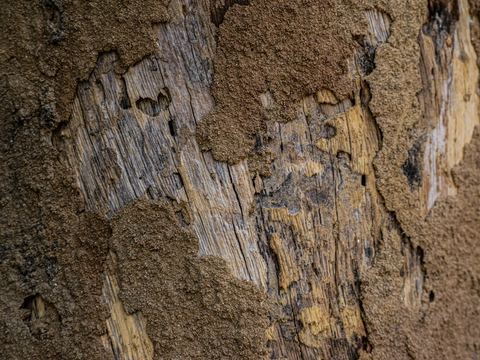
In a CSIRO survey of homes with termites, 86% found them through damaged wood, 34% through mud tubes and just 8% through wings. The tubes are thin tunnels of mud that subterranean termites build over brick, concrete and hard timber to stay damp and out of the light.
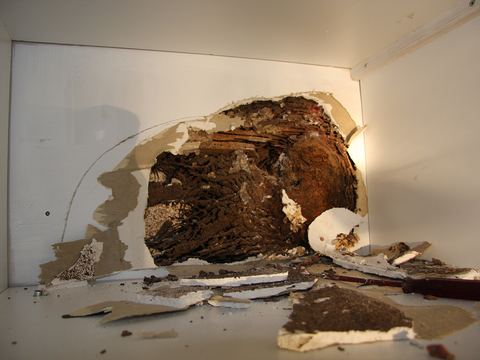
Timber they've been eating can sound dull and hollow when tapped, and it often keeps a paper thin outer skin, so it looks sound until it gives. Paint that bubbles or blisters for no clear reason is another clue, according to Consumer Affairs Victoria. Our signs of termites page has drawings of each.
What the job usually involves
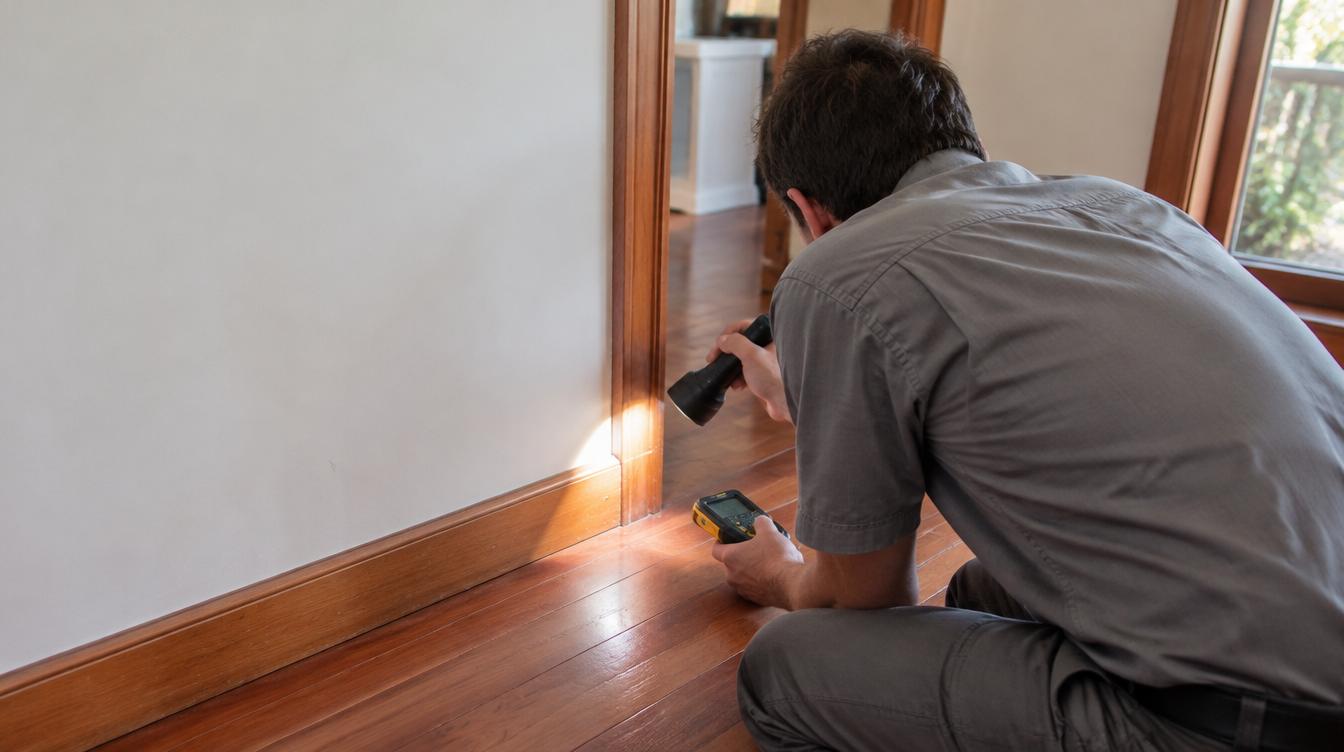
It starts with a full inspection: roof space, subfloor (the space under a raised floor), every room, the garage, outbuildings, fences, stumps and nearby trees, with a written report. Some inspectors use moisture meters or other tools to check behind linings without opening them.
If termites are active, treatment is usually a termite barrier (a chemical or physical layer that stops termites getting into the house unseen), a baiting system, or both, then follow-up inspections. What makes the job bigger is how far they've spread, how easy the roof and subfloor are to get into, and whether timber needs repair afterwards. Our termite treatment page compares the options.
What you can do, and what to leave
You can
- Fix dripping taps, leaking downpipes and roof leaks quickly; damp draws termites in.
- Keep garden beds, mulch and timber from building up against the walls.
- Store firewood off the ground and away from the house.
- Photograph anything suspicious and note where it is.
Leave to a pest business
- Opening up damaged timber or wall linings.
- Any treatment, barrier or bait system.
- Working out where the colony is coming from.
Before you agree to a treatment
- Which licence authorisation do you hold for timber pests?
- Where exactly did you find activity, and can I see the photos?
- Why this system for this house, and what follow-up inspections does it need?
- What's the full product name, and what does any warranty cover, in writing?

If it were our house in Geelong
We'd book an inspection now if it's been a few years, and straight away if you've found tubes or hollow timber. Leave everything as you found it until the inspector has seen it, then tap Termites with your postcode.
Want someone to look at it?
Tell us what you've seen and your postcode, and a local pest business that handles exactly that calls you to talk it through.