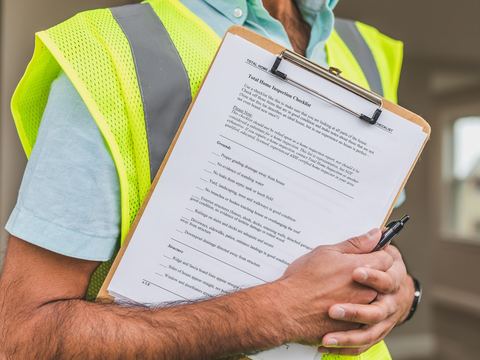
Read the notice in the meter box
Where the National Construction Code requires a termite management system, it also requires a durable notice fixed somewhere prominent, such as the meter box. The notice shows which system was used and when it was installed, and the installer's recommended scope and frequency of future inspections. For a chemical system, it also shows the life expectancy given on the product's register label.
Photograph it and keep the photo with your house papers. Older homes built before the requirement may have no notice at all, which is a reason to book an inspection rather than a reason to relax.
Signs worth a look
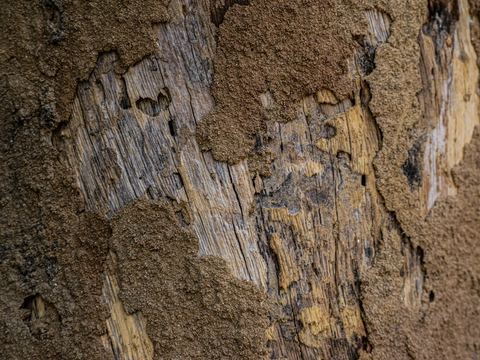
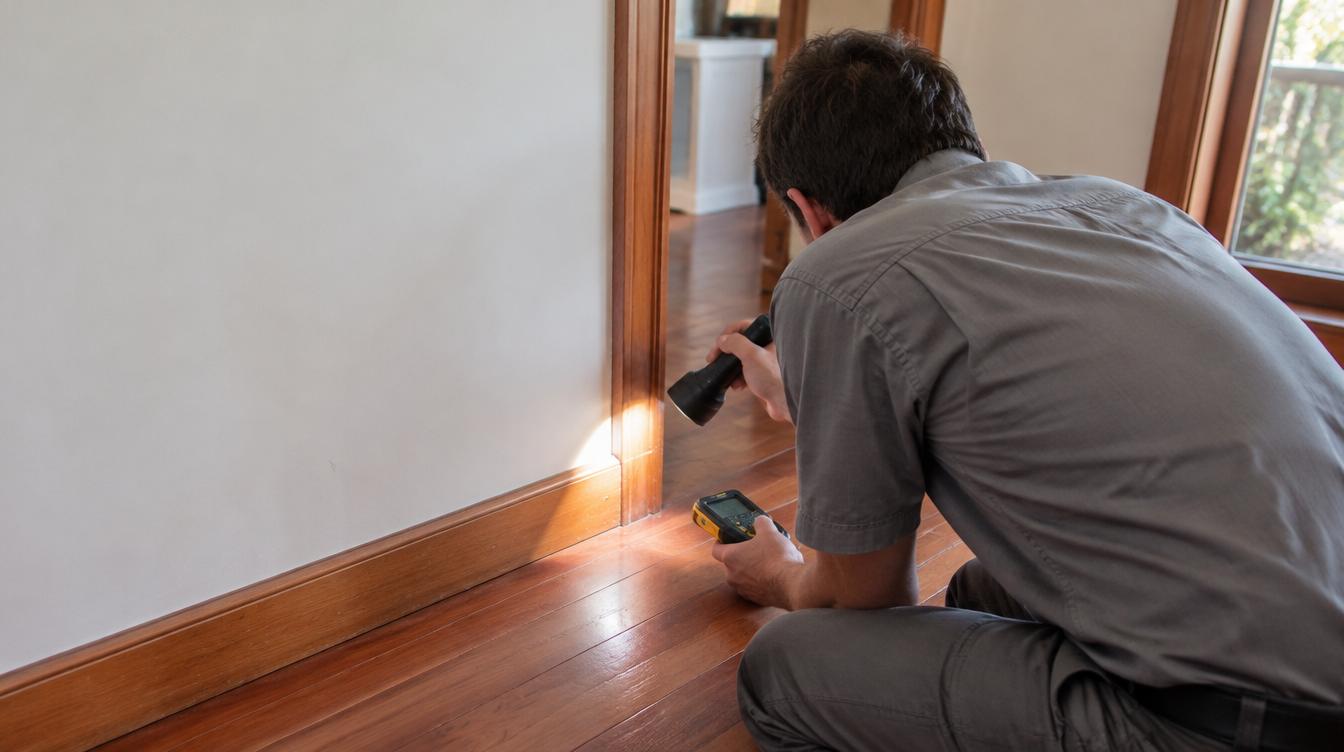
CSIRO says termites can damage timber flooring, linings, architraves, furniture, books and even the paper backing on plasterboard, including in houses where the main structure is protected. Look along skirting boards, architraves and door frames for timber that feels soft or looks rippled under the paint.
Drywood termites are different: they leave gritty droppings, like sand or ground pepper, below holes that may be only 1 mm wide. Whatever you find, don't touch it or spray it. Several treatments need the termites still active, so a disturbed colony makes the job harder.
Wollongong, honestly
No local termite figures
Official sources don't publish termite data for Wollongong, and CSIRO's hazard zones exist only as a national map. Anyone quoting a precise local risk figure is guessing, so judge your house by what the inspection finds.
The nest may not be on your block
CSIRO says subterranean termites usually forage within 30 m of their nest and occasionally travel 100 m or more. A colony in a neighbour's tree or the bush up the slope can reach your house.
Inspections and the NSW EPA
In NSW, a timber pest inspection that uses no pesticides doesn't need an EPA licence. Treating termites does, so the licence question matters at the treatment stage.
Funnel-webs under the house
The Australian Museum lists some Sydney funnel-web records from Wollongong. If you're clearing the subfloor for an inspector, gloves and closed shoes are sensible.
From inspection to treatment
The inspection
The inspector checks the roof void, subfloor, walls, garden, fences and trees, and writes up what they found and where they couldn't reach.
If termites are active
They'll suggest a treatment, usually baiting or a soil barrier, and explain why that one suits your house.
Follow-up
Bait systems are checked on return visits, and barrier treatments may be followed by a check that activity has stopped. Ask how many visits are included.
Afterwards
Keep the report and any treatment record with the product name, and put the next inspection in the calendar.

Where we'd start with termite inspections and treatment in Wollongong
Open the meter box, photograph the termite notice if there is one, and book the inspection it recommends. Already seen damage or mud? Leave it alone and tap Termites with your postcode.
Want someone to look at it?
Tell us what you've seen and your postcode, and a local pest business that handles exactly that calls you to talk it through.