
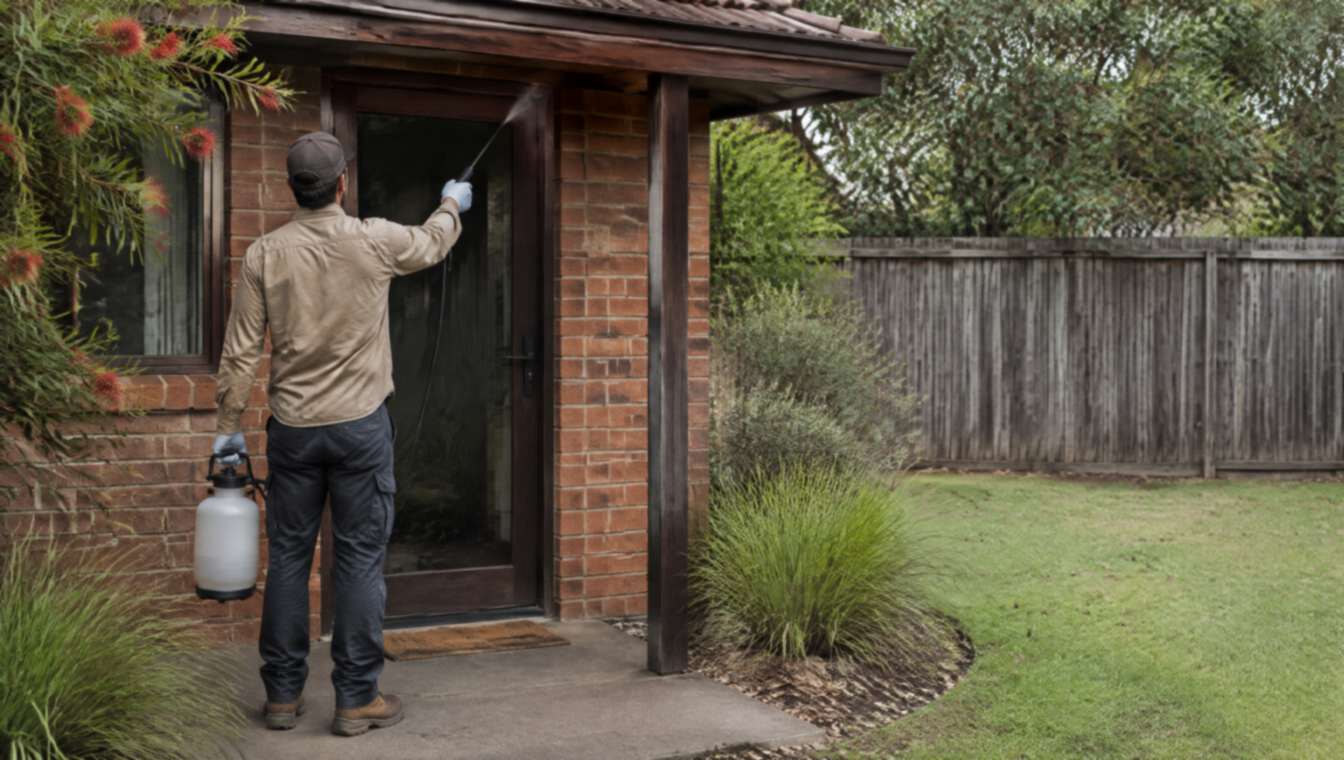
Orange, New South Wales
Pest control in Orange
Yellow and black, and mostly underground.
In Orange, the pest worth knowing first is the European wasp, which the Australian Museum lists here, and whose nests are usually hidden in the ground rather than hanging where you can see them.
- Matched to what you've seen
- Only one local pest business gets your number.
Matched to what you've seen
Before a pest business can take jobs from Which Pest, we record the jobs it handles, so a termite job never goes to a business that only sprays for spiders.
Only one local pest business gets your number.
We pass your contact details to one local pest business so it can contact you about this job.
Pest control in Orange: what to know before anyone calls
On this page
Stung, or near a nest?
Keep people and pets away from the nest and don't dig, block or pour anything into the hole. Call 000 if someone stung has noisy breathing, a swollen tongue or throat, a wheeze, a change in voice, dizziness or collapses. If they carry an adrenaline autoinjector, healthdirect says to use it straight away, then call 000.
What's different in Orange
European wasps live here
The Australian Museum names Orange, Bathurst and Forbes among the places European wasps are found. The museum says they were known in NSW by 1978.
How NSW Health maps mosquitoes
NSW Health splits the state's mosquito-borne virus activity into three zones: inland, the tablelands, and the coastal strip. As at 30 July 2026, it lists Orange as a Japanese encephalitis high risk area, a health listing for NSW Health and your GP rather than a pest job.
Summer surveillance
NSW Health watches mosquitoes and the viruses they carry every year from November to April, the peak months for both.
Is it a European wasp?
The Australian Museum describes a stout wasp, 1.2 to 1.6 cm long, with a bright yellow and black banded body and black spots on each yellow band. Victoria's health department adds two clues you can see from a distance: European wasps have all black antennae and fly fast with their legs tucked in, while paper wasps are slimmer, have orange-brown antennae and let their back legs dangle.
A nest made of mud isn't a European wasp nest. Theirs are papery, made from chewed wood pulp, and about 80% of them are in the ground, with most of the rest inside roofs and wall cavities. What you usually see is a steady line of wasps going in and out of one hole.
Why the nest might not be in your yard
European wasps forage up to half a kilometre from the nest, so the ones at your barbecue may live next door or across the road. They're drawn to meat, sweet food and drink.
A colony starts in spring with one queen and grows all summer; new queens and males hatch in autumn. The museum says Australia's warmer climate can keep a nest going over several seasons, past 100,000 wasps, so a hole that looks quiet in October can be busy by March.
Bees or wasps?
| Bees | European wasps | |
|---|---|---|
| Body | Rounder and usually hairy | Slender and smooth, bright yellow and black |
| Sting | Leaves the sting in the skin | Can sting more than once |
| Usual nest | A swarm on a branch, or a hive in a cavity | A hole in the ground, a roof or a wall |
| Who to call | A beekeeper for a swarm; a pest business for bees in the house | A pest business |

Where we'd start with pests in Orange
Watch from well back to find where the wasps are going in, take a photo, and tap A wasp nest. Leave the hose and the fly spray alone: a disturbed nest defends itself, and European wasps attack when that happens.
Want someone to look at it?
Tell us what you've seen and your postcode, and a local pest business that handles exactly that calls you to talk it through.
Questions
Pest control in Orange: common questions
How many stings need a doctor?
healthdirect says to see a doctor straight away if a child has 5 or more stings or an adult has 10 or more. For one or two, wash with soap and water and use a wrapped ice pack for 15 minutes.
Do you handle bee removal in Orange?
Bees inside a wall or roof are a job a pest business can quote. A swarm resting in a tree is usually collected by a local beekeeper. Our bees page explains the difference.
Seen a pest in Orange? Tell us what it is.
What you have seen, one tap about it and your postcode. Then a local pest business that handles exactly that calls you.
Before anyone starts
The licence rules where you live
Related help
More on pest control in Orange
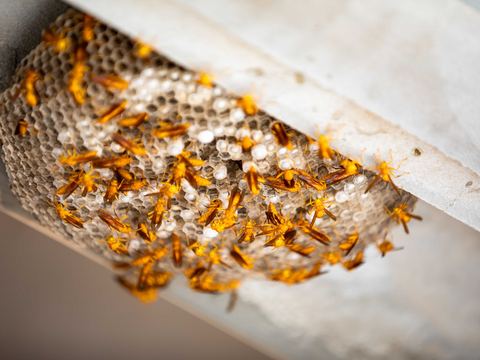 Wasp nest removalWhat to do first, which wasp it is, and why WA reports European wasps.Read it
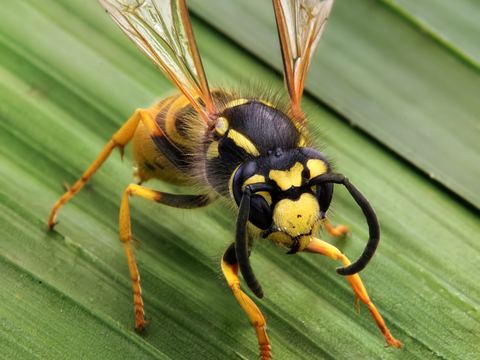 European waspHow to pick a European wasp from a paper wasp, find the nest without getting stung, and the WA report line.Read it
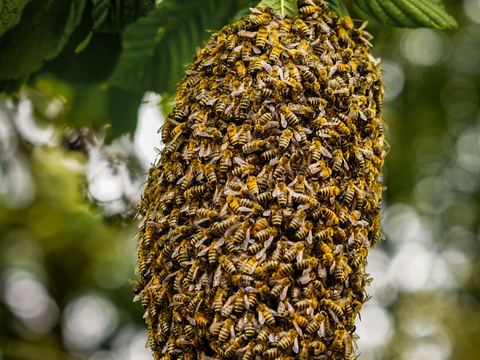 Bee hive removalSwarm or colony, who to call for each, and what to ask before anyone opens a wall.Read it
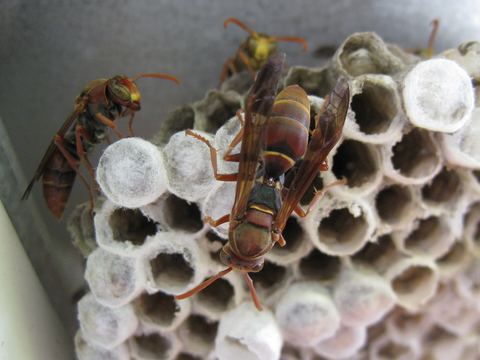 Paper waspHow to identify a paper wasp and its comb, sting first aid, and when a nest is worth a call.Read it
 Pest control in New South WalesWho the NSW EPA licenses, the timber pest licence, possums, fire ants and renting rules.Read it
Where this information comes from
- Australian Museum European wasp, checked 3 November 2026
- Victorian Department of Health (published by the then Department of Health and Human Services) Pest control technical note number 21: European wasps, checked 3 November 2026
- Australian Museum European wasp, checked 3 November 2026
- healthdirect Australia Bee and wasp stings, checked 3 November 2026
- healthdirect Australia Bee and wasp stings, checked 3 November 2026
- NSW Health Japanese encephalitis virus (JEV) vaccination (high risk areas), checked 3 November 2026
- NSW Health (Health Protection NSW and NSW Health Pathology, ICPMR Westmead) NSW Arbovirus Surveillance Program Annual report 2024-2025, checked 3 November 2026
Rules and advice change, so check the source before you act on anything here. How we write and check these pages.