Bitten? Call 000 now
healthdirect says any bite from a big black spider is a medical emergency: call 000 for an ambulance, and don't wait for symptoms. Lie the person down and keep them still. Wrap an elasticated bandage 10 to 15 cm wide firmly over the bite, then a second one over the whole limb, starting just above the fingers or toes; it shouldn't cut off circulation. Splint the limb to keep it still. Don't cut the bite, don't use a tourniquet, and give them nothing to eat or drink. No phone reception? NSW Health's children's hospitals say call 000 anyway, or go straight to the nearest emergency department. This bandage is for funnel-web and mouse spider bites only, not redbacks.
How to recognise a funnel-web
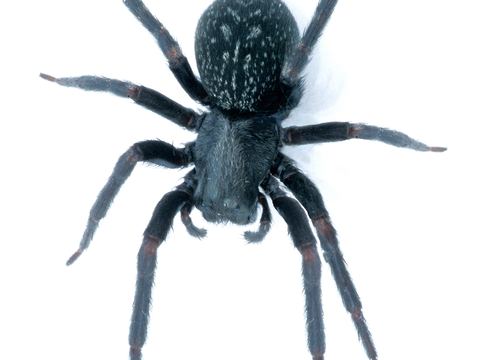
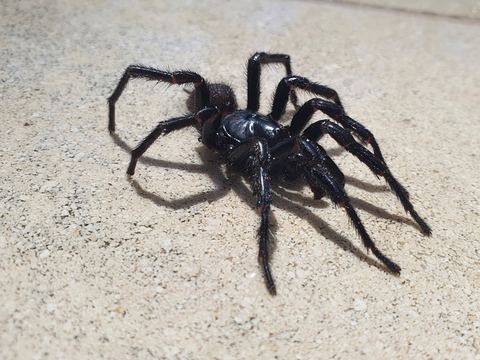
Funnel-webs are medium to large, black to brown, with a shiny front body section (the carapace). Look at the rear end: they have finger-like spinnerets sticking out past the abdomen, and in the Sydney funnel-web the side pair is long and easy to see. The Sydney funnel-web measures 2.0 to 4.0 cm, and males carry a large spur halfway along the second pair of legs.
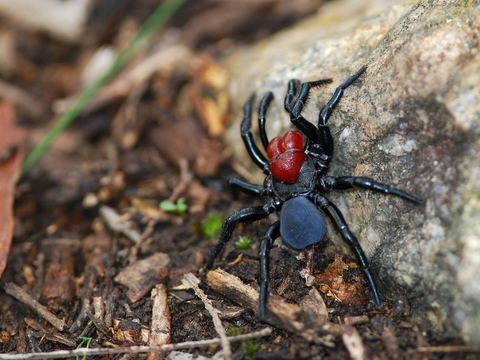
Even the Australian Museum says you can't tell the Sydney funnel-web from its southern cousin by eye, and that mouse spiders, trapdoor spiders and black house spiders are often mistaken for funnel-webs. So don't get close enough to check.
Funnel-web or a look-alike?
| Funnel-web | Mouse spider | Black house spider | |
|---|---|---|---|
| Body | Shiny carapace, long finger-like spinnerets | Bulbous head and jaws, short spinnerets | Dark and solid looking, grey hairs on the carapace |
| Home | Silk-lined burrow with trip-lines fanning out from the entrance | Burrow in the ground, some with two trapdoors at the top | Lacy web with a funnel entrance, around window frames |
| Bite | Emergency: call 000 and bandage | Treat like a funnel-web: call 000 and bandage | Can be painful, with swelling; wash and use a cold pack |
Where funnel-webs live
There are 38 described species in eastern Australia, in moist forests from Tasmania to north Queensland, and in drier forests on the Western Slopes and around South Australia's gulfs. Most live in burrows under rocks, in rotting logs or in crevices that stay cool and damp; the southern tree funnel-web builds in rough-barked trees instead.
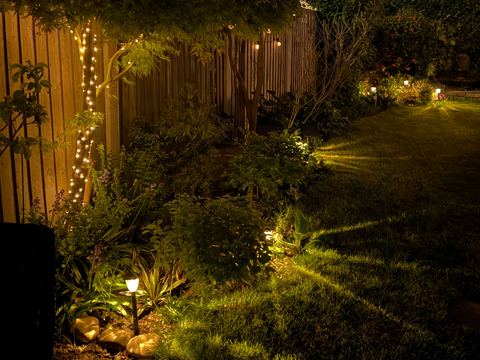
The Sydney funnel-web's main range runs from the Central Coast south to the Georges River and west to around Baulkham Hills, with records from the Blue Mountains and Wollongong. In gardens, look for burrows in rockeries, dense shrubs, logs and leaf litter in shade. Better Health Channel says the Sydney funnel-web isn't found in Victoria.
When males wander into houses
Females seldom leave their burrows. Males go looking for them at night through the warmer months, from November to April, especially on humid nights and after wet weather, and they need cool, damp cover by dawn. That's when they turn up in shoes, piles of washing and swimming pools.
A funnel-web in the pool may not be dead: they've survived 24 to 30 hours under water. Don't touch it, with or without gloves.
How dangerous is a bite?
The venom attacks the nervous system. The male Sydney funnel-web caused most of the 13 recorded funnel-web deaths, and there have been none since antivenom arrived in 1981. Up to 30 to 40 people are bitten each year, and hospitals in major cities and regional centres hold the antivenom. The Australian Museum says first aid should be given straight away.
In funnel-web country
You can
- Shake out shoes, clothes and bedding left on the floor, especially in the warmer months.
- Wear gloves and closed shoes when gardening around rocks, logs and leaf litter.
- Fit draught strips under doors, and keep the laundry and garage doors shut at night.
- Make sure everyone in the house knows the first aid above.
Leave to a pest business
- Any spider you think is a funnel-web: never try to handle one.
- A treatment around entry points and damp hiding spots if males keep turning up inside.

Where we'd start with the funnel web spider
We'd teach everyone the bandage first aid, keep shoes off the floor from November to April, and seal the gaps under doors. If funnel-webs keep turning up inside or in the pool, tap Spiders or ants and say so.
Want someone to look at it?
Tell us what you've seen and your postcode, and a local pest business that handles exactly that calls you to talk it through.