If someone is bitten
If you're sure it was a black house spider, Better Health Channel advises washing the bite with soap and water and holding a cold pack on it for 15 minutes. If you're not sure what bit them, or it was a big black spider on the ground or the floor, healthdirect says to treat it as a medical emergency: call 000 and follow the funnel-web first aid. The Poisons Information Centre on 13 11 26 can advise any time.
What it looks like
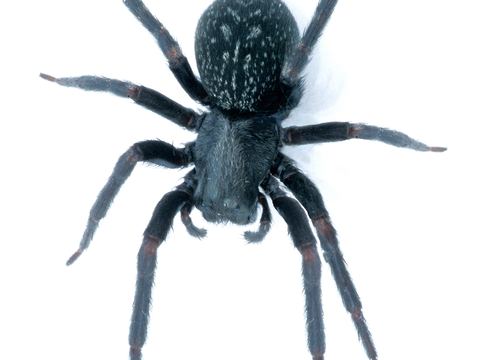
Adults are dark brown to black, with a charcoal abdomen and grey hairs that are usually visible on the carapace (the front section of the body). They're thickset rather than leggy, and the females are larger than the males.
The brown house spider is a close relative, slightly smaller, and you'll find it in the same kinds of places.
The web is the giveaway
Black house spiders build lacy, untidy-looking webs with a funnel-like entrance, typically in the corners of window frames and in wall crevices. The spider waits inside the funnel and disappears into it the moment anything disturbs the web.
They mature in summer and live for about two years, and they're widely distributed, particularly in southern and eastern Australia.
Is it a funnel-web?
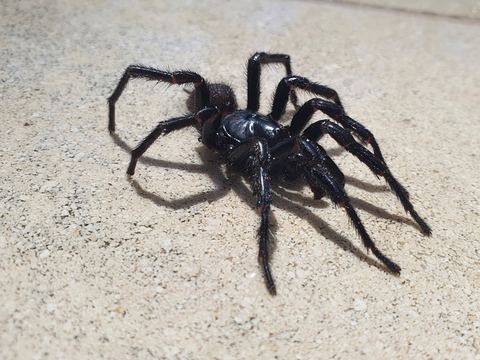
No, though the name and the funnel-shaped retreat cause a lot of worry. The Australian Museum lists black house spiders among the spiders most often mistaken for funnel-webs, and says the two aren't related or similar in appearance, size or life history.
Where they live is the easiest clue. Most funnel-webs live in burrows under rocks, in rotting logs or in crevices in cool, moist places near the ground. A black house spider's web is usually up on the wall or the window frame.
How bad is a bite?
Bites are uncommon because the spiders are timid. When one does bite, it can be quite painful with swelling around the bite, and occasionally brings nausea, vomiting, sweating and dizziness.
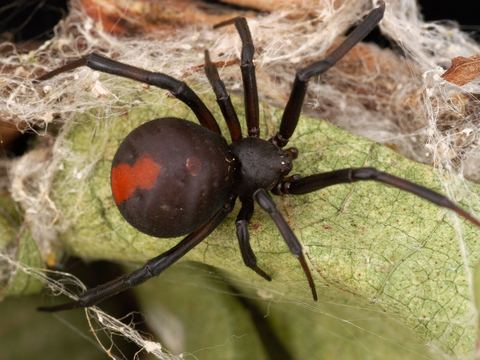
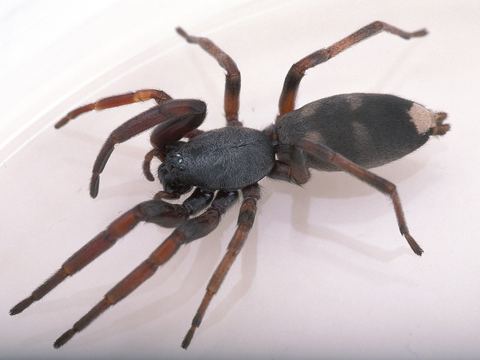
There's a food chain worth knowing about too. Black house spiders eat redbacks, and they're a favoured food of the white-tail spider. If you're finding white-tails indoors, their dinner may be living in your window frames.
What you can do
You can
- Brush webs off window frames and wall corners with a long-handled broom, wearing gloves.
- Once the webs are gone, fill the cracks around window frames with a sealant.
- Turn off outdoor lights you don't need, so fewer insects gather around the windows.
- Check the flyscreens and fix any gaps at the edges.
Leave to a pest business
- Webs in every window and right around the eaves, where a general outdoor spider treatment helps.
- Spiders in high places you'd need a ladder to reach.
- White-tails turning up inside as well.

What we'd do about the black house spider
One or two webs in the window frames don't need a pest business; a broom, gloves and a tube of sealant will do. When they're in every window and you're also seeing white-tails inside, a general spider treatment around the outside of the house is worth asking about: tap Spiders or ants.
Want someone to look at it?
Tell us what you've seen and your postcode, and a local pest business that handles exactly that calls you to talk it through.