What a carpenter ant looks like
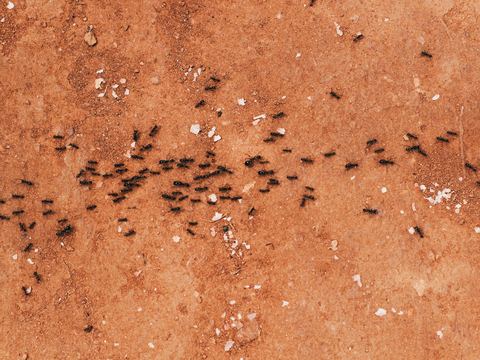
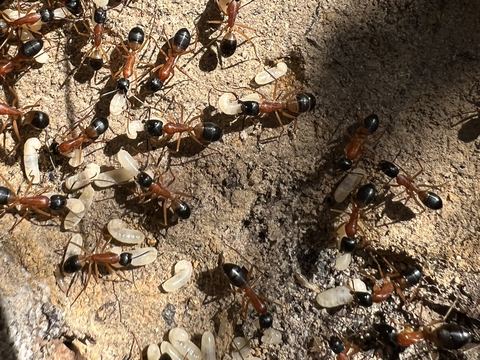
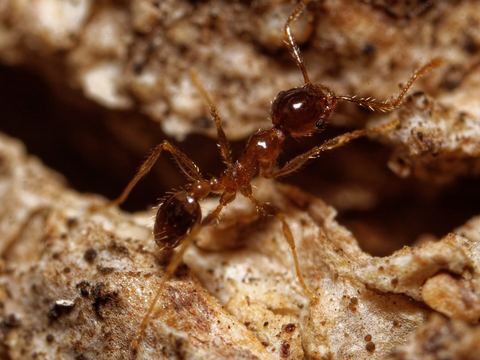
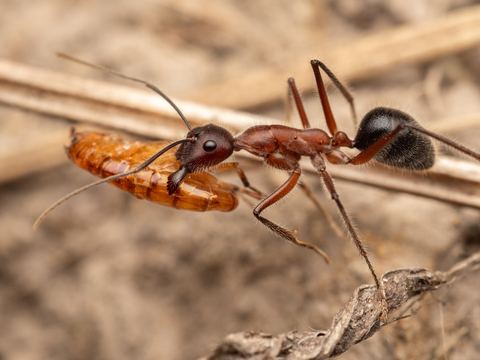
Victoria's Health department describes carpenter ants as varying a lot in size and colour, from about 2.5 to 14 mm and brown to pale brown. They belong to the genus Camponotus, and the one most Australians know is the banded sugar ant: 5 to 15 mm, with an orange-brown middle and a black head and abdomen.
They're mostly out at night and will travel a long way for a meal. On summer evenings you'll see them running under porch lights and street lights. Like every ant, they have elbowed antennae and a pinched, narrow waist.
Do they damage timber?
Not the way the name suggests. Victoria's Health department says ants aren't related to termites and can't damage sound timber. Carpenter ants prefer to dig into moist, rotting wood and other soft material, and seldom tunnel into dry, sound wood. The same source says they rarely come inside and rarely cause structural damage.
So if you find a nest in a deck board, a window sill or a fence post, treat it as a message about the wood. Something has kept that timber wet long enough to rot, and that's the repair to chase.
Carpenter ant or termite?
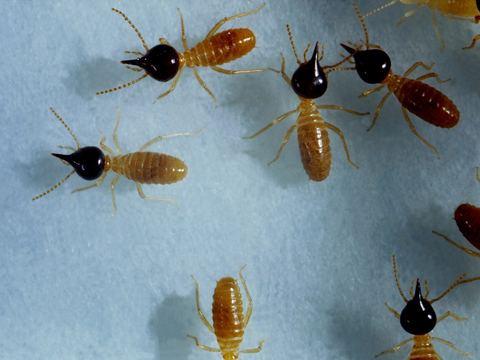
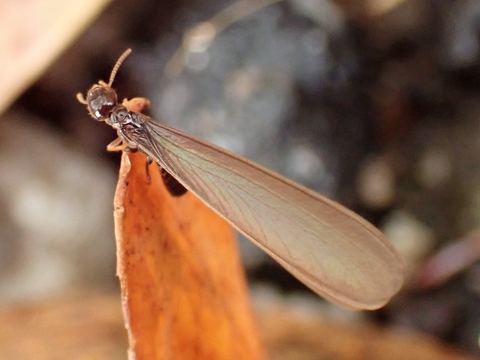
| Carpenter ant | Termite | |
|---|---|---|
| Waist | Narrow, pinched | None between thorax and abdomen |
| Antennae | Elbowed | Straight, with bead-like segments |
| Colour | Brown to pale brown, or black and orange | Pale brown to white, darker head |
| Wings, if flying | Front pair larger than the back pair | Two pairs of equal size, shed easily |
| Timber | Nests in wood that's already wet or rotting | Eats sound timber, often leaving a thin outer skin |
Where you'll find the nests
Mostly outside: in decaying wood, in soil, between rocks, among plant roots and in twigs on shrubs and trees. They eat live and dead insects, sweet food and household scraps, and the Australian Museum describes sugar ants tending aphids for their honeydew much like farmers tend stock.
What to do about them
You can
- Find and fix whatever is keeping the timber wet: a leaking gutter, a downpipe, a dripping tap.
- Replace rotten boards and posts once they're dry and the leak is fixed.
- Keep sweet food and pet food sealed, and wipe up spills before bed.
- Trim shrubs and branches back from the walls and roofline.
Leave to a pest business
- Ants trailing inside night after night.
- Damaged timber that sounds hollow when tapped: that needs a termite inspection, and don't break it open first.
- A nest inside a wall cavity you can't reach.

Our take on carpenter ants
Carpenter ants in the garden don't need a treatment. Ants in a soft window frame need a plumber or carpenter more than a pest business. If the wood looks or sounds hollow and you can't see ants clearly, we'd tap Termites for an inspection; if it's clearly ants trailing indoors, tap Spiders or ants.
Want someone to look at it?
Tell us what you've seen and your postcode, and a local pest business that handles exactly that calls you to talk it through.