The real sugar ant
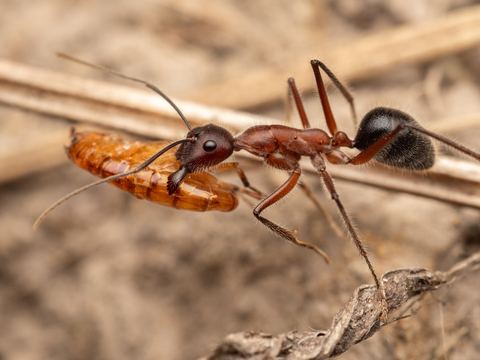
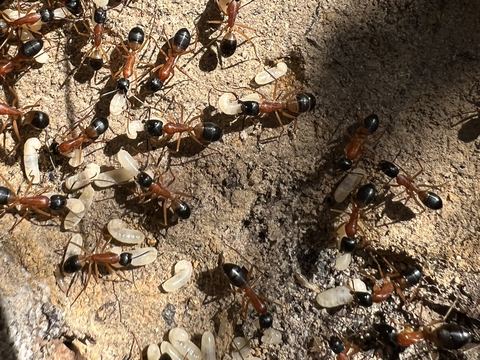
The banded sugar ant, Camponotus consobrinus, is a big ant: 5 to 15 mm long, with a black head, a black abdomen and an orange-brown section in the middle. The Australian Museum says it's found throughout Australia, and it belongs to the carpenter ants, one of the most common and widespread ant groups in the country.
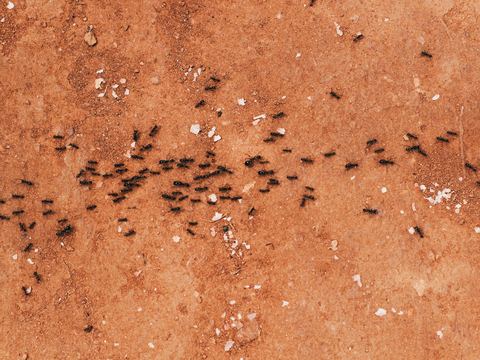
It's a night forager. Through summer you'll see sugar ants hurrying about beneath house and street lights after dark, and carpenter ants in general will travel a long way for food.
Why they're called sugar ants
Because they'll go for anything sweet. Outdoors they collect nectar and honeydew, the sugary liquid aphids give off, and the Australian Museum says they tend aphids much like farmers tend stock. Their wider menu covers live and dead insects, sweet food and household scraps.
Which sugar ant is on your bench?
| Banded sugar ant | Small house ants | |
|---|---|---|
| Size | 5 to 15 mm | Mostly 1.5 to 3.5 mm |
| Colour | Black head and tail, orange-brown middle | Black or brown, often shiny |
| When | Mostly at night | Often in a steady trail to food, day or night |
| Inside the house? | Rarely, says Victoria's Health department | Often: kitchens, wall cavities, behind cupboards |
| Where the nest is | Outside: rotting wood, soil, between rocks, among roots | Outside under paths, or inside walls and ceilings |
So what's on the kitchen bench?
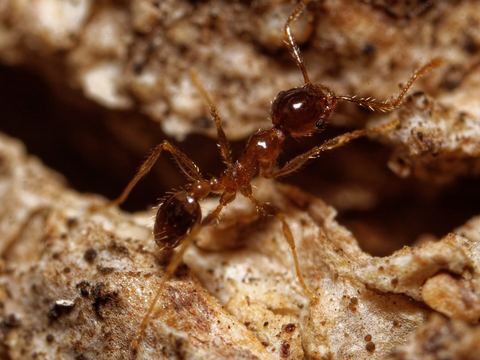
Victoria's Health department says carpenter ants rarely come into houses. A busy trail of tiny ants to the sugar bowl is far more often one of the small pest ants: black house ants, white-footed house ants, Argentine ants or coastal brown ants, most of them only 1.5 to 3.5 mm long.
That matters, because the house ants behave differently and some need a particular approach. Our ant guide walks through how to tell them apart and why spraying can make some of them worse.
Can sugar ants damage the house?
Not sound timber. Carpenter ants, sugar ants among them, prefer to dig into moist, rotting wood and other soft material, and Victoria's Health department says they seldom tunnel into dry, sound wood. Ants aren't related to termites at all.
So sugar ants in a soggy fence post are telling you about the post. If you're finding damage in house timber and you're not sure what's causing it, leave the wood alone and get a termite inspection before anything else.
Keeping both kinds off the bench
You can
- Wipe benches and sweep up crumbs before bed, when sugar ants forage.
- Keep sugar, honey, jam and pet food in containers that seal.
- Rinse cans and bottles before they go in the recycling bin.
- Trim back branches and shrubs touching the house, since ants use them as bridges.
- Fix leaks and rotting timber outside, so there's nothing soft to nest in.
Leave to a pest business
- Ants trailing inside day after day, or nesting in a wall, which usually means a house ant.
- Ants around damaged timber, where a termite inspection comes first.

Our take on sugar ants
Work out which sugar ant you've got. Big orange-and-black ants in the garden at night aren't hurting anything, and we'd leave them. Small ants trailing across the bench are a house ant problem: clean up for a few days, and if the trail keeps coming back, tap Spiders or ants.
Want someone to look at it?
Tell us what you've seen and your postcode, and a local pest business that handles exactly that calls you to talk it through.