Swallowed bait or a bite
Call the Poisons Information Centre on 13 11 26, day or night, if a child may have eaten mouse bait; don't wait to see if they get sick. Take any pet that ate bait to the vet now. Clean a mouse bite straight away with soap and water, cover it, and see a doctor, especially if it looks infected.
Mouse droppings, and what else to look for
Rockhampton Regional Council describes mouse droppings as black, rod shaped and 3 to 6 mm long, and Victoria's Health department calls them small and spindle or irregular in shape. You'll find them along skirting boards, in the backs of drawers and cupboards, and wherever food is stored.
Mice also leave a distinctive pattern on grain: Victoria's Health department says they nibble the outside and leave the core. Add gnawed packets and cables, scratching and squeaking inside walls at night, and holes up to 20 mm wide in walls, partitions and floors, and the picture is usually clear.
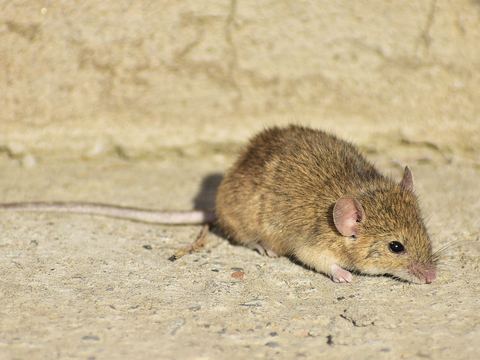
A mouse, or a young rat?
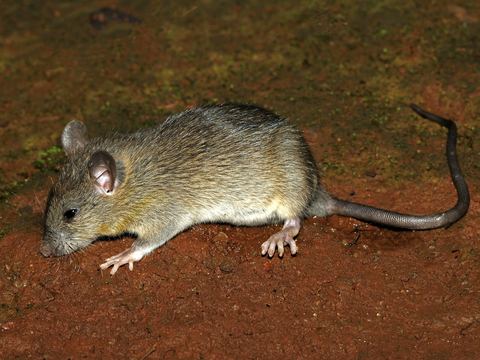
| House mouse | Black rat | |
|---|---|---|
| Body | 60 to 100 mm | 165 to 205 mm when grown |
| Tail | About the same length as the body | Much longer than the head and body |
| Ears | Large and hairy | Large, thin, almost hairless, 20 mm or more |
| Weight | 10 to 25 g | 95 to 340 g when grown |
| Droppings | 3 to 6 mm, rod shaped | 10 to 18 mm, spindle shaped |
Why they move in when it cools down
CSIRO says cooler weather pushes mice to find shelter inside homes, which is when people start to see them. Once inside, numbers climb quickly. CSIRO says mice can breed from about six weeks old, every 19 to 21 days, with litters of up to 10. The Australian Museum puts first breeding at two months, with litters of four to eight. Either way, a pair in autumn can be a crowd by winter.
In some years it gets far worse. The Australian Museum says house mouse numbers can reach plague levels that last three to four years, and that numbers rise about 18 months after a fire, and seem to rise after rain too. In May 2021, CSIRO described a plague in parts of Queensland and New South Wales and said such plagues come about every 10 years.
Cleaning up after mice
Cover up first
NSW Health advises gloves, waterproof clothing and footwear, and a waterproof dressing over any cuts.
Bag the mess
Pick up droppings and old nesting material with paper towel and seal it all in a bag for the bin.
Disinfect
Mop floors and clean benches with disinfectant or a bleach solution, as NSW Health suggests.
Wash up
Wash your hands with soap when you're done, even if you wore gloves.
Why the clean-up matters
NSW Health links mice to leptospirosis, lymphocytic choriomeningitis virus, rat bite fever and gut infections such as salmonellosis, campylobacteriosis and cryptosporidiosis. The choriomeningitis virus usually comes from contact with rodent urine, droppings or saliva, so benches and pantry shelves deserve a proper clean, not a quick wipe.
Shutting them out
You can
- Move cereals, flour, pet food and seed into glass, metal or hard plastic containers.
- Walk the outside of the house and block gaps around pipes, vents and doors.
- Fit brush strips to the bottoms of doors, including the garage.
- Clear clutter from cupboards, the garage and under the house so you can see new droppings.
Leave to a pest business
- Scratching in walls or ceilings after you've sealed what you can find.
- Bait stations placed where children and pets can't get to them.
- Rural properties and sheds during a plague year.

Where we'd start with the mice
Seal the food first, then the gaps, then clean properly. If you're still finding fresh droppings or hearing them a week or two later, tap Rats or mice and say where you've seen the signs.
Want someone to look at it?
Tell us what you've seen and your postcode, and a local pest business that handles exactly that calls you to talk it through.